A zipper on jeans, a jacket, or a bag may start to split even when the teeth look intact and the slider moves along the track without snagging. At first glance, the mechanism seems fine, but the fastener fails to perform its function. According to practical recommendations provided by hardware manufacturers, in most cases, the root of the problem lies not in the teeth themselves, but in a worn-out slider, incorrect mechanical stress on the structure, or dirt inside the channels. You can identify the cause and fix the malfunction yourself without using professional tailor services.
How a zipper works and where the "weak link" is
Any standard zipper consists of two rows of teeth, a slider (often colloquially called a "pull"), and stoppers that prevent the mechanism from sliding off the end of the track. When the slider moves, the teeth on both sides interlock or disengage. Inside the slider, there are special guide channels that press the teeth together. These channels deform over time: the metal or plastic expands from repeated zipping and unzipping cycles, and the slider stops compressing the teeth with sufficient force. As a result, even after being fully zipped, the teeth behind the slider split open under the fabric's own weight.
Five main reasons why a zipper splits
The first and most common reason is wear or loosening of the slider. A characteristic symptom: the teeth join at the moment of zipping but immediately split open a few centimeters behind the slider. The second reason is damaged or misaligned teeth. If one or more elements are bent, fallen out of the track, or no longer match in height, the slider is physically incapable of connecting both halves. This happens especially often on jeans and winter jackets that are constantly under tension. The third reason is tight-fitting clothing. If the fabric stretches significantly during movement, the zipper receives constant lateral stress, and even a functional mechanism will eventually "split." The fourth is contamination: threads, lint, dust, and small particles get into the slider channels and prevent it from moving smoothly. The fifth is a manufacturing defect or low-quality hardware that cannot withstand the declared number of cycles.
What you can do yourself: adjusting the slider
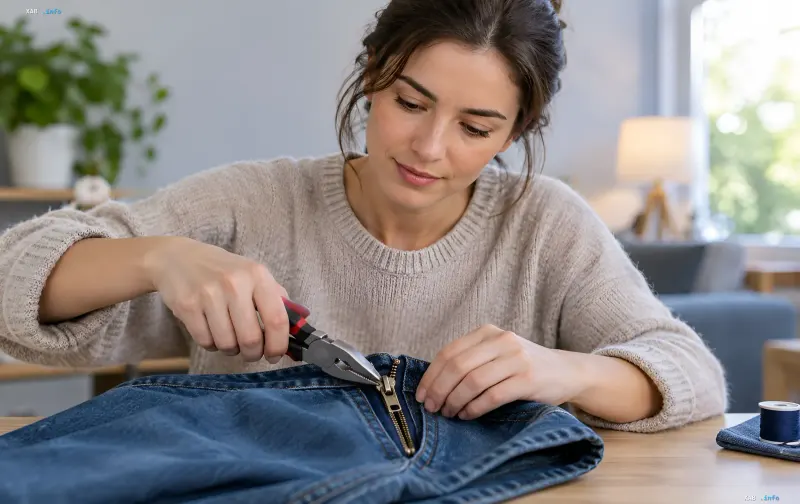
If the teeth are intact and the problem is that the slider does not hold the fastener, in some cases, minor mechanical adjustment helps. Repairers use pliers to very carefully squeeze the side walls of the slider, reducing the internal gap. This must be done gradually, bit by bit, checking the movement after each step: excessive pressure can deform the part permanently or completely block the slider's movement. If the problem persists after a minor adjustment, the slider should be replaced. Such a repair usually does not require replacing the entire zipper—it is enough to remove the old slider and install a new one of the same type and size.
Cleaning and lubrication: simple steps to extend hardware life
Before changing parts, check the fastener for threads, lint, and dirt. Remove small particles carefully with tweezers or a soft brush without pulling on the teeth. If the zipper moves stiffly, hardware manufacturer YKK recommends applying paraffin or a special lubricant to the fastener elements, then carefully moving the slider up and down several times so the compound distributes across the channels. It is important not to use oil, petroleum jelly, or greasy creams: they leave stains on the fabric and attract extra dust, accelerating wear.
When replacement is unavoidable
If the teeth do not match or one of them has shifted to the side, do not force the slider—this will damage the neighboring elements and the mechanism itself. In a workshop, misaligned but intact teeth can sometimes be restored. If some teeth are missing or broken, especially in the center of the zipper, the entire fastener usually has to be replaced. Technical recommendations from Coats note that excessive load on the lower part of the fastener leads to teeth splitting behind the slider; if the situation recurs, the manufacturer advises checking whether the garment fits loosely enough and whether its design creates constant tension on the zipper.
Prevention: how to avoid recurring splitting
To make a zipper last longer, follow a few simple rules. Do not zip or unzip the zipper by force if it is stuck. Regularly clean the track from lint and threads. Avoid excessive fabric tension: if jeans or a jacket have become tight, the zipper will be subjected to additional load. Store clothing with zippers closed so that the teeth do not split and catch on other items. At the first sign of a stiff slider, lubricate the mechanism with paraffin without waiting for the fastener to "fall apart" completely. Following these measures allows you to extend the service life of the hardware several times over and avoid frequent trips to a tailor.