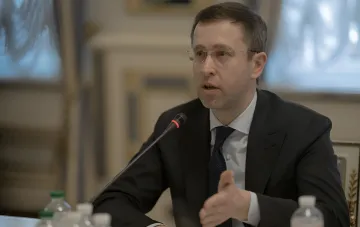
In the run-up to the 2026 heating season, the Ukrainian parliamentary body has voiced alarming forecasts regarding the energy security of major cities. People's Deputy Bohdan Kitsak made a resonant statement, calling on citizens to embrace hard realism: every resident of million-plus cities must independently decide whether they are ready to spend the winter in conditions of a complete lack of utility resources.
Call for "realism" and readiness for the worst
According to the parliamentarian, the current pace and quality of infrastructure preparation for winter in million-plus cities do not match the real threat. Kitsak emphasized that the intensity of missile and drone strikes from the Russian Federation remains unpredictable, and during the autumn-winter period, the main blow will be directed at energy nodes.
"We need to be realists. The speed and quality of preparation do not correspond to reality," the deputy stated. He emphasized that the responsibility for making the decision falls on the shoulders of citizens: to remain in the city without water and light or to seek alternative survival options.
The question of the deputy's personal safety
In his statement, Bohdan Kitsak did not specify exactly where he plans to spend the winter period. This moment sparked a lively response in society: if the deputy calls on citizens to prepare for severe trials, the question remains open as to what security measures have been taken for the parliamentarian himself and his family. The lack of information about the deputy's personal evacuation plan or preparation creates a certain information vacuum.
Contradictory data
There is a discrepancy in the interpretation of the deputy's words and the official position of the relevant departments. On the one hand, Bohdan Kitsak speaks directly about the inevitability of outages and the need to prepare for life without resources. On the other hand, at the time of publication, official comments from the Ministry of Energy of Ukraine or utility services regarding infrastructure readiness had not been received.
While the deputy calls for panic and evacuation, state structures traditionally try not to publicize critical vulnerabilities so as not to provoke social tension. This creates a situation where citizens receive mixed signals: on the one hand, a call to flee, on the other, silence from officials.
Energy crisis as a factor of migration
Kitsak's statement indirectly points to a possible wave of internal migration from large cities to safer regions. If residents are forced to choose between living in conditions of cold and lack of water, this could lead to the depopulation of industrial centers and an overload of infrastructure in rural areas. Experts note that such scenarios are already being discussed in expert circles, but only a few dare to voice them publicly.