
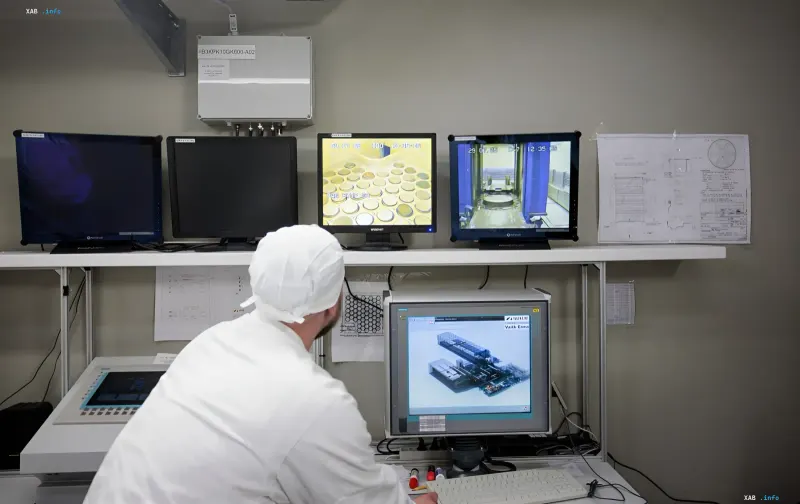
Lithuania is launching an unprecedented operation in global practice: specialists have begun dismantling the active zones of RBMK reactors at the decommissioned Ignalina Nuclear Power Plant. This is the same type of reactor that was operated at the Chernobyl station. The uniqueness of the mission lies in the fact that Lithuania will become the first country to completely dismantle the active zones of such reactors.
Ignalina NPP, the only one in the Baltic states, was closed in two stages: the first unit was shut down at the end of 2004, and the second in December 2009. The closure of the plant was a mandatory condition for Lithuania's accession to the European Union. Today, more than a decade after the shutdown, the final and most difficult stage of decommissioning the plant is beginning.
Robots instead of people
Plant Director Linas Baužis emphasizes the complexity of the upcoming work: "This will be the most difficult task. But we will be the first in the world to do it." Working with equipment that has a high level of radioactivity excludes human participation. The reactor's active zone will be dismantled by robots equipped with cutting-edge technologies.
The most labor-intensive part of the process will be the dismantling of graphite components. According to Baužis, this work will most likely be carried out by specialists from international companies from the USA or France. At present, the plant staff has already dismantled everything that can be safely removed without involving highly specialized contractors.
Fate of spent fuel and geological repository
A key stage of preparation was the removal of all nuclear fuel from the reactors. It has been placed in interim storage for 50 years. During this period, the state is obliged to build a deep geological repository for the final disposal of waste by 2090.
Currently, geologists are evaluating 77 potential sites in almost 30 municipalities of the country. The Visaginas municipality, where the plant itself is located, has already been deemed unsuitable for the repository. Baužis assured that the decision on the location of the facility will be made by scientists, not politicians.
Economics of dismantling: from scrap metal to wind turbines
The plant territory now resembles a giant scrap metal warehouse. Everything that can be dismantled is being cut into parts. The resulting metal is either sold at auctions or sent for recycling. The plant's strategy is aimed at decontaminating at least 77% of metals and returning them to economic circulation.
In particular, it is planned to clean 1,400 tons of copper, which can subsequently be used in the production of wind turbines. This is critical for the project's economy: if the metal cannot be cleaned, significantly larger and more expensive repositories for radioactive waste will be required, adding millions of euros to the budget.
Nuclear tourism and heritage
The fate of the main reactor buildings remains a subject of discussion. The plant director suggested that it would be more expedient to preserve them as a scientific test range or a technology center, rather than demolishing them. In a few hundred years, the repositories of radioactive components will probably remain in the form of concrete structures resembling burial mounds.
For now, visitors can still inspect the reactor installations. Tours are fully booked several weeks in advance. The city of Visaginas is preparing plans to position itself as a center for nuclear tourism to attract specialists and enthusiasts interested in nuclear energy.
Recall that it was at the Ignalina NPP, thanks to the similarity of equipment, that the cult HBO series "Chernobyl" was filmed. At the end of 2024, Lithuania also transferred equipment from decommissioned NPPs and TPPs to Ukraine to support Ukrainian energy.


