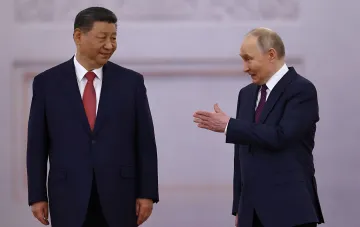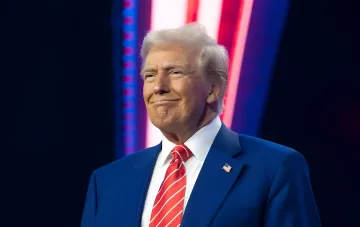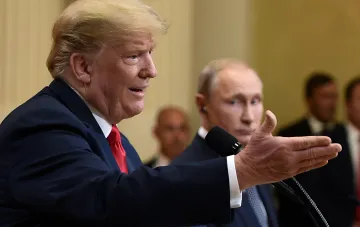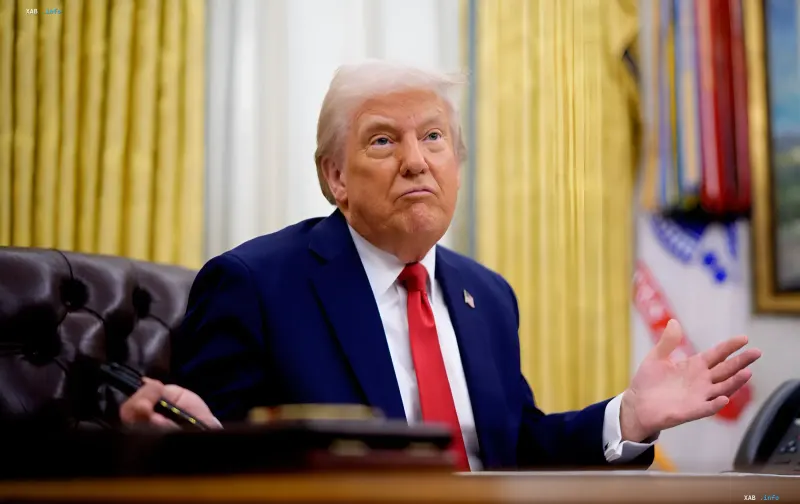
The trilateral meeting between US President Donald Trump, Chinese leader Xi Jinping, and Russian President Vladimir Putin, which the parties considered on the sidelines of the APEC summit in Shenzhen, China (November 18–19), is facing the threat of disruption. According to The Wall Street Journal, obtained by RBC-Ukraine, Washington and Beijing cannot agree on the format of the talks: China insists on a strictly regulated procedure with the reading of a pre-prepared statement and minimal space for discussion, whereas the Trump administration demands an open format allowing the three leaders to actively exchange views. Disagreements over rules and the agenda raise doubts about whether the meeting will take place, despite all three countries initially expressing readiness to consider the idea.
Format as a Bargaining Chip
The Chinese side, according to WSJ sources, is ready to host the trilateral meeting only on the condition of preliminary preparation that ensures an agreed agenda and a predetermined outcome. Beijing, the publication claims, seeks to create the "appearance of a historic trilateral dialogue"—with photographs, statements, and propaganda value—without the risk of unpredictable negotiations. A high-ranking US administration official, in turn, stated that Xi Jinping does not appear ready to engage in informal exchanges of views with colleagues, and that the demand for a rigid format raises questions about Beijing's readiness for direct engagement. Without preliminary preparation, according to the same source, China would prefer to hold separate bilateral meetings.
The Nuclear Issue: Beijing's Red Line
A key irritant has been Trump's intention to raise the issue of denuclearization and arms control at the meeting. China possesses a significantly smaller atomic potential than the US and Russia, although its arsenal is growing rapidly. For Beijing, participating in trilateral arms control negotiations, according to the WSJ, risks cementing its status as "nuclearly inferior." One Chinese official stated directly to the publication that Beijing will not agree to participate in such talks. At the same time, Xi Jinping has overseen the most significant expansion of China's nuclear arsenal in the country's history, making any formatting that fixes asymmetry unacceptable to him.
Moscow's Strategic Calculation
According to the WSJ assessment, Putin's proposal for a trilateral meeting was aimed at taking advantage of the warming relations between Trump and the Kremlin and, relying on China, achieving progress in ending the war against Ukraine on terms favorable to Russia—and without the participation of Ukrainian President Volodymyr Zelenskyy. Russian Deputy Foreign Minister Andrey Rudenko, commenting on the agenda, told RIA Novosti that it "should not be limited to some separate topics, but should include a whole set" of international challenges. Russian Presidential Aide Yury Ushakov previously stressed that a single meeting would not be enough to resolve the Ukrainian conflict and that "even in a few hours of negotiations it is impossible to resolve all accumulated problems," although the topic of Ukraine may enter the agenda in one form or another.
Timeline and Risks of Disruption
The APEC summit in Shenzhen is scheduled for November 18–19, 2026, leaving less than ten days to resolve disagreements over the format. Currently, none of the parties has announced a refusal to meet, but according to the WSJ, disagreements over the rules of procedure and the content of the agenda have already led to discussions within the US and Chinese administrations of a scenario where, instead of a single trilateral summit, only separate bilateral contacts will take place. The outcome of the format negotiations is expected to be known in the coming days, directly ahead of the APEC summit.