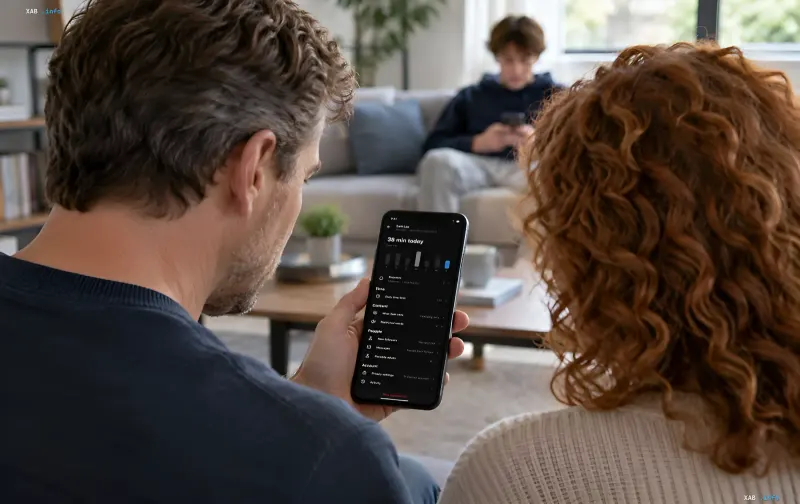
The X platform, owned by Elon Musk, has launched a parental control tool aimed at users aged 13 to 17. The new feature is designed to restrict teenagers' access to sensitive content and protect their personal data. By default, accounts in this age group will receive a protected mode, and targeted advertising for them will be completely blocked. The company has also integrated additional management tools into standard settings, which become available to parents and guardians once the controls are enabled.
What Has Changed for 13–17 Accounts
The key change is automatic: protected mode is enabled by default, meaning teenagers do not need to manually activate restrictions. This means sensitive content will be filtered without additional actions from the user. At the same time, the platform stops showing targeted ads to this audience, reducing the amount of personal analytics used for advertising purposes. Essentially, X shifts part of the responsibility for teenagers' digital experience to system settings rather than the young user's individual decisions.
What Parents Specifically Can and Cannot Do
The control tools are designed as a content management mechanism rather than access to the child's private life. Once controls are enabled, parents and guardians receive a number of management functions, but the company has clearly separated them from the private areas of the account. Specifically, guardians cannot read the teenager's private messages, view search or watch history, publish posts on their behalf, or log into their account. Thus, X draws a line between "managing what the child sees" and "controlling their correspondence and actions," leaving the latter to the teenager themselves.
How to Enable Controls: A Two-Way Process
Activating parental controls requires consent from both parties. The linking process is initiated by the parent or guardian, but the final step is performed by the teenager themselves—without their confirmation, the feature is not activated. Step-by-step instructions are available in the X Help Center. According to the developers, this mechanism prevents one-sided control activation and emphasizes that the tools are created for joint content management rather than interfering with the child's personal space.
Context: Regulatory Pressure and Company Position
X emphasized that the platform is not targeted at children and is not promoted as a service for minors, but is taking additional measures for young people who already use the service. The company directly links the launch of the tool to current and upcoming regulatory requirements in the US and several other countries. Amid tightening data protection laws for minors on social media, such features are becoming virtually a mandatory compliance element rather than just a marketing gesture.
Summary: X is betting on "default protection"—an automatic safe mode and blocking targeting for teens—while keeping the privacy of correspondence and history with the user themselves. The two-way connection process and explicit restrictions for guardians indicate an attempt to balance regulatory requirements, parental expectations, and the teenager's right to digital autonomy.