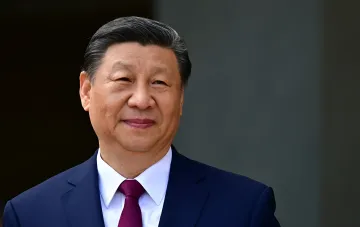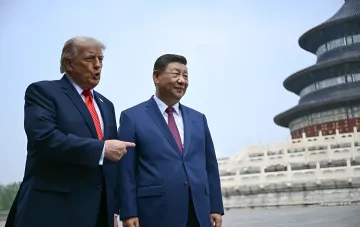
Chinese President Xi Jinping's participation in the World AI Conference in Shanghai marked a significant event, confirming the strategic priority of artificial intelligence development for Beijing. The country's leader did not merely attend the event but formulated a new doctrine for China's interaction with the global community in the field of high technology. His speech clarified China's ambitions: the country intends to expand its influence in the global AI market, betting on the openness and security of technologies.
From "Solo" to "Symphony" of International Cooperation
The central idea of Xi Jinping's speech was the criticism of attempts to monopolize advanced technologies. The head of state emphasized that AI development should not be the domain of a narrow circle of countries. Using a musical metaphor, he stated that progress in this field should resemble a "symphony of international cooperation" rather than a "solo" by one power. This thesis directly correlates with the current strategy of Chinese developers, whose models have already gained popularity abroad precisely due to their accessibility.
To implement this strategy, Beijing is ready to invest in educational infrastructure. Xi Jinping announced a large-scale project to prepare up to 5,000 educational courses. These materials will be available to citizens of other countries wishing to master working with Chinese AI models. Thus, China is trying to create a loyal ecosystem of users and specialists integrated into its technological solutions.
New Organization and Focus on the "Global South"
An important element of the new strategy was the mention of the World AI Cooperation Organization. Xi Jinping noted that 29 countries, including Russia and Brazil, have already joined this structure. The organization is intended to become a platform for developing common approaches to the security and ethics of neural network implementation. The leader of China warned participants of the need to take into account both direct and indirect risks arising from the large-scale implementation of AI.
Special attention was paid to the countries of the "Global South." Xi called on these states to develop the local infrastructure necessary for the full operation of artificial intelligence technologies. This could become a key factor in the struggle for influence in developing markets, where China offers not only software but also assistance in building a technical base.
Technological Sovereignty and Infrastructure
Chinese authorities understand that leadership in AI is impossible without its own production base. Beijing's plans include not only the development of software but also the creation of semiconductor components, as well as the construction of specialized data centers (DCs) across the country. This will help reduce dependence on Western chips and ensure the stable operation of national models.
This week, an international cooperation plan was presented, which implies the formation of unified standards, exchange of data and experience, as well as the joint development of computing power. However, despite the rhetoric about openness, Bloomberg previously reported that Chinese officials discussed the possibility of restricting foreign users' access to the most advanced versions of Chinese AI models. This creates a certain duality in the strategy: on the one hand — openness and technology export, on the other — maintaining a strategic advantage in the field of AI "heavy artillery".