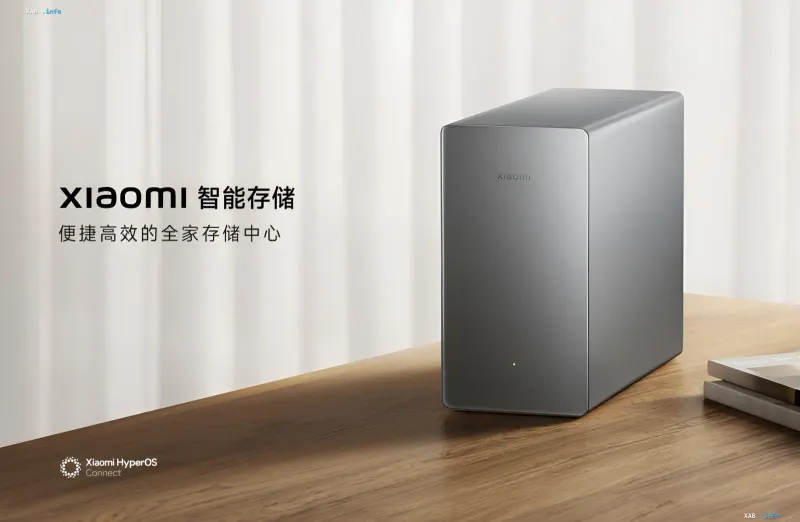
In November 2026, the analytical company AVC Revo published data that became a major event for the Chinese network storage market. The first-ever Xiaomi NAS server, which entered the market in August of this year, turned into one of the key players in the segment within weeks. By the end of August, the company's share of online NAS sales in China was 24.9%, and by September it had jumped to 32.5%. According to total data for the third quarter of 2026, Xiaomi took second place among all manufacturers with a 21.5% share, overtaking Synology, which dropped to third place. Ugreen remains the market leader, but the appearance of Xiaomi has fundamentally redistributed market positions.
Ecosystem and simplicity: why buyers chose Xiaomi
AVC Revo analysts identify several key factors that ensured such rapid growth. First, the Xiaomi NAS device is tightly integrated with the company's smartphone ecosystem: synchronization of the photo album with AI-based recognition and categorization functions turns the drive into a full-fledged family media center. Second, Xiaomi consciously targeted the segment of buyers purchasing a NAS server for the first time. Instead of complex RAID array configurations, Docker container settings, and manual access rights management, the user gets a system with intuitive connection and control via the familiar HyperOS Connect interface. Affordable prices, aggressive marketing campaigns, and the development of sales channels further accelerated the influx of buyers.
The market as a whole: recovery after the July dip
The appearance of Xiaomi had a noticeable impact on the dynamics of the entire Chinese NAS market. In the third quarter of 2026, the volume of online sales amounted to 170 million yuan (approximately 23.9 million dollars), which is 9.9% less than in the second quarter. In quantitative terms, 45,000 devices were sold — 12.5% less than in the previous quarter. The average selling price increased by 3% and reached 3,818 yuan. At the same time, a clear recovery trend can be traced within the quarter: after a sharp drop in sales in July by 46.2%, the indicator rebounded by 42.7% in August and added another 7.7% in September. Analysts attribute this turnaround primarily to the release of Xiaomi devices, which stimulated demand in a segment that had previously been stagnating.
Competitive landscape: Ugreen holds the lead, Synology loses ground
The redistribution of shares affected all key players. Ugreen, which held first place in the NAS market in China, maintained its lead, but its share decreased under the pressure of the new competitor. Synology, which for many years was considered one of the two main brands in the consumer NAS niche, dropped to third place. For a company whose business model was historically built around enthusiasts and small businesses, competition with a mass-market brand offering a "boxed" solution with ecosystem connectivity became a serious challenge. It is expected that in the fourth quarter of 2026, the battle for the Chinese NAS market will be even more intense, especially if Xiaomi expands its lineup of drives or updates the firmware with additional AI functions.
What this means for the global market
Xiaomi's success in China is an important signal for the global network storage market. If the company decides to bring its NAS devices beyond China, it could change the balance of power in Europe and North America, where Synology, QNAP, and WD My Cloud dominate. Integration with HyperOS Connect and an emphasis on "family" use scenarios — storing photos, videos from security cameras, and smartphone backups — potentially attracts an audience that previously did not consider NAS as an option. However, for now, AVC Revo data reflects exclusively the Chinese market, and extrapolation to global sales is premature. Nevertheless, the very fact that a mass consumer brand captured a third of a niche market in two months indicates that the barrier to entry into the NAS segment has significantly decreased.