
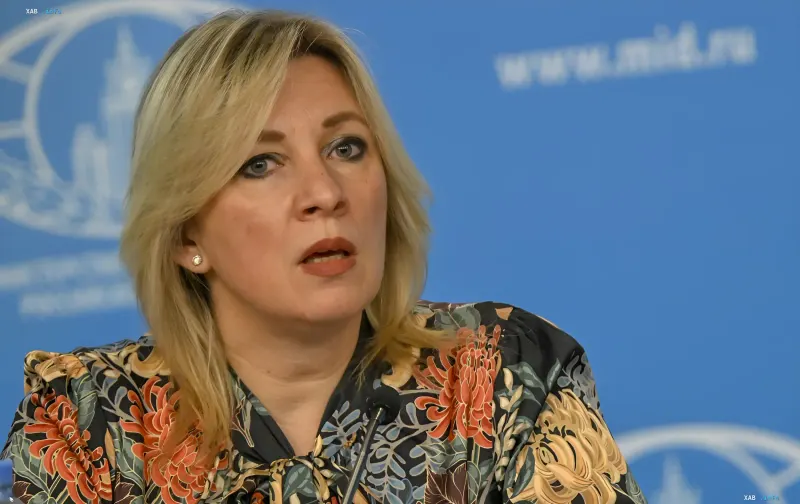
Representative of the Ministry of Foreign Affairs of the Russian Federation, Maria Zakharova, stated that the North Atlantic Alliance, allegedly in conjunction with Ukraine, is developing weaponry intended for massive strikes on Russian airfields and airbases. According to her, this concerns not only border objects but also the targeting of objectives deep within Russian territory.
As reported by RBC-Ukraine citing the Foreign Ministry spokesperson's comment, Zakharova emphasized that the weapons being created are aimed at mass destruction and the long-term incapacitation of Russian aviation infrastructure. "It is based on these positions that we will evaluate both the current situation and the prospects for further escalatory development," she noted.
Threats against defense industry enterprises
Zakharova also stated that the actions of Ukraine and NATO give the Russian military grounds to pay increased attention to enterprises involved in the development and production of weapons against Russia. This could mean an expansion of the list of targets for possible retaliatory measures by Moscow.
In her opinion, the Alliance is losing its "remnants of rationality" and moving into a "zone of heightened risk." Furthermore, the Russian Foreign Ministry spokesperson accused Kyiv of attempting to drag NATO into a direct military conflict with Russia. According to her, the Ukrainian authorities allegedly seek to improve their position on the battlefield in this way.
Europe's reaction: the "gray zone" between war and peace
European countries hold an opposing view. According to intelligence services, the continent is in a "gray zone" between war and peace. It is assumed that the Kremlin may decide, at the very least, on limited military actions against a NATO member immediately after the end of hostilities in Ukraine.
In the opinion of European officials, the Baltic states — Estonia, Latvia, and Lithuania — are primarily at risk, against whom Russian leader Vladimir Putin expresses threats. RBC-Ukraine previously also reported that a material published in The Guardian spoke of Russia's preparation of military and hybrid provocations on NATO's eastern flank.
Thus, the situation remains tense, and mutual accusations and threats continue to grow. Both sides are demonstrating readiness for escalation, which creates risks for stability in the region.


