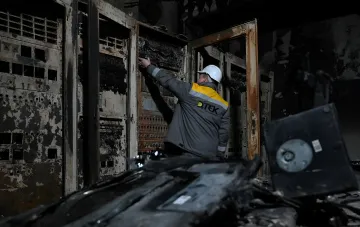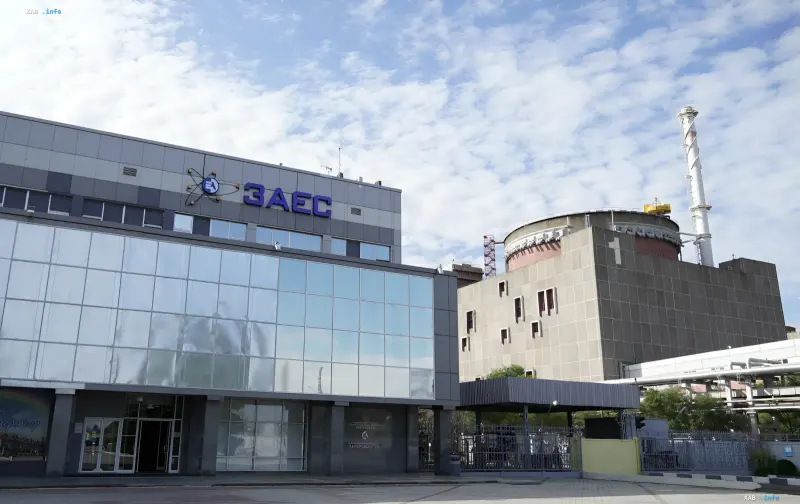
On the night of Wednesday, November 25, the Zaporizhzhia Nuclear Power Plant lost external power supply. According to the state-owned company Energoatom, at 04:28, as a result of shelling on the right bank of the Dnieper, approximately 13 kilometers from the Ferrospalnaya substation, the 330 kV Ferrospalnaya-1 power transmission line was disconnected. Following the incident, the station's internal needs are being met by backup diesel generators, and staff continue to monitor the facility's safety parameters.
Course of events and current operating mode
According to Energoatom, the disconnection of the main line left the NPP without external power sources, forcing the station to switch to autonomous operation using diesel generators. Russian agencies, citing the station's communications director, confirmed the transition to backup generators and reported that the radiation background at the facility remains within normal limits. However, according to them, the station has not been generating electricity since September 11, 2022, and all six reactors are in a cold shutdown mode.
Energoatom's position: systematic infrastructure damage
The Ukrainian company emphasized that systematic damage to energy infrastructure near the ZNPP as a result of attacks increases the risk of a nuclear accident. "The only guarantee of restoring nuclear and radiation safety is the return of the station to the full control of Ukraine and its sole legal operator — JSC NNEGC Energoatom," the company stated. Thus, the November 25 incident fits into a series of damage to the external lines supplying the station.
A series of incidents in November
According to participants in the conflict, on November 9, a ZNPP employee died as a result of a Russian drone strike; this was the second such case in a few days. On the night of November 8, the station was also left without external power — that blackout, according to Energoatom's calculations, was the 16th since the beginning of the year. The frequency of outages highlights the vulnerability of the external power lines on which the station depends while in cold shutdown mode.
Divergence in assessing causes and risks
The parties classify the cause of the disconnection and the degree of threat differently. Energoatom directly links the incident to shelling by Russian forces and speaks of an increased risk of a nuclear accident. Russian media, in turn, note that the cause of the outage will be established after inspection, point to regular strikes on the station's territory and Enerhodar by the Ukrainian Armed Forces, and claim that there are no nuclear or radiation safety threats at the moment. However, both sides acknowledge the actual loss of external power and the station's reliance on backup diesel generators.