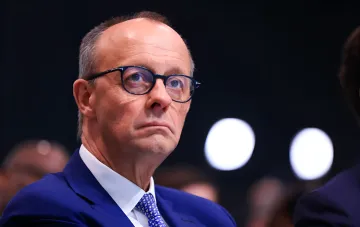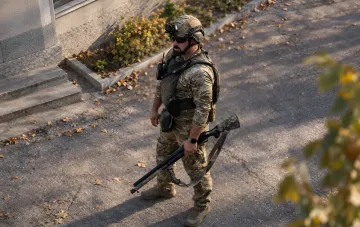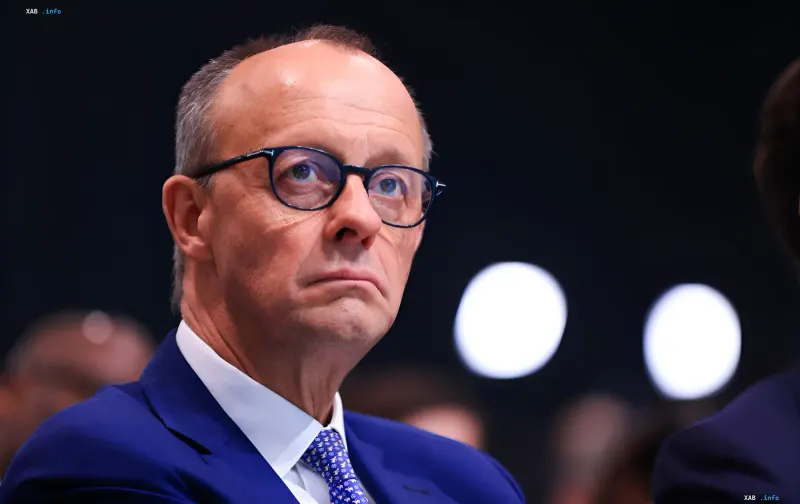
German Chancellor's security advisor Günther Zautter, speaking at the annual YES meeting in Kyiv organized by the Viktor Pinchuk Foundation, stated that Chancellor Friedrich Merz's team is ready to cover the growth in Ukraine's defense spending. According to him, Berlin is also calling on other allies of Kyiv to join this effort, as the needs of Ukraine's Armed Forces remain significant and European partners continue to seek additional sources of financing. This was reported by RBC-Ukraine.
Germany — the Largest Current Donor, but Not in Total
Zautter emphasized that at the current moment Germany is the largest financial donor to Ukraine. At the same time, over the entire period of the full-scale war, which, in his words, has already lasted 4.5 years, the country ranks second in the volume of aid after the United States. Thus, Berlin is demonstrating a growing dynamic of support: while Germany trails Washington in the cumulative total over the entire war, it has moved to first place among all donors in the current financial cycle.
"We Must Bear This Burden"
The Chancellor's advisor underscored that supporting Ukraine's Armed Forces serves not only Berlin's obligations to Kyiv but also Germany's own national interests. "We must bear this burden. If we do not, the problems will simply be enormous," Zautter explained. He added that supporting Ukraine is a "vital component" for the security of the entire European continent.
Warning on the Consequences of Halting Aid
Zautter warned of serious consequences in the event that further aid to Ukraine is halted. "If this support stops — whether for political or financial reasons — Ukraine will face an enormous problem. We are all convinced that this will be a huge problem," he stated. According to him, Ukraine's needs remain significant, and European partners are jointly working to find a solution to this issue. "But we know that, unfortunately, there are still additional needs right now. Together we are working to find a solution to this problem," the Chancellor's advisor added.
Context: Germany's Military Economy and Domestic Political Risks
Zautter's statement came against the backdrop of a large-scale restructuring of the German economy along military lines. As analysts previously noted, Germany is for the first time since World War II transitioning to a model of military economy, in which every third euro of the state budget is directed to defense. Meanwhile, warnings are being voiced in the public sphere that a victory for the "Alternative for Germany" (AfD) party in local elections could over time affect the volumes of aid to Ukraine and to Ukrainian citizens in Germany. Chancellor Friedrich Merz himself had previously sent a similar signal, which adds further weight to Zautter's words in Kyiv: Berlin is in effect locking in a course of continued support for as long as it is politically possible.
Contradictory Data
No direct factual contradictions were identified in the provided sources. At the same time, it is worth noting a difference in wording: in the text of Zautter's speech Germany is called the "largest financial donor" without specifying a time horizon, whereas in the same speech it is clarified that over the cumulative 4.5 years of the war the country ranks second after the United States. This is not a contradiction but a distinction between the current flow of aid and the accumulated volume; however, when quoted in other publications, the wordings are often mixed up, which can give the reader a false impression that Germany leads in the cumulative total over the entire war. Additional context on Germany's transition to a military economy (every third euro to defense) is provided in materials dated July 2026 and contains no direct figures on the volume of aid to Ukraine, so any comparison with Zautter's statements is only indirect.