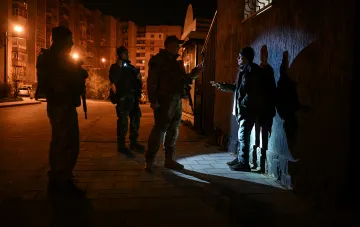
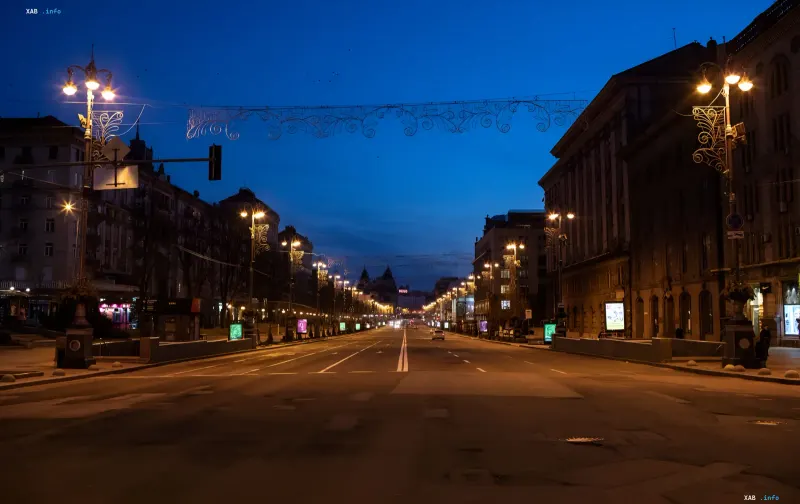
Ukrainian President Volodymyr Zelensky announced in his Telegram channel plans to revise the country's current curfew model. According to RBC-Ukraine, the key direction of the reform will be shortening the duration of nighttime restrictions in Kyiv, as well as offering the authorities of other cities the opportunity to independently assess the relevance of the time frames they have retained. The initiative, as envisaged by Kyiv, is intended to make the restrictions regime more adaptive to the changed tactics of Russian strikes and prolonged air alerts, without lowering the basic level of population safety.
What will change in the capital: from 00:00 to 05:00 — and beyond?
At present, the curfew in Kyiv is in effect from midnight until five o'clock in the morning. Zelensky's message explicitly states that the duration of this window will be shortened, however the exact new time boundaries — neither the start hour nor the end hour — are provided in the text of the statement. This creates an information vacuum that, as expected, will be filled at the level of the Cabinet of Ministers and the capital's city administration. In parallel, a review of the related rules has been announced: the operation of public transport, the metro operating regime, and the functioning of other urban infrastructure facilities during air alerts.
Regions will gain the right to flexibility
An important element of the announced reform is the decentralization of decisions. The authorities of oblasts and million-plus cities will be offered to conduct their own assessment of the existing restrictions and, if necessary, adjust their time frames. The criteria for decision-making are named as two factors: the actual security needs of a specific settlement and the ability of business to operate normally. Thus, a single nationwide curfew schedule may give way to a differentiated model in which each region tailors the regime to its own threat.
A two-tier alert system instead of a single signal
A separate but interrelated innovation will be a change in the very logic of warning about an air threat. Instead of a single alert signal, two levels of danger are planned to be introduced — "yellow" and "red" — which will depend on the nature and degree of the immediate threat. According to RBC-Ukraine, within this system the rules for opening bridges, operating the metro, and the permissible level of urban infrastructure activity are also being worked out, depending on the established alert level. The details of the mechanisms have not yet been disclosed and, it seems, will be presented to the public in a separate regulatory act.
Context and legal nuances for those liable for military service
The easing of the curfew does not cancel the requirements regarding documents that citizens liable for military service must carry during nighttime restrictions. According to information confirmed by a number of Ukrainian publications, men of conscription age must have their military registration document on hand when moving during the hours the curfew is in effect. This requirement remains in force regardless of whether the restrictions window is narrowed in Kyiv or other cities. Experts note that the combination of a shortened schedule with a two-tier alert system is intended to reduce the administrative burden on business and the population without abolishing the control mechanisms.
Contradictory data
The main discrepancy between the statements and the actual state of affairs concerns the specifics. In Zelensky's official message, a "reduction" of the curfew in Kyiv is explicitly declared, however neither in the text of the post, nor in the RBC-Ukraine materials, nor in the publications of Korrespondent and UNIAN at the time of preparing this article are the new exact time boundaries named. Some sources interpret the wording as a transition, for example, to a three-hour window, while others — as the retention of a five-hour schedule with changed hours. Until the publication of the corresponding Cabinet of Ministers resolution or decree, neither version can be considered equivalent. Moreover, the question of whether the two-tier alert system will be applied across the entire territory of Ukraine simultaneously or introduced in stages is not addressed in the available materials.