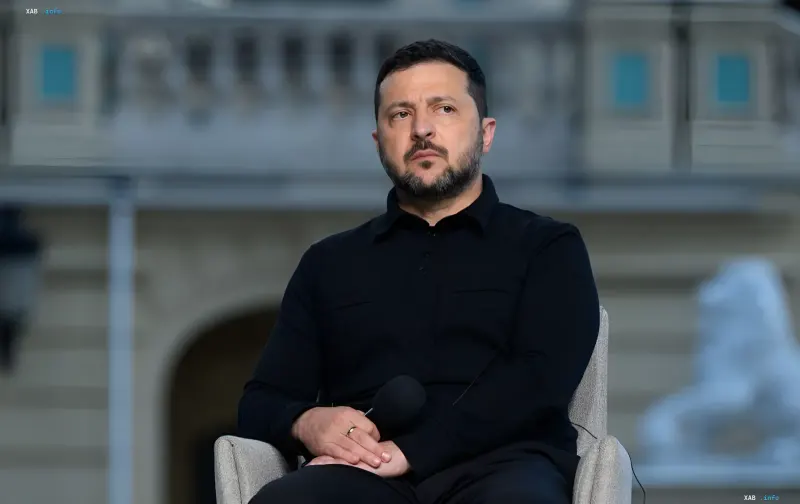
In an open address to Western partners, Ukrainian President Volodymyr Zelensky outlined the minimum threshold of support that, in his words, is necessary to protect the population from Russian ballistic missiles. The head of state stated outright that he wants to receive 100–120 interceptor missiles per month from allies, emphasizing the particular urgency of the task during the "difficult, especially cold months." In his formulation, even securing such a level of deliveries is a "huge challenge" for the partners, since Ukraine's actual needs are substantially higher.
The Mathematics of Interception: 140 vs. 280
Justifying his request, Zelensky cited his own estimates of Russia's production capacity: according to him, Moscow is currently able to produce around 140 ballistic missiles per month. Citing NATO doctrine, the president reminded that destroying such a number of targets requires a "one-to-two" ratio, i.e., roughly 280 interceptor missiles per month. "You will never have 280 missiles a month, and between us, this is a huge challenge — to have even 100 missiles a month. That is what I want," he emphasized, effectively acknowledging that even the minimum acceptable level of deliveries for Kyiv is not yet being met.
The Call to "Save Lives" and the Freya System
Against this backdrop, Zelensky urged allies to step up support, stating: "They must give as much as possible. With all respect to them, they must help Ukrainians to save their lives." At the same time, the head of state announced the signing of agreements with several European companies on the development of a Ukrainian air-defense system named Freya. According to him, the first stage of testing this system is scheduled for the end of December, and the time, in the president's assessment, is "short."
What Allies Have Already Promised
Zelensky's statements came against the backdrop of a series of concrete commitments from partners. Canada, reportedly, decided to allocate around 350 million dollars for interceptor missiles for Ukraine. The European Commission, in turn, approved a package of 6.1 billion euros, intended in part for Patriot missiles and drones. Germany and the United Kingdom, according to European media, are also preparing to hand over Patriot interceptor missiles to Kyiv. Thus, the need for 100–120 interceptors per month declared by the president becomes the benchmark by which actual delivery volumes will be measured.
Context: The Night Attack of September 12
The call to strengthen air defense came amid ongoing strikes on Ukrainian cities. On September 12, air-defense forces repelled a new Russian night attack, during which missiles and drones were used, including against Kyiv. It is precisely such episodes, in Zelensky's logic, that determine the urgency of the issue of a monthly minimum of 100–120 interceptor missiles, without which, in his words, it is impossible to reliably protect civilian centers.