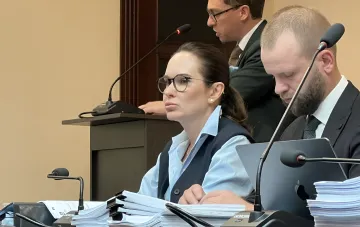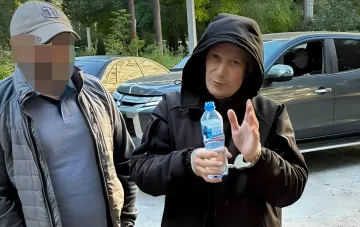
Ukrainian President Volodymyr Zelensky publicly stated on September 14 that Prosecutor General Ruslan Kravchenko must leave his post, calling on parliamentarians to support his dismissal “without delay.” The head of state’s remarks came in response to Kravchenko’s morning speech, in which he accused the president’s entourage of “political pressure.” “This Prosecutor General has only one path: resignation from office. That is exactly what I told him,” Zelensky emphasized, adding that “if he considers this political pressure, let him call it that.” According to RBC-Ukraine, the president also noted that Ukraine “had seen all the reasons for making such a decision.”
Timeline of the Conflict: From “Carthage” to Mutual Suspicions
The roots of the current crisis go back to September 4, when the National Anti-Corruption Bureau (NABU) and the Special Anti-Corruption Prosecutor’s Office (SAP) announced the unmasking of a criminal group operating directly within the Office of the Prosecutor General. According to the investigation, the group’s members shielded a network of fraudulent call centers and laundered the assets obtained in this way. On September 6, Kravchenko publicly denied any involvement in the described schemes, stating that the suspect employee had been removed from his position and that the work of the relevant department had been ordered to be reviewed. On September 8, the president held a separate meeting with Kravchenko, as well as with the heads of NABU and SAP; following that conversation, the Prosecutor General submitted his resignation. The next day, on September 9, three more prosecutors lost their posts — the First Deputy Prosecutor General and two heads of regional prosecutor’s offices.
The Prosecutor General’s Counterattack: Suspicions Directed at NABU Leadership and SAP’s Entourage
However, despite the resignation submitted on September 8, Kravchenko continued to perform his duties and on September 14 signed a suspicion against NABU Director Sem Krynok, calling on him to resign. According to the Prosecutor General, Krynok is suspected of forging official documents to obtain undue benefit on an especially large scale, as well as of a fictitious adoption of a child, which, according to the investigation, he attempted to use as grounds for evading liability in court. A second suspicion was issued against a person close to SAP Head Oleksandr Klymenko: he is charged with offering undue benefit to judges of the High Anti-Corruption Court and with assisting in evading mobilization. Thus, within a single day, the conflict between the prosecutor’s office and the anti-corruption bodies entered a phase of high-level mutual accusations.
Contradictory Data
Several inconsistencies have emerged in the public agenda. First, Kravchenko submitted his resignation on September 8, yet on September 14 he continues to hold the post, sign suspicions and make public statements, while Zelensky is only now demanding the Rada’s “immediate” dismissal. This raises the question of the Prosecutor General’s procedural status: formally he is already in a state of resignation, but in fact he retains his powers until his departure is ratified by parliament. Second, Kravchenko accuses the president’s entourage of “political pressure” while simultaneously signing suspicions against the head of NABU and a person from the SAP head’s circle — which can be interpreted as escalation rather than the stance of a victim of pressure. Third, according to TASS citing RBC-Ukraine, Zelensky currently has no approved candidates to replace the Prosecutor General, which compounds the uncertainty within the prosecutor’s system.
Political Consequences and a Systemic Crisis of Trust
As RBC-Ukraine noted in a separate analytical piece, conflicts between law enforcement and anti-corruption structures are destabilizing the state system as a whole. Mutual suspicions between the Prosecutor General’s Office, NABU and SAP set a precedent in which each side accuses the other of abuses, while the president is forced to act simultaneously as arbiter and initiator of personnel decisions. The absence of a ready candidate for the post of Prosecutor General on Zelensky’s part, as recorded by TASS, means that even after Kravchenko’s formal dismissal the post may remain vacant for an indefinite period, creating an institutional vacuum amid martial law and ongoing investigative cases. An Odesa People’s Deputy, who commented on the situation for the publication “Odesa,” previously noted that Kravchenko “really did not want” to leave, underscoring the political will component of the process.
What Comes Next
The key question of the coming days will be the Verkhovna Rada’s reaction to Zelensky’s call. If parliament supports the dismissal, the Prosecutor General’s Office will have to determine a successor in a situation where, according to available data, the president has no ready candidate. In parallel, the High Anti-Corruption Court must consider the suspicions signed by Kravchenko against Krynok and the person from Klymenko’s circle, which could become grounds for new legal and political disputes. Experts point out that without external arbitration — for example, from international partners funding the anti-corruption institutions — resolving the conflict between the prosecutor’s office and NABU/SAP may drag on for months.