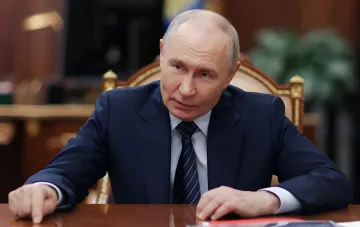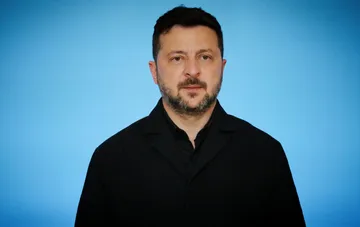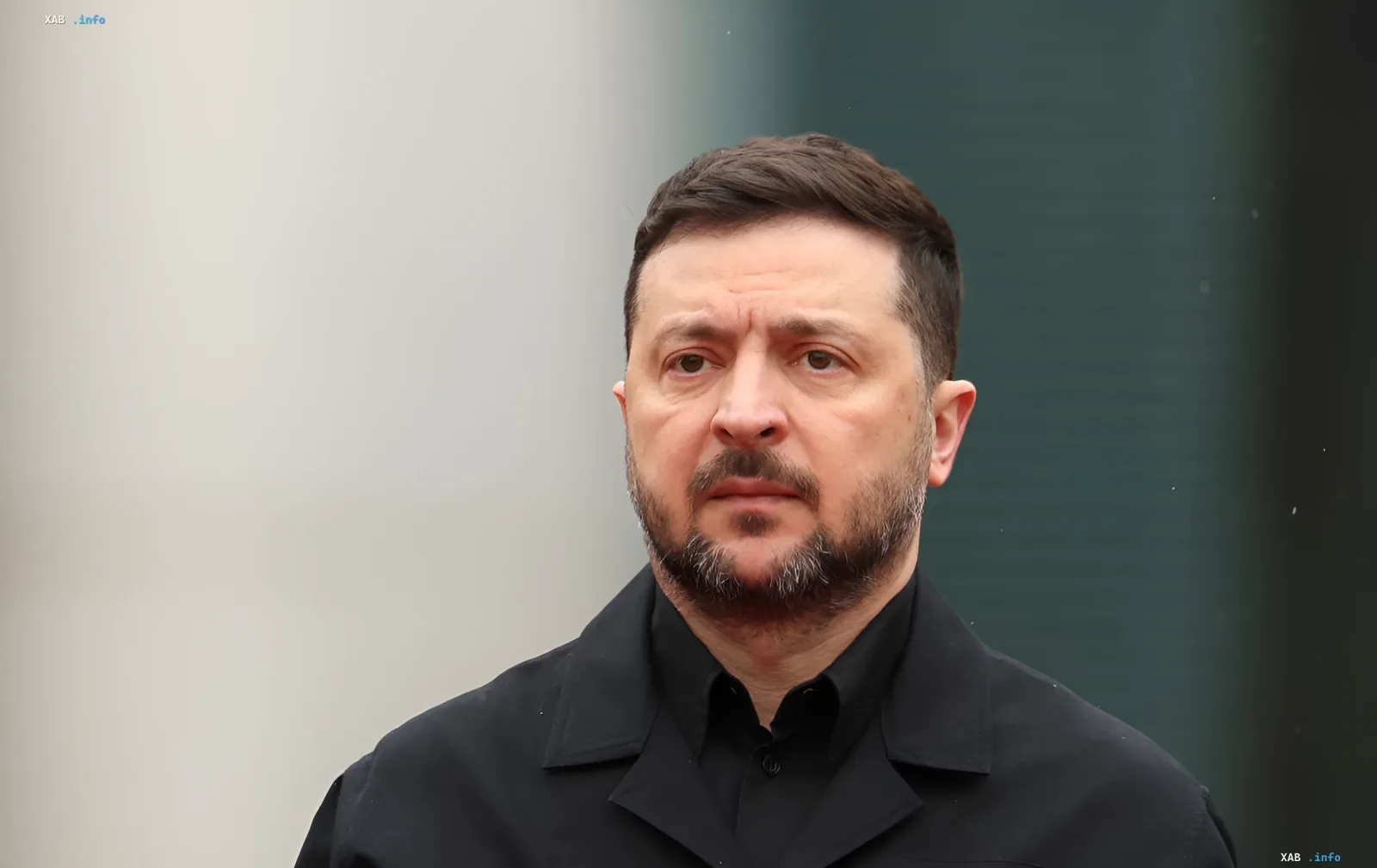
Ukrainian President Volodymyr Zelensky, in an interview with the Canadian broadcaster CBC News, spoke about the possibility of personal talks with Russian leader Vladimir Putin. According to the head of the Ukrainian state, the very prospect of sitting down at the negotiating table with Putin “does not evoke positive emotions,” but he is ready to consider such a meeting if it has practical meaning and a concrete result. “It is normal for me, although it is not my desire and certainly not the best day of my life — it would be better to sit with my family,” Zelensky said, answering a direct question about his readiness for a personal meeting.
Security guarantees as the key condition
At the same time, Zelensky clearly marked a red line: any meeting must be tied to a concrete result and real security guarantees for Ukraine. The President emphasized that by security guarantees he means confidence that Russia will not be able to again begin the occupation of Ukrainian territory. “He is an enemy, and I know his real goal: to occupy us if we are not strong enough or if there are no security guarantees,” Zelensky said, directly calling Putin “an enemy of Ukraine.” Thus, formal consent to dialogue does not mean readiness for a symbolic or declarative meeting — Kyiv insists on the practical substance of the negotiations.
Moscow’s position: trilateral format and “readiness for dialogue”
Against the backdrop of Ukrainian statements, signals of readiness for negotiations also came from the Kremlin. Russian presidential spokesperson Dmitry Peskov stated that Moscow expects a new trilateral meeting involving Ukraine, Russia, and the United States, and that the question of holding such talks had already been discussed with American representatives. Russian Foreign Minister Sergey Lavrov, for his part, claimed that Russia “has something to say” and allegedly had not refused dialogue, declaring readiness for a new round of negotiations on Ukraine. Both statements were made in the context of Moscow’s attempts to present itself as a party open to negotiations while maintaining pressure on Kyiv.
Contradictory data
Between the statements of Kyiv and Moscow there is a number of inconsistencies that make it difficult to form a single picture of the negotiation process. First, the format of the meeting: Zelensky, in his CBC interview, discusses precisely a personal bilateral meeting with Putin, whereas Peskov announces a trilateral format with the mandatory participation of the United States. These are fundamentally different negotiation architectures, implying different levels of trust and different dynamics of decision-making. Second, a number of Ukrainian and international sources (including Life.ru and strana.news) record Zelensky’s statements about readiness for an “unconditional ceasefire,” which formally contradicts his own position in the CBC interview, where the key condition is named precisely security guarantees. The difference in wording may indicate an evolution of the position or an adaptation of rhetoric to different audiences and formats, however, for factual analysis this remains an open question.
Context: what lies behind the rhetoric
Zelensky’s statements came against the backdrop of ongoing hostilities and diplomatic maneuvers around the Ukrainian settlement. For Kyiv, the possibility of a personal meeting with Putin is not only a domestic political signal but also an international one: the President demonstrates readiness for dialogue on the condition that it is not perceived as a capitulation or an acknowledgment of Russian claims. For Moscow, by contrast, the emphasis on a trilateral format with the participation of the United States allows the Kremlin to shift part of the responsibility for the outcome onto Washington while simultaneously maintaining the image of a “reasonable party” ready for negotiations. In a situation where both sides simultaneously declare readiness for dialogue but disagree on format and conditions, a real shift in the negotiation track remains in question for now.