
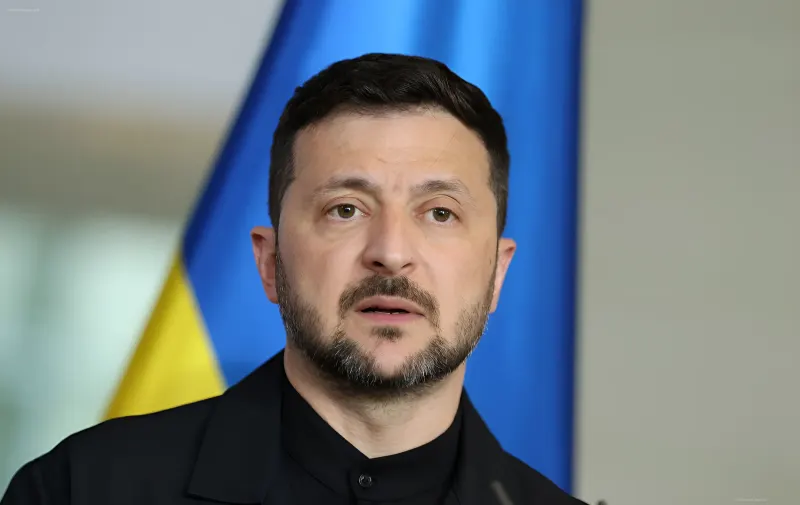
A tense financial battle is unfolding in Kyiv. President Volodymyr Zelensky has officially submitted a bill to the Verkhovna Rada designed to unlock access to colossal financial support from the European Union. The agreement involves a loan of 90 billion euros—a resource that will be critical for the functioning of the Ukrainian state in the coming years.
The Lifeline Mechanism: 2026-2027
The document in question aims to ratify a loan agreement and a memorandum of understanding. This is not merely a formality but the legal foundation for receiving macro-financial assistance. According to the plan, between 2026 and 2027, Ukraine could secure up to 90 billion euros. These funds are earmarked for two primary objectives: supporting the state budget and strengthening defense capabilities.
The unique aspect of this loan lies in its source: the funds will be covered by future reparations from Russia for the invasion. As early as 2026, Kyiv expects to receive half the amount—45 billion euros.
Tranche Details and Strict Conditions
The agreement outlines a clear distribution of funds. The budgetary portion of the aid is divided into two instruments: macro-financial assistance (up to 8.35 billion euros) and the Ukraine Facility mechanism (another up to 8.35 billion euros). However, accessing these funds will not be easy—they are tied to the fulfillment of strict conditions.
Payments will be made in three tranches, each with its own "entry tickets":
- First tranche (3.2 billion euros): Requires the submission of bills to parliament to abolish tax exemptions for international parcels and digital platforms. Currently, the Rada does not support these initiatives.
- Second tranche (3.7 billion euros): Will be disbursed only after the aforementioned tax laws are approved.
- Third tranche (1.45 billion euros): Linked to the implementation of tax regime reform.
Parliamentary Deadlock and Risk of Halt
The situation is complicated by the fact that the EU loan is closely tied to IMF requirements under the financial support program. Recently, parliament failed to pass a vote on the parcels law, which was one of the key conditions. This creates a real threat of suspension of lending from both the fund and the European Union.
People's Deputy Yaroslav Zheleznyak reported that the vote on ratification could take place as early as May 28. Nevertheless, without a breakthrough in tax issues, access to these funds remains uncertain. President Zelensky, for his part, after a conversation with European Commission President Ursula von der Leyen, expressed hope for the imminent arrival of the first tranche, noting that the date has already been determined.


