
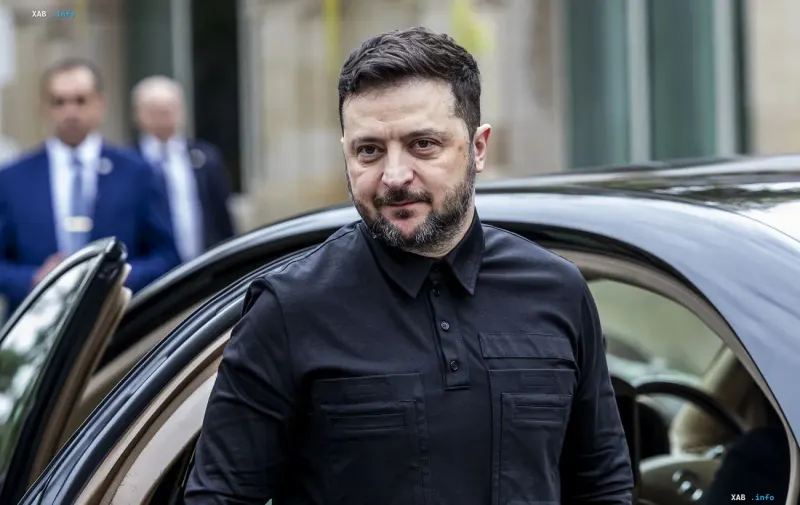
Ukrainian President Volodymyr Zelensky stated that the team of US President Donald Trump intends to hold new negotiations with the Russian side following the consultations that took place with the Ukrainian delegation. The head of state told journalists this, referring to the outcomes of his visit to New York, where he met with the US president. According to Zelensky, after the personal meeting with Trump, expanded negotiations were held between the Ukrainian and American delegations, focusing on all the issues previously outlined by the two leaders.
The US side's plan: consultations with Moscow and allies
Zelensky confirmed that after the completion of bilateral consultations with Ukraine, American representatives intend to contact the Russian side and other partners to discuss possible formats for the further negotiation process. "They will be in touch with the Russians, they will be in touch with various partners, going through possible formats," RBC-Ukraine quotes Zelensky as saying. Thus, Washington, it seems, intends to act as a coordinator of a multilateral dialogue, attempting to build a sequence of contacts: first with Kyiv, then with Moscow and its allies.
Written plan: Zelensky has not seen it
Commenting on Trump's statement at the UN General Assembly session about the possibility of an early end to the war, Zelensky noted that there was no ready written plan or document with corresponding proposals on his desk. At the same time, he said that Ukraine and the US have already managed to discuss certain details of potential agreements, but for now they do not intend to disclose them in the public domain. "For now, there is no point in it, since there has been no reaction from Russia so far," the Ukrainian president explained. This means that, despite the rhetorical activity at the UN, the specific text of a peace agreement or at least its draft, according to Kyiv, was not handed over to the Ukrainian side.
"I do not want to create inflated expectations"
Zelensky stated outright that he does not intend to create inflated expectations among the population regarding the early end of hostilities. "Drones and missiles are flying over people, you say: it will end tomorrow, and tomorrow the Russians will 'dump' again," he said, clarifying that in this context "dump" refers precisely to President Trump. This phrase became, perhaps, the sharpest public signal that Kyiv does not consider Washington's words about an "early end to the war" a guarantee of a ceasefire and is not ready to build communication with society on promises that, in his view, may be broken by the Russian side.
The Kremlin's position: readiness to meet on a condition
Against the backdrop of Zelensky's statements, a signal of its own was heard in the Kremlin: Russian leader Vladimir Putin, according to administration representatives, is ready to meet with Trump, but puts forward a condition. The specific content of this condition is not disclosed in the provided sources, which adds intrigue and uncertainty to the assessment of the prospects for a trilateral or multilateral format. Thus, both sides — Washington through Zelensky and Moscow through the Kremlin — demonstrate readiness for dialogue, while maintaining a significant distance in their formulations and not moving on to specific dates and formats.
Contradictory data
There is a number of inconsistencies between the statements of the parties. On the one hand, Trump publicly declared at the UN General Assembly session the possibility of an "early end to the war," which implies that his administration has at least a working document or plan. On the other hand, Zelensky outright claims that there was no ready written plan or proposal on his desk. This may mean that the speech at the UN session was about political will, not about a specific text, or that the document exists but was not handed over to the Ukrainian side. Moreover, Zelensky speaks of "new negotiations" between the US and Russia as a future event, while the Kremlin is already declaring Putin's readiness to meet with Trump "on a condition." It is unclear whether this refers to the same contact or to different stages of the negotiation sequence. Finally, the condition put forward by Moscow is not specified in open sources, making it impossible to objectively assess its acceptability for Washington and Kyiv.


