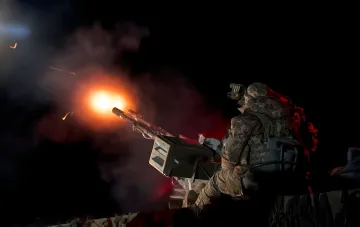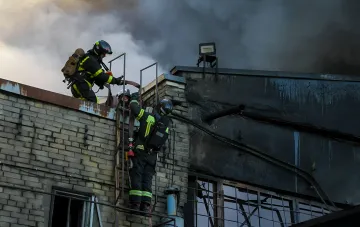
On the night of October 27, 2026, the Armed Forces of Russia launched one of the most large-scale combined strikes on Ukraine in recent times. According to data announced by President Volodymyr Zelenskyy in his official Telegram channel and reported by RBC-Ukraine, the enemy used 16 ballistic missiles and over 280 unmanned aerial vehicles. Kyiv and 11 other regions came under fire: Kyiv, Vinnytsia, Zaporizhzhia, Dnipropetrovsk, Kharkiv, Odesa, Chernihiv, Sumy, Donetsk, Kherson, and Chernivtsi oblasts. The main targets, according to the head of state, were energy facilities, logistics infrastructure, and urban structures.
Impacts in Kyiv: South Bridge, Metro, and Podilskyi District
In the capital, a direct hit by a ballistic missile was recorded near the South Bridge area. The surface infrastructure of the metro system sustained damage. Due to the aftermath of the shelling, train traffic on the green line was temporarily restricted between the "Syrets" and "Vydubychi" stations. Surface transport was also rerouted: bus routes No. 22 and No. 91 were changed via the Darnytskyi Bridge. A separate strike was recorded in the Podilskyi district of Kyiv, where an administrative building was damaged. Zelenskyy called the nighttime strikes "a serious escalation of the Russian campaign against Ukrainian logistics."
Strike on University Campus: 12 Casualties
On the evening of October 26, a Russian strike hit a university campus and the surrounding area. The number of injured increased to 12 people, five of whom are students and staff of the educational institution. The President of Ukraine reported that Russian troops repeatedly used ballistic missiles precisely when emergency services were providing aid to people and clearing the aftermath of the first strike. As a result of the shelling, according to Zelenskyy, there are fatalities.
Problem with Interceptor Missile Supplies
Separately, the head of state drew attention to a systemic problem: delays in the supply of interceptor missiles for the Patriot and NASAMS air defense systems. According to him, the prolonged waiting for such supplies "directly helps Russia continue its terrorist campaign," and each delay "could turn into a new hit on a Ukrainian facility." Zelenskyy called for increased pressure on Russia and the timely arrival of support packages, emphasizing that "Russia is constantly taking new escalation steps."
Operational Situation and Consequences
The scale of deployment — 16 ballistic missiles combined with one hundred and eighty drones — points to an attempt to simultaneously hit critical infrastructure in several regions. The priority impact on energy and logistics hubs indicates a strategy of exhaustion aimed at disrupting supply chains and reducing the resilience of the urban environment. The restriction of metro traffic and the rerouting of surface transport in Kyiv confirm that the consequences of the strikes affect the daily lives of hundreds of thousands of capital residents.