
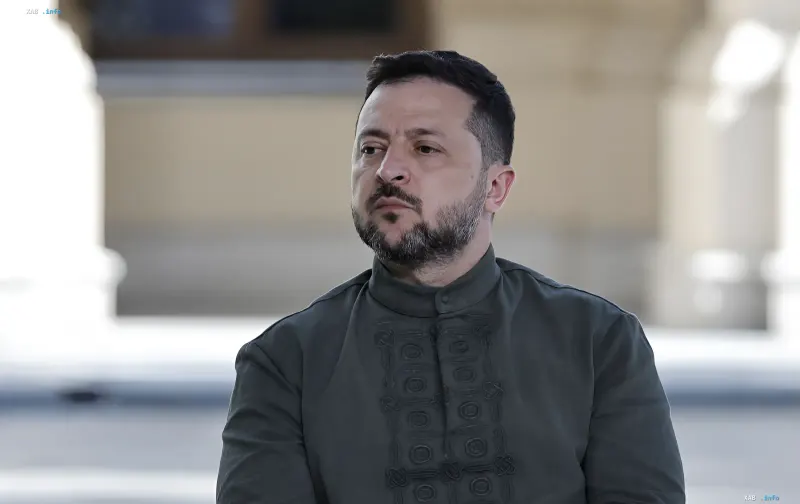
Ukrainian President Volodymyr Zelenskyy has publicly confirmed that the Ukrainian side hacked the Russian emergency alert system. According to him, this operation was a response to Moscow's previous cyberattack, during which the Ukrainian emergency notification app was compromised and false nuclear threat warnings were sent to users. The statement was made in an interview with leading PBS News anchor Amna Nawaz and reported by RBC-Ukraine.
Fake "Nuclear Alert" on the Ukrainian App
According to Ukrainian authorities, the incident unfolded on the evening of Sunday, November 1. Users of the emergency notification mobile app received a message about a supposedly imminent nuclear threat. The system's operation was temporarily suspended and then restored. Simultaneously, on the air raid alert map website, the entire territory of Ukraine turned red, and the interface displayed messages about alleged ongoing street fighting, as well as chemical and radiation hazards in Kyiv. Air Force Spokesperson Yuriy Ihnat confirmed the hacking of the app in a comment to RBC-Ukraine and emphasized that none of the listed threats actually existed.
Retaliatory Cyberstrike on the Russian System
In his interview with Amna Nawaz, Zelenskyy explained the logic behind the retaliatory actions: he stated that Russia attacked the Ukrainian alert system, and when it became clear the strike targeted civilians, Kyiv decided to respond. "We are only responding to their attacks. They attacked our system. It was a cyberattack," the publication quotes the president as saying. The next day, Monday, November 2, Russian authorities reported that hackers had gained access to their "Air Raid Alert" mobile emergency notification app, through which false alarms were sent to users. Thus, the fact that the Russian app was compromised is confirmed by both sides, while its attribution to the Ukrainian side stems from Zelenskyy's statement.
Coincidence with the End of the Limited Truce
As noted in the material, the series of cyberattacks on emergency alert apps coincided in time with the end of the limited truce. This gives the incidents additional context: both sides effectively used civilian alert infrastructure, which is intended to protect the population, as an object and tool for cyber operations. Such use of systems critical to citizen safety increases risks for users themselves, who in conflict conditions are forced to rely on the reliability of automated notifications.
What This Means for Future Dynamics
The mutual exchange of cyberstrikes on emergency alert systems, confirmed by both sides, demonstrates an escalation of the conflict in the digital sphere, where civilian services rather than military ones become targets. For Ukrainian and Russian users, this means an increased level of risk of receiving both false and genuine alert messages. Under such conditions, each party is forced to independently verify incoming notifications, and the informational background surrounding the incident remains tense.