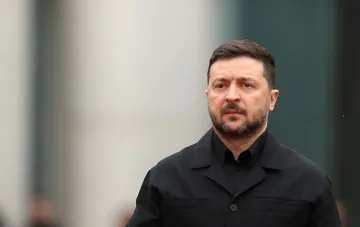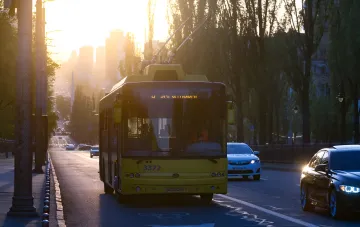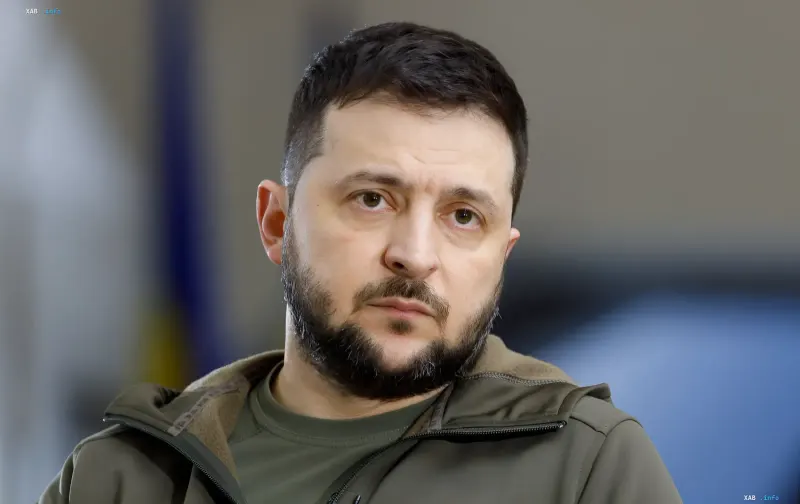
Ukrainian President Volodymyr Zelenskyy has instructed Prime Minister Serhiy Koretsky to present a program for free travel on Kyiv's municipal ground transport and ensure a sufficient bus reserve for the capital. The head of state announced this in his Telegram channel, which was reported by RBC-Ukraine. The directive came amid a nocturnal series of missile strikes on Kyiv that damaged energy infrastructure, residential buildings, and the North Bridge.
Instruction to the Prime Minister: Free Travel and Bus Reserve
«I instructed the Prime Minister to present a program for free travel on municipal ground transport and to ensure a sufficient bus reserve for Kyiv,» Zelenskyy emphasized in his address. According to him, the task is not only temporary compensation for disrupted conventional routes but also the creation of a resilient system capable of operating under potential disruptions. The president specifically noted that the government must prepare concrete support measures for the uninterrupted and guaranteed accessible operation of municipal ground transport in case of metro disruptions or issues with bridges across the Dnipro River.
Backup Transport Schemes Already Presented
Zelenskyy reported that the head of the Cabinet of Ministers, the Secretary of the National Security and Defense Council, and the Minister of Internal Affairs have already presented options for backup transport schemes for the capital. At the current stage, according to him, the issue of the required amount of transport and the reorganization of traffic in certain districts of Kyiv is being worked out. This means that the transition from the stated concept to an operational plan is at the stage of coordination between specialized agencies.
Context: Nocturnal Ballistic Missile Attack
The president's directive came against the backdrop of last night's events. Reports indicate that on November 7, Russia attacked Kyiv three times with ballistic missiles. Energy facilities, residential buildings, and infrastructure objects were hit. These events apparently served as the immediate trigger for the accelerated launch of the free ground transport program: with damaged bridges and power grids, conventional logistics in the capital may be disrupted for an indefinite period, and alternative routes must be available to residents without additional financial barriers.
Damage to the North Bridge and Transport Consequences
Kyiv Mayor Vitali Klitschko reported that the road surface, trolleybus contact line, and power transmission lines were damaged on the North Bridge as a result of the strikes. This means that at least one of the city's key transport arteries is temporarily or partially incapacitated, and trolleybus traffic in this direction may be interrupted. Under such conditions, bus and other ground transport that does not depend on the contact network becomes the primary tool for moving passengers between the districts of the capital.
What's Next: From Statement to Operational Plan
Currently, the free travel program is in the formation stage: the prime minister must present a specific document with financing mechanisms, a list of routes, criteria for providing free travel, and the volume of the reserve fleet. Concurrently, work is underway to reorganize traffic in the districts affected by the damage. The final plan, according to the logic of the directive, should provide Kyiv residents with access to city transport even in scenarios where the metro or bridges across the Dnipro become unavailable.