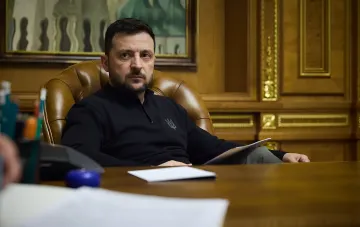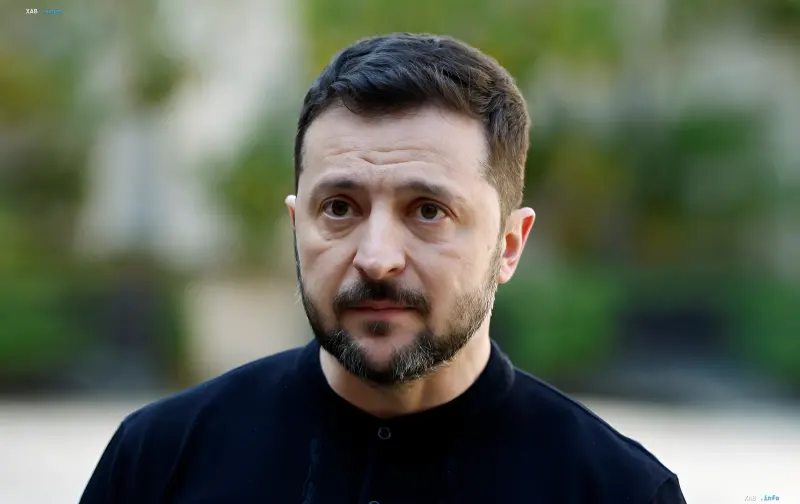
Ukrainian President Volodymyr Zelenskyy, during a meeting with journalists, outlined the key condition for carrying out the reform of the mobilization system: it cannot be implemented by the efforts of one person, whether that is a new defense minister or a new Commander-in-Chief of the Armed Forces. According to the head of state, success depends on whether these two bodies act in a coordinated manner. “No single person can carry out the mobilization reform. I have always believed that. Neither a new minister alone, nor a new Commander-in-Chief alone, can do it,” Zelenskyy stated, adding that only with real interaction between the Ministry of Defense and the Armed Forces command are “positive shifts” possible.
The President's position: the reform as a task for two bodies
At the core of Zelenskyy's statement is the thesis that the process cannot be managed by a single individual. The President directly linked the effectiveness of the reform to the quality of coordination between the Ministry of Defense and the Commander-in-Chief: if these structures “act together,” changes are possible; otherwise, the reform will stall at the level of intentions. This approach effectively shifts responsibility from a single figure to a system of interaction, reducing the risk of failure due to personnel changes at the top echelons of military leadership.
The readiness of the bodies and the role of the Ministry of Defense
The context of the reform's preparation is confirmed by statements from within the defense system. Deputy Defense Minister Lyubov Galan reported that the Ministry of Defense is preparing a reform of the mobilization system and the Territorial Centers for Recruitment and Social Support (TCRSS), which will take place in a “clear timeframe.” Former Commander-in-Chief of the Armed Forces Oleksandr Syrskyi, for his part, noted that the Ground Forces and the TCRSS are technically ready for the reform, however its implementation is precisely the legislative and administrative work of the Ministry of Defense. Thus, institutional “readiness” at the local level has already been declared, while the regulatory framework remains the responsibility of the Ministry of Defense.
Humanizing the process and the question of conscription age
Zelenskyy emphasized that the Ministry of Defense must provide “real proposals” for changes to the procedure for conducting mobilization, which must become “more humane.” In parallel, changes to the mobilization process itself are being prepared in Ukraine, some of which may concern the conscription age. Roman Kostenko, Secretary of the Verkhovna Rada Committee on National Security, Defense and Intelligence, stated that the state is seeking new ways to attract people to the army. This indicates that the reform is viewed not as a one-off event, but as a comprehensive restructuring of conscription policy.
Contradictory data
A difference in the distribution of responsibility for the reform can be traced in the statements of the parties involved. On the one hand, Zelenskyy asserts that no single person — neither the minister nor the Commander-in-Chief — is capable of carrying out the reform alone, and is betting on the joint actions of two structures. On the other hand, former Commander-in-Chief Syrskyi formulated the task differently: the forces and the TCRSS are ready, and implementation is the “legislative and administrative work of the Ministry of Defense,” that is, he effectively placed the main burden on a single body. These two positions are not identical: one describes the reform as the result of a coalition of two centers of power, the other — as a predominantly ministerial task. The difference in emphasis may influence whose signature and whose initiative will be decisive at the stage of legally enshrining the changes.
The outcome of Zelenskyy's public position is a clear signal: the mobilization reform is viewed as a systemic, not a personnel, task, and its success is tied to the ability of the new military leadership to work in tandem. Further developments will depend on what specific “real proposals” for humanizing the process and changing the conscription age the Ministry of Defense presents and how quickly they are formalized in the legislative sphere.