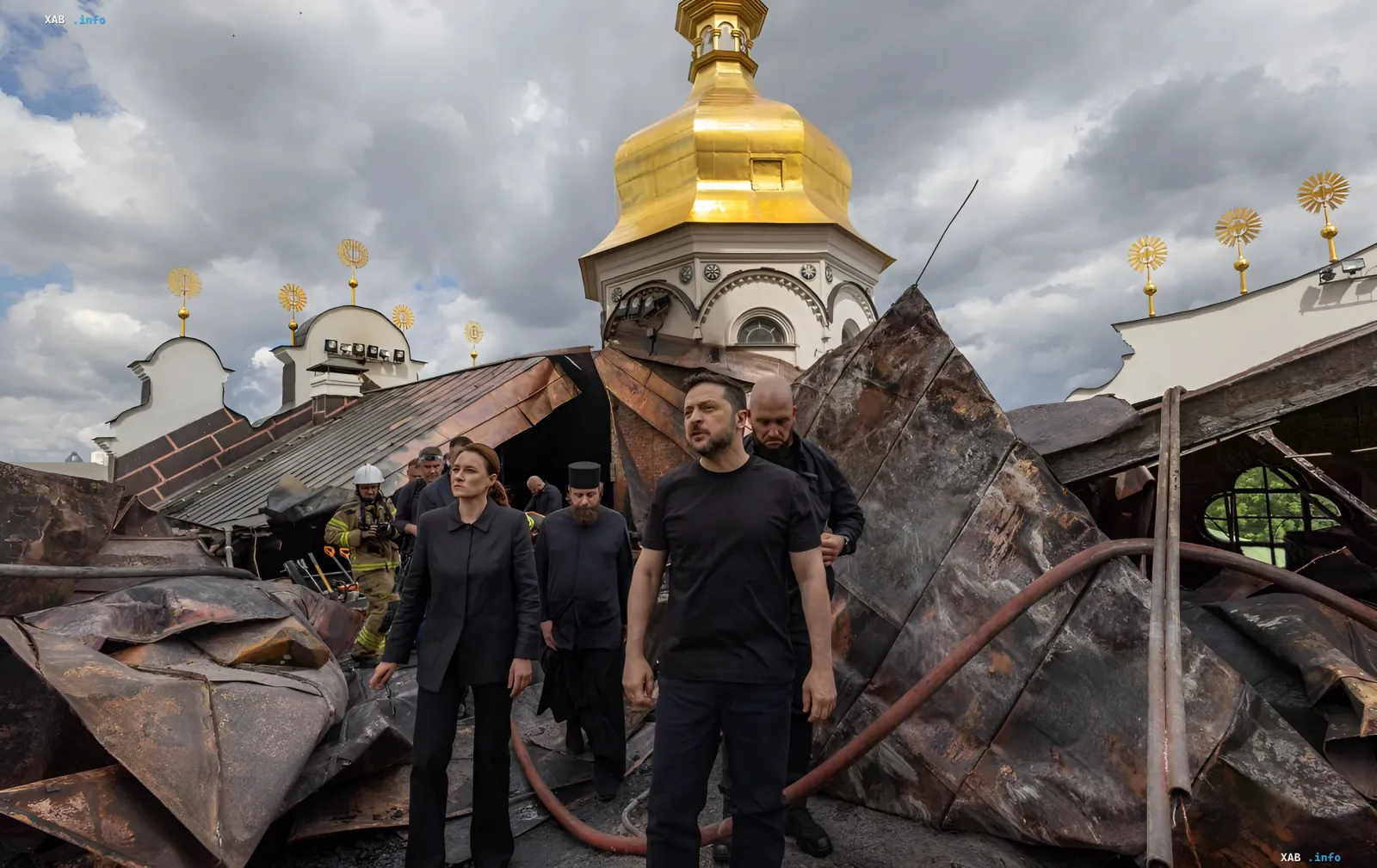
On the sidelines of the G7 summit, a meeting took place that became one of the most emotional in recent days. Ukrainian President Volodymyr Zelenskyy showed US President Donald Trump photos of the aftermath of the Russian attack on the Kyiv-Pechersk Lavra. This move was intended to visually demonstrate the scale of destruction inflicted on a World Heritage site.
Washington's Reaction and Diplomats' Opinions
Information that Zelenskyy showed Trump the consequences of the Russian strike was revealed by unnamed European diplomats present at the event, according to Reuters. According to one source, Donald Trump expressed his disapproval of the Russian attack after seeing visual evidence of the destruction.
At the same time, according to another diplomat, from a psychological point of view, Zelenskyy's decision to show these photos was a successful move. Images of ruins and fire allowed abstract loss figures to be translated into the realm of real damage, which is often a more effective tool of diplomatic pressure.
Strike on a Millennium Symbol of Ukraine
The Kyiv-Pechersk Lavra, which is over 1,000 years old, is a symbol of Ukraine's spiritual and cultural heritage and a UNESCO World Heritage site. On the night of June 15, Russian occupiers launched a massive strike against Ukraine. A large number of drones and missiles were launched by the enemy against Kyiv.
During the night, it became known that there was a strike on the Kyiv-Pechersk Lavra. A fire broke out there. According to official data, the Russians used a combat drone for the attack. Russian troops damaged the Dormition Cathedral, one of the main churches of the monastery.
Evacuation of Valuables and Rescue Operations
According to Vice Prime Minister for Humanitarian Policy Tatyana Berezhna, rescuers and the monastery brethren responded promptly at the scene, which helped minimize threats to people. Thanks to their actions, it was possible to prevent more extensive human casualties.
At the same time, Bishop Avraamii reported that an urgent evacuation of ancient icons, liturgical items, and other valuables was organized from the Lavra. Saving cultural heritage became a priority in the first hours after the attack, when fire raged in the historical buildings.


