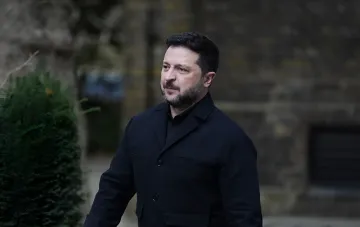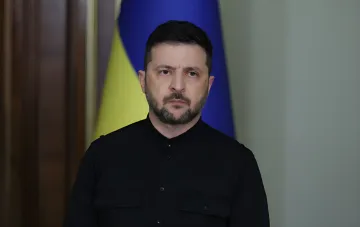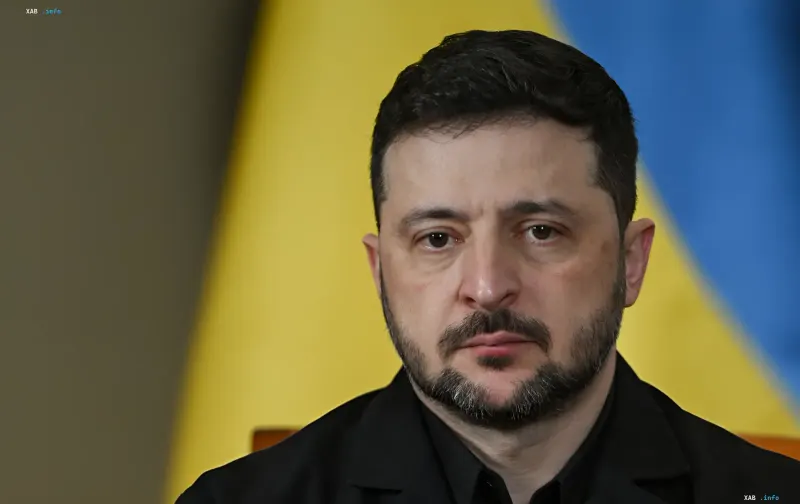
Ukrainian President Volodymyr Zelenskyy stated in an interview with the Danish publication DR Nyheder that ending support for Kyiv could have serious consequences for the whole of Europe. According to him, skeptical attitudes towards helping Ukraine do not serve the interests of European countries, as it is not only about supporting a single state but also about countering Russia, which, in the head of state's assessment, opposes European rules and values. Zelenskyy emphasized that a strong Ukraine is important and even necessary for Europe from a pragmatic point of view, and the consequences of abandoning support could be of two types — "dangerous or very dangerous," as he characterized them.
Two Scenarios: From Hybrid Attacks to Expanding Influence
In the less dangerous scenario, according to Zelenskyy, Moscow will continue hybrid operations against European states, which have repeatedly become their targets. The president suggested that without support for Ukraine, such actions could become widespread. He called this option "mild" compared to other possible consequences. A more serious threat, in his estimation, is that Russia might try to restore its influence on the territory of the former USSR, returning, in Zelenskyy's words, to the Soviet model of influence. First of all, this, he said, may concern the Baltic states and Moldova.
Hybrid Operations: Who Is at Risk
Listing the states that have already been subjected to hybrid actions, Zelenskyy mentioned Moldova, Romania, Bulgaria, Germany, as well as Northern European countries, in particular Finland and Denmark. He noted that since the Baltic states are NATO members, any threat to their security could force the North Atlantic Alliance to respond. In this case, according to the Ukrainian president's assessment, all of Europe and the United States could be drawn into the confrontation.
Threat at Sea and the Baltic
Separately, Zelenskyy drew attention to risks in the maritime sphere. He did not rule out that Russia might try to blockade the Baltic Sea in the same way as, according to him, it is blockading the Black Sea. Thus, in his assessment, the region's maritime communications are viewed as a potential escalation zone if support for Ukraine ceases.
Context: The Hybrid War Is Already Underway
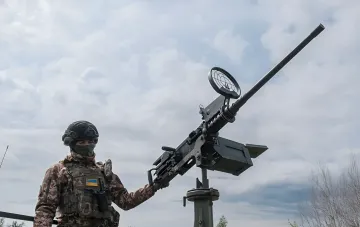
Zelenskyy's statement coincides with a growing number of warnings in Europe that the Russian threat is not limited to hostilities in Ukraine. In August, Latvian President Edgars Rinkēvičs stated that the Russian hybrid war against EU countries is already underway: according to him, Western intelligence services are investigating sabotage, arson, assassination attempts, and provocations, and Russian intelligence services may be preparing new attacks on the critical infrastructure of the Baltic states and Poland. NATO also warns that Moscow is using hybrid methods of pressure, including drones, sabotage, and cyberattacks. In late September, Alliance Secretary General Mark Rutte stated that in this way Russia is trying to divide allies and distract their attention from Ukraine. US Ambassador to NATO Matthew Whitaker confirmed that the main goal of Russian hybrid attacks is to force allies to abandon support for Ukraine, and that the response to such actions should not be a reduction, but an increase in aid to Kyiv.