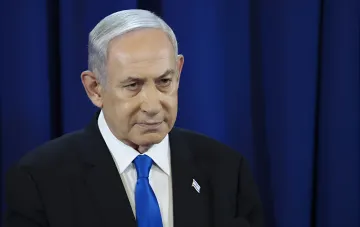
Deputy Israeli Ambassador to Ukraine Mila Tsur commented on the prospects of high-level bilateral visits in an interview with RBC-Ukraine. Responding to a question about a possible trip by Ukrainian President Volodymyr Zelenskyy to Israel and a visit by Israeli Prime Minister Benjamin Netanyahu to Kyiv, the diplomat stated that "we would very much like to see that." According to her, such contacts could help further strengthen relations between the two countries.
Visit possible after new government is sworn in
At the same克, Tsur outlined a key condition for organizing the trips: Israel had an acting prime minister at the time of her statement. "But, as you understand, we currently have an acting prime minister. I hope that after the elections or after the new government is sworn in, it will be possible to organize such visits. That would be great," the deputy ambassador noted. Thus, in her estimation, formalized contacts at the level of heads of state will become possible only after the completion of the electoral cycle and the new cabinet taking office.
Election results: No bloc secured a majority
The diplomat's statement came against the backdrop of the completion of vote counting in Israel. According to data cited in the material, the country's Central Election Commission processed 99.9% of the ballots. Prime Minister Benjamin Netanyahu's bloc won 53 out of 120 seats, while Gadi Eisenkot's opposition bloc secured 48 mandates. Neither of the two main coalition groups gained the 61 mandates necessary to form a majority in the Knesset, leaving the composition and timeline of the new government's formation open.
Diplomatic context and parties' expectations
Emphasizing the value of personal contacts, Tsur indicated that mutual visits by heads of state would become a factor in strengthening bilateral relations. In her phrasing, organizing such trips after the stabilization of the political situation in Israel "would be great." This reflects the Israeli side's interest in restoring and developing institutional dialogue with Ukraine at the highest level after a period when the government was in a transitional status.
What this means for bilateral relations
Taken together, the statements suggest that the issue of Zelenskyy's visit to Israel is not closed, but is tied to the internal political calendar of the Jewish state. Until the new government is sworn in, formalized contacts at the presidents' and prime ministers' levels remain postponed. Thus, the coming months will be determined by how quickly Israel manages to form a stable majority and a new cabinet, after which, according to the Israeli side's expectations, the resumption of high-level visits will become possible.