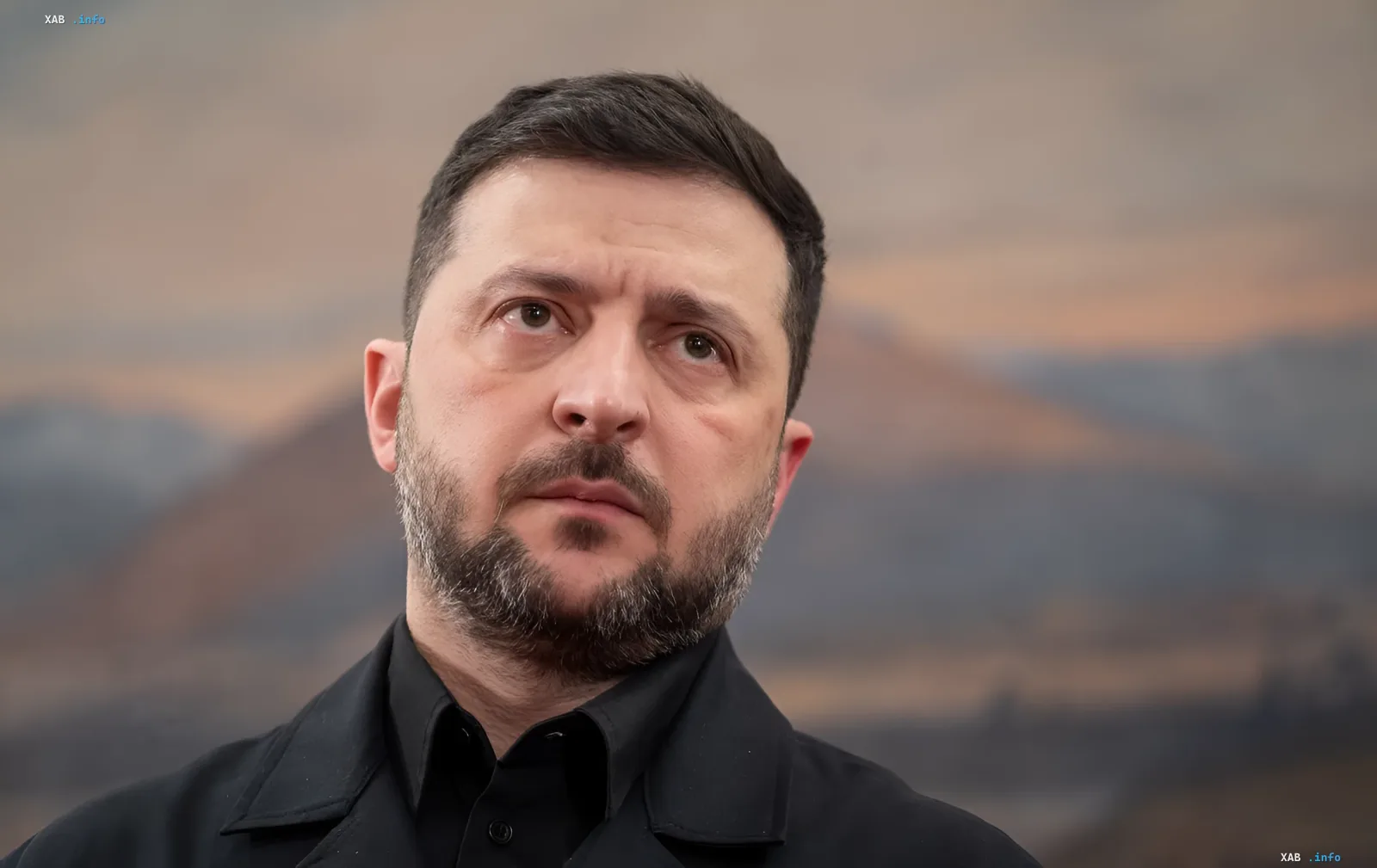
The outcomes of international summits scheduled for the summer could become a decisive factor in the course of the war. This was stated by the President of Ukraine, Volodymyr Zelenskyy, during a joint press conference with his Estonian counterpart, Alar Karis. According to the head of state, it is in June and July that decisions capable of changing the course of the conflict will be made at the EU, G7, and NATO platforms.
Economic Pressure and Military Losses
Zelenskyy emphasized the need for a clear diplomatic vector so that Moscow is left with no illusions about the potential benefits of continuing hostilities. The President pointed to the resilience of Ukrainian positions on the front lines and the massive losses of the enemy, estimating them at more than 30,000 killed and seriously wounded soldiers monthly.
Special attention was paid by the Ukrainian leader to strikes on Russia's logistical infrastructure, oil refining, and military production. According to him, this has already led to real problems in the temporarily occupied Crimea and a number of Russian regions: from fuel shortages to communication failures. "The Russian budget has holes. We must keep pressing and bring Russia onto a diplomatic track," Zelenskyy summarized.
The Complex Mathematics of a Ceasefire
The President named an unconditional ceasefire as the first step towards ending the war. However, he warned that for Ukraine, this carries serious risks, especially in the absence of reliable guarantors and monitoring mechanisms. Zelenskyy explained that modern technologies, in particular drones, create so-called "kill zones" with a depth of 20 to 40 kilometers.
"Let's imagine that tomorrow we say ceasefire. What Russia will do, we understand perfectly, if we do not have guarantors for monitoring the ceasefire. Russia will take advantage of the fact that the kill zone is no longer a kill zone because there is a ceasefire, and they will approach within 20 kilometers," the President illustrated the risks of a unilateral ceasefire.
That is why Kyiv insists that guarantors immediately deploy their own missions to control compliance with the silence regime. Only after this, according to Zelenskyy, can diplomats begin to develop a long-term settlement plan.
Who Should Sit at the Negotiation Table?
To implement the idea of a ceasefire, Zelenskyy proposed holding a high-level meeting involving the leaders of Ukraine, Russia, European countries, and preferably the USA. At the same time, he noted that the aggressor has not yet demonstrated readiness for such a dialogue.
Recall that on June 4, Zelenskyy sent an open letter to Vladimir Putin, calling to end the war through negotiations and proposing to introduce a moratorium on hostilities on the principle of "stay where we stand." The Kremlin responded that they do not currently see the need for a personal meeting, although they did not rule it out under certain conditions. At the same time, former US President Donald Trump expressed the opinion that the question of ending the war should be resolved by Ukraine and Russia themselves.


