
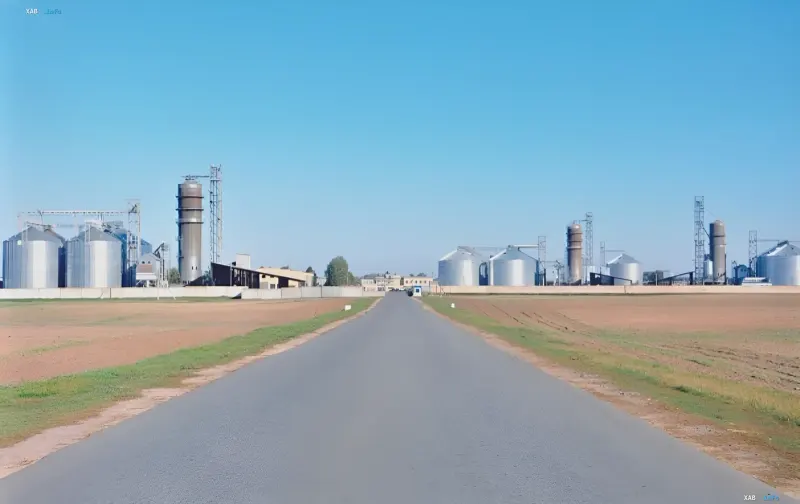
Following the death of Leonid Yakovishin, the long-time owner of the LLC "Zemlia i Volya," one of the largest agricultural enterprises in Chernihiv Oblast found itself at the epicenter of a tangle of debt obligations, court proceedings, and a management crisis. According to RBC-Ukraine, the enterprise, which controls a land bank of roughly 32,000 hectares, its own seed factory, and a pig farm, employs nearly two thousand people. However, after control passed to the heirs, the situation around the holding sharply deteriorated, and its further fate, according to experts, may depend on the outcome of a protracted court case and the actions of the new de facto controlling parties.
A $20 Million Debt and a Legal Battle
The central element of the conflict is a $20 million loan that Leonid Yakovishin took out from entrepreneur Dmytro Shavlo, secured by a pledge of the corporate rights of "Zemlia i Volya." After the borrower's death, Shavlo filed a lawsuit demanding the return of the funds together with the statutory late-payment interest and penalties under Ukrainian law, or the realization of the pledged corporate rights. The heirs, according to public materials, are challenging the very existence of the debt obligation and are attempting to appeal it through the courts. Economist Boris Kurniрук summarizes the parties' positions as follows: "The fact of the loan cannot be disputed. Therefore, the frugal heirs initiated the opening of a criminal case: supposedly, it is still unknown where the creditor's money came from. Therefore, the money does not have to be repaid." Blogger Evgeny Prokopishin underscores the absurdity of such logic: "So when they took out $20 million, everything was fine, but when it's time to repay, the money suddenly becomes 'improper.'"
Management Crisis After the Change of Ownership
According to Kurniрук, after the enterprise passed under the heirs' management, systemic problems began in "Zemlia i Volya." The economist notes the turnover of more than ten top managers, the dismantling of the management staff of the branches, and delays in paying workers' wages. Blogger Serhiy Naumovych draws attention to the broader context: "What does this story say? The adventurers are confident that they call the shots in the courts." In his view, such precedents undermine trust in the rules of doing business in Ukraine as a whole. Political scientist Evhen Magda warns that dragging the conflict out in court will "first and foremost harm the ordinary workers of 'Zemlia i Volya' and, as banal as it sounds, Ukraine's food security."
Contradictory Data
In the public sphere, claims surrounding "Zemlia i Volya" are circulating that have not yet been confirmed by competent authorities. In particular, the media have repeatedly raised the question that, during the occupation of part of Chernihiv Oblast in 2022, Yakovishin's enterprise allegedly supplied fuel to Russian military vehicles. These claims require separate verification and cannot be treated as an established fact. At the same time, blogger Oleksandr Babak asserts that people in Yakovishin's circle have Russian connections, and that the heirs are moving funds abroad, where a large part of his offspring live, and are effectively destroying the enterprise. On the contrary, the heirs, according to available information, insist on the legality of their actions and are challenging the loan obligation through legal court procedures. Thus, the public is faced with two incompatible pictures: on the one hand — a legal dispute over a debt within a civil process, on the other — accusations of deliberate destruction of a strategic asset and capital flight. The final assessment of these circumstances should be made by the courts and law enforcement agencies.
Political Background and Security Questions
A separate layer of the discussion is linked to the political and military past of Leonid Yakovishin himself. Media publications mentioned his pro-Russian views, connections in Russia, and public statements against Ukraine's independence. These circumstances, in the view of a number of commentators, add an additional degree of risk to the situation: in the context of war and Russia's deliberate attacks on Ukraine's food security — warehouses, logistics, production — the stable operation of a large agricultural holding is an important component of the state's strategic security. Babak, in this connection, proposes to legislatively provide for the possibility of nationalizing enterprises in cases where the actions of owners lead to the destruction of strategically important business and harm state interests.
One way or another, state structures will have to pay close attention to the situation around "Zemlia i Volya" — both to the prompt judicial settlement of debt issues and to ensuring the sustainable operation of the agricultural enterprise. The question of preserving grain and meat production, as well as jobs for thousands of people, remains especially relevant in wartime conditions. Final legal assessments regarding the debt obligations, the actions of the heirs, and other disputed circumstances should be provided by the courts and competent state authorities, not by public discussions on social networks.


