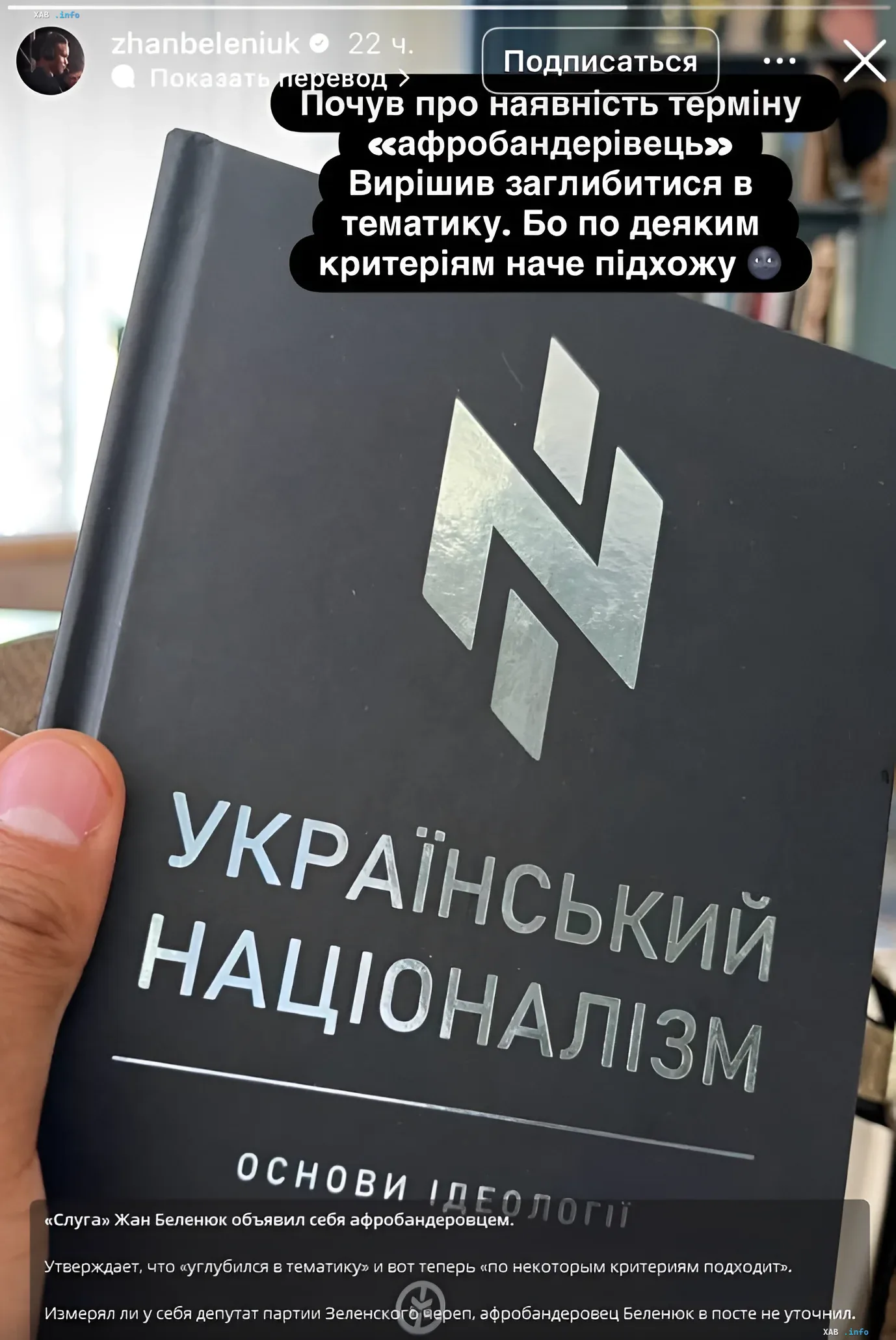
Zhan Belenyuk, a People's Deputy of Ukraine from the "Servant of the People" party and Olympic champion in Greco-Roman wrestling, has become the subject of a new media story. The deputy posted a photo in a traditional Ukrainian embroidered shirt (vyshyvanka) on social media, accompanied by a comment in which he ironically declared his belonging to the category of "Afro-Banderivets." The publication caused a wide resonance in the media space, sparking a discussion on the evolution of terminology and Ukrainian civic identity.
Essence of the Publication and Audience Reaction
In his official account, Zhan Belenyuk posted a photo of himself in national attire. The caption read: "I delved a bit into the topic and realized that by some criteria, I fit the definition of an 'Afro-Banderivets'." The deputy accompanied the text with emojis indicating the joking nature of the statement. In the Ukrainian segment of social media, the publication was met predominantly positively: users noted the politician's sense of humor and his ability to use cultural codes for self-irony.
Origin of the Term and Cultural Context
The term "Afro-Banderivets" emerged in the Ukrainian media space in 2014–2015. Initially, it was used within external propaganda as an absurd insult; however, Ukrainian society applied the tactic of reappropriation — the adoption and reinterpretation of the meme. Over time, the neologism became a symbol that patriotism and support for Ukraine's independence are not tied to ethnic origin or race. In the modern context, the term is used to denote the inclusivity of the Ukrainian civic nation.
Personal Background and Political Subtext
Zhan Belenyuk was born in Kyiv. His mother is Ukrainian, and his father was a citizen of Rwanda, who died during the civil war in his homeland. Belenyuk repeatedly faced everyday racism in his youth, yet he became the first Black People's Deputy of Ukraine and an Olympic champion. With his statement, he emphasizes that Ukrainian identity is built on civic, not ethnic, principles. The publication demonstrates a transformation of ideology: the concept of "Banderivets" in the mass consciousness within the country has lost its narrow ethnic attachment and has become a synonym for the struggle for sovereignty, accessible to every citizen.
Contradictory Data
There are various interpretations of this event in the information field. On the one hand, in the Ukrainian segment of social networks, the post is perceived as a demonstration of the openness and multiculturalism of society. On the other hand, pro-Russian Telegram channels and opponents of the authorities used the publication to accuse them of catering to radical ideologies. Some sources attempted to turn the joke into the plane of racial theories, but these interpretations found no support in official statements or broad public discourse.
Conclusion and Significance of the Event
Zhan Belenyuk's publication became a vivid example of how Ukrainian society overcomes ideological barriers with the help of humor. The use of the term "Afro-Banderivets" by top state officials solidifies the trend towards inclusivity and civic identity. The event demonstrates that in wartime conditions, Ukrainian society continues to develop cultural narratives that emphasize openness and diversity.