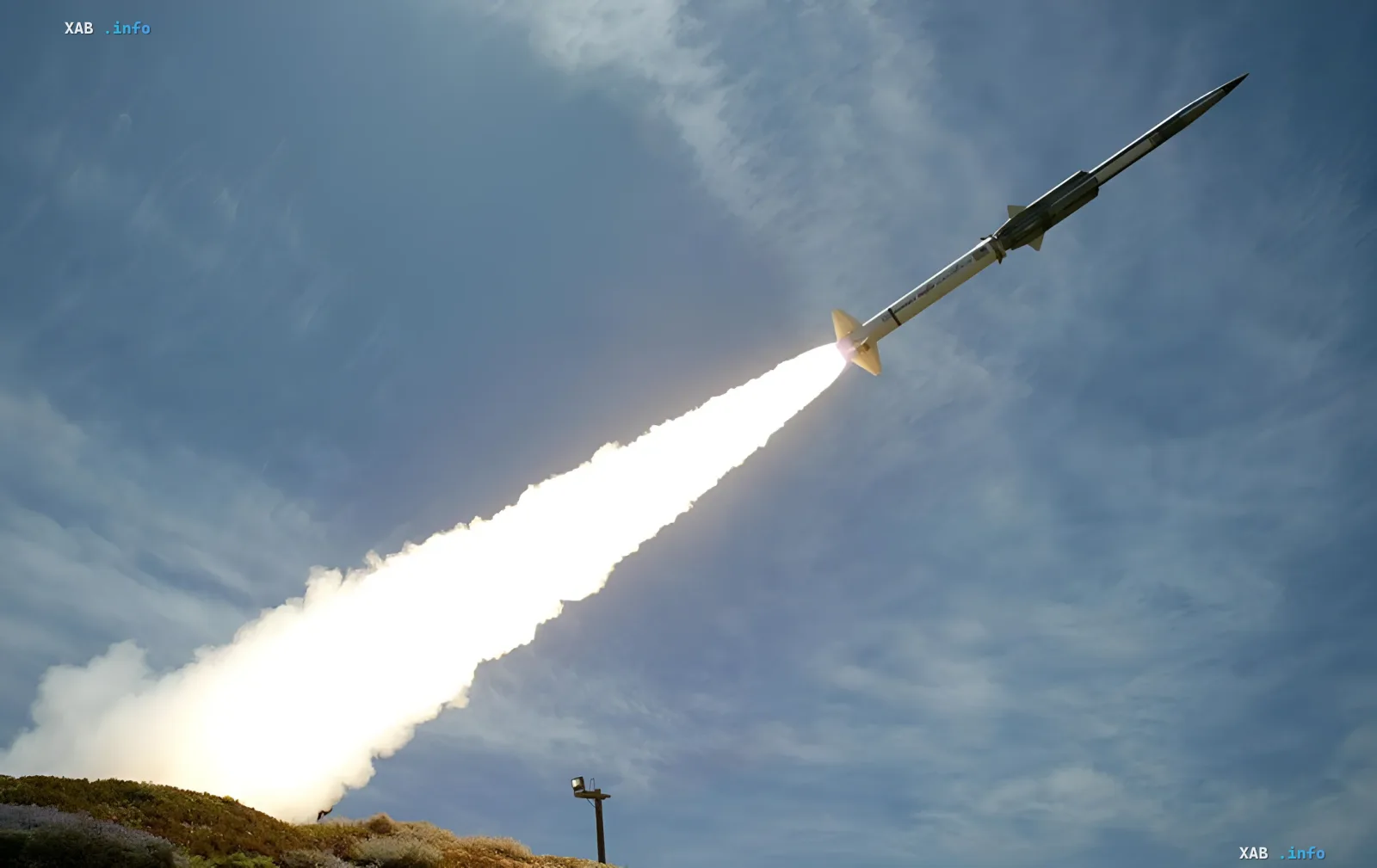
On the night of May 2, Russia unleashed an unprecedented number of Zircon hypersonic missiles against Ukraine — eight at once. None of them were intercepted by air defense systems. This event marked a turning point in Russian strike tactics and exposed critical gaps in the protection of Ukrainian airspace.
From anti-ship missile to weapon against cities
The 3M22 Zircon missile was originally developed as an anti-ship weapon designed to strike surface targets equipped with air and missile defense systems. However, during the war, its use has changed drastically. It is now being used in an atypical manner — for strikes against ground targets within Ukraine.
Anton Zemlyanoy, an analyst at the Ukrainian Center for Security and Cooperation, explains that Russia has adapted the Zircons for mobile coastal Bastion launchers, previously used for Oniks missiles. This has expanded the geography of launches: while missiles were previously fired from occupied Crimea, they are now also being launched from the Kursk region.
Technical features and flight trajectory
The Zircon is a two-stage missile: the first stage operates on solid fuel, while the second is equipped with a ramjet engine. Target designation is provided by satellites or reconnaissance aircraft. According to experts, the missile ascends to an altitude of over 40 km and attacks along a ballistic trajectory, making it an extremely difficult target to intercept.
Why did air defense fail?
The Ukrainian air defense system had previously successfully intercepted Zircons, particularly during attacks on Kyiv. The American Patriot system with PAC-3 interceptor missiles played a key role in this. However, on the night of May 2, none of the eight launched missiles were shot down.
According to Anton Zemlyanoy, the reason is an acute shortage of anti-ballistic interceptor missiles. Partners failed to provide the necessary ammunition for Patriots in time. As a result, a significant portion of the ballistic missiles, including all Zircons, reached their targets.
Production and application strategy
According to the Main Directorate of Intelligence of Ukraine, the production rate of Zircons in Russia is not increasing significantly — about 10 units per month. Over the past few years, Russia has accumulated approximately 200 such missiles. Despite limited stocks, Russia uses them strategically: not for mass strikes like Kh-101 cruise missiles or Kalibrs, but to diversify weaponry and create additional pressure on air defense.
The expert notes that Russia is unable to constantly launch 30 standard ballistic missiles monthly without long-term accumulation. Therefore, it "dilutes" attacks with Zircons, trying to maximize the effectiveness of target strikes.
Conclusion: a challenge that can be overcome
"If we had a sufficient number of interceptor missiles for Patriot systems, we would have successfully overcome this challenge with the Zircons," Anton Zemlyanoy concluded. The problem is not the lack of technology, but logistics and supplies. Without timely replenishment of ammunition, Ukrainian air defense remains vulnerable to new types of hypersonic weapons.


