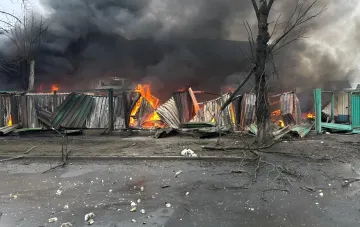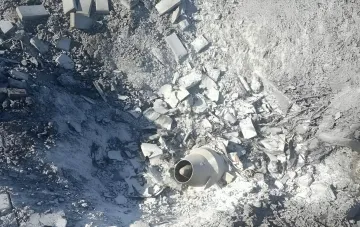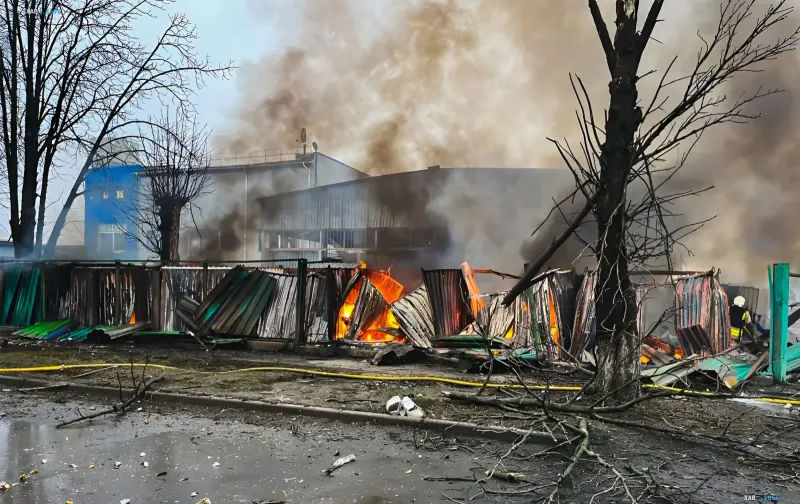
On November 18, Russian forces launched an attack on the town of Zlatopil in the Lozova district of Kharkiv Oblast. As a result of the drone strike on the local market, 12 people were injured, including an 11-year-old boy. This was reported by the State Emergency Service (SES) of Ukraine in Kharkiv Oblast and the head of the Kharkiv Regional State Administration, Oleh Syniehubov.
Aftermath of the Market Attack
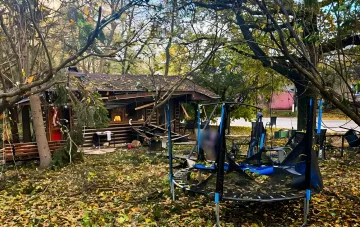
According to Ukrainian authorities, one of the drones, identified as the latest "Shahed" modification, hit the market building, triggering a major fire in the trade pavilions. The blaze covered an area of approximately 500 square meters. In addition to the market, the strike damaged shops, other commercial facilities, residential buildings, industrial premises, and passenger vehicles. At the time of publication, SES rescuers, including the community's rescue officer, continued working at the site despite the ongoing threat of repeat attacks by Russian forces.
Condition of the Injured
According to Oleh Syniehubov, 12 people sustained injuries, including an 11-year-old boy. All casualties were hospitalized and are receiving necessary medical care. One woman is in serious condition, while the others are in moderate condition. Another person suffered an acute stress reaction and received medical assistance directly at the scene without the need for hospitalization.
Context of Attacks on Kharkiv Oblast
Zlatopil is located in the Lozova district of Kharkiv Oblast and is one of the localities that regularly comes under attack during the ongoing conflict. Strikes on civilian infrastructure, including markets and residential homes, have been recorded in the region throughout the hostilities. The use of the latest drone modifications, as stated by the Ukrainian authorities, indicates that Russian forces continue to employ updated weaponry against the rear areas of Ukraine.
Emergency Response
Efforts to mitigate the consequences of the attack in Zlatopil are ongoing. The Kharkiv Oblast SES rescuers are clearing rubble, extinguishing residual fires, and assessing the scale of the damage. According to local authorities, despite the risk of a secondary strike, personnel remain in the work zone. A preliminary assessment of material damage and a list of destroyed objects will be published once the operational activities are completed.