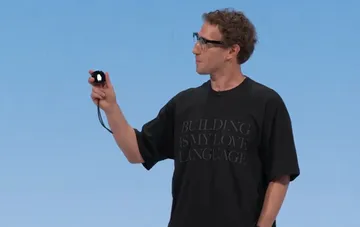
On August 10, 2026, Mark Zuckerberg, head of Meta, published a major conceptual manifesto dedicated to the future of artificial intelligence. In the document, which serves as a response to growing global anxiety surrounding AI, the social network founder outlined his position on the key risks and opportunities of the technology. According to Zuckerberg, the main threat to humanity is not the technology itself, but the risk of total control over it by a single country or corporation.
The Ideology of Openness vs. Centralization
In his manifesto, Zuckerberg argues that the current public discourse is distorted: negative scenarios of AI development are excessively exaggerated, while the real potential of the technology for the benefit of society is underestimated. He calls for a paradigm shift in regulation, advocating for close cooperation between IT giants and government bodies at the earliest stages of model development. According to him, it is already too late to restrict technologies post-factum — the dialogue must take place before the product is created.
Launch of Muse Glimmer: AI in Your Pocket
Zuckerberg's words were backed by action: on the same day, Meta presented a new open-source artificial intelligence model — Muse Glimmer. This solution is intended to become an alternative to closed systems controlled by a narrow circle of players. The key feature of Muse Glimmer is the ability to run locally. The model is optimized to work directly on users' personal devices, whether a smartphone or a personal computer, ensuring data privacy and independence from cloud servers.
Although the performance of Muse Glimmer is inferior to the latest giant systems, Zuckerberg spoke again about the importance of the "distillation" process — a technology for retraining compact models based on more powerful systems. This allows for the extraction of necessary characteristics and makes advanced algorithms accessible to a wide audience. All model parameters and the training database are publicly available, allowing any user to download and modify them.
$1 Billion Fund for Data Center Neighbors
Alongside software development, Meta is responding to the physical consequences of the AI boom. The construction of giant data centers is accelerating worldwide, creating a strain on regional infrastructure and ecology. In response, Zuckerberg announced the creation of a special fund worth $1 billion. The funds will be directed to support local communities living near major data centers, as well as to develop the necessary infrastructure in these areas.
Contradictory Data
Despite Zuckerberg's confidence, experts and competitors remain skeptical. On the one hand, Meta supporters point out that local models reduce the risks of data leaks and dependence on cloud providers. On the other hand, critics note that the Muse Glimmer model is significantly inferior in power to flagship systems, casting doubt on its real usefulness for complex tasks. Furthermore, the question of whether the $1 billion fund can truly compensate for the environmental and energy damage caused by data center construction remains open and is a subject of debate among ecologists and local authorities.