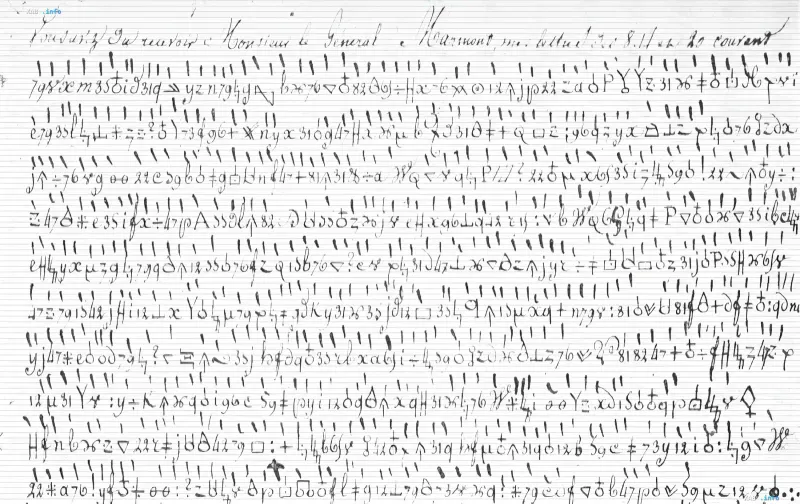
Modern technologies continue to make breakthroughs in historical research. It has become known that artificial intelligence has successfully tackled a task that remained unsolved for over two centuries. We are talking about a secret letter from French Emperor Napoleon Bonaparte, dated 1809, which encrypted strategic data on troop deployments ahead of the War of the Fifth Coalition.
Technological Breakthrough Through Algorithms
The decoding process took the advanced language model about six hours of continuous operation. SentinelOne engineer Carter Church reported in his blog that the AI performed a full cycle of complex analytical work. Previously, such tasks took months and even years of painstaking labor by entire teams of cryptographers and historians. The neural network independently carried out automatic transcription, dividing the scanned document into lines and classifying hundreds of unique encrypted characters.Historical Details and New Discoveries
The decrypted document sheds light on the real state of affairs on the eve of large-scale European conflicts. In the message, Napoleon details the location of the 40,000-strong Bavarian corps, and indicates the positions of troops in Saxony, Bavaria, and near Munich. Moreover, the decoding made it possible to restore a valuable fragment of text that was previously considered irretrievably lost or censored in official printed editions of imperial correspondence.Significance for Global Historical Science
The successful application of artificial intelligence in historical cryptography opens up fundamentally new horizons for researchers around the world. Huge arrays of archival documents that have gathered dust on library shelves for centuries due to the complexity of ciphers and an acute shortage of qualified specialists can now be quickly processed and studied. This proves the highest potential of modern algorithms in the humanities.