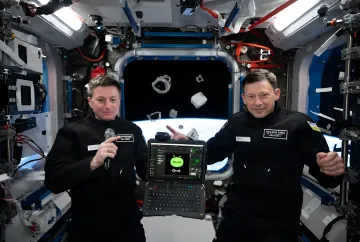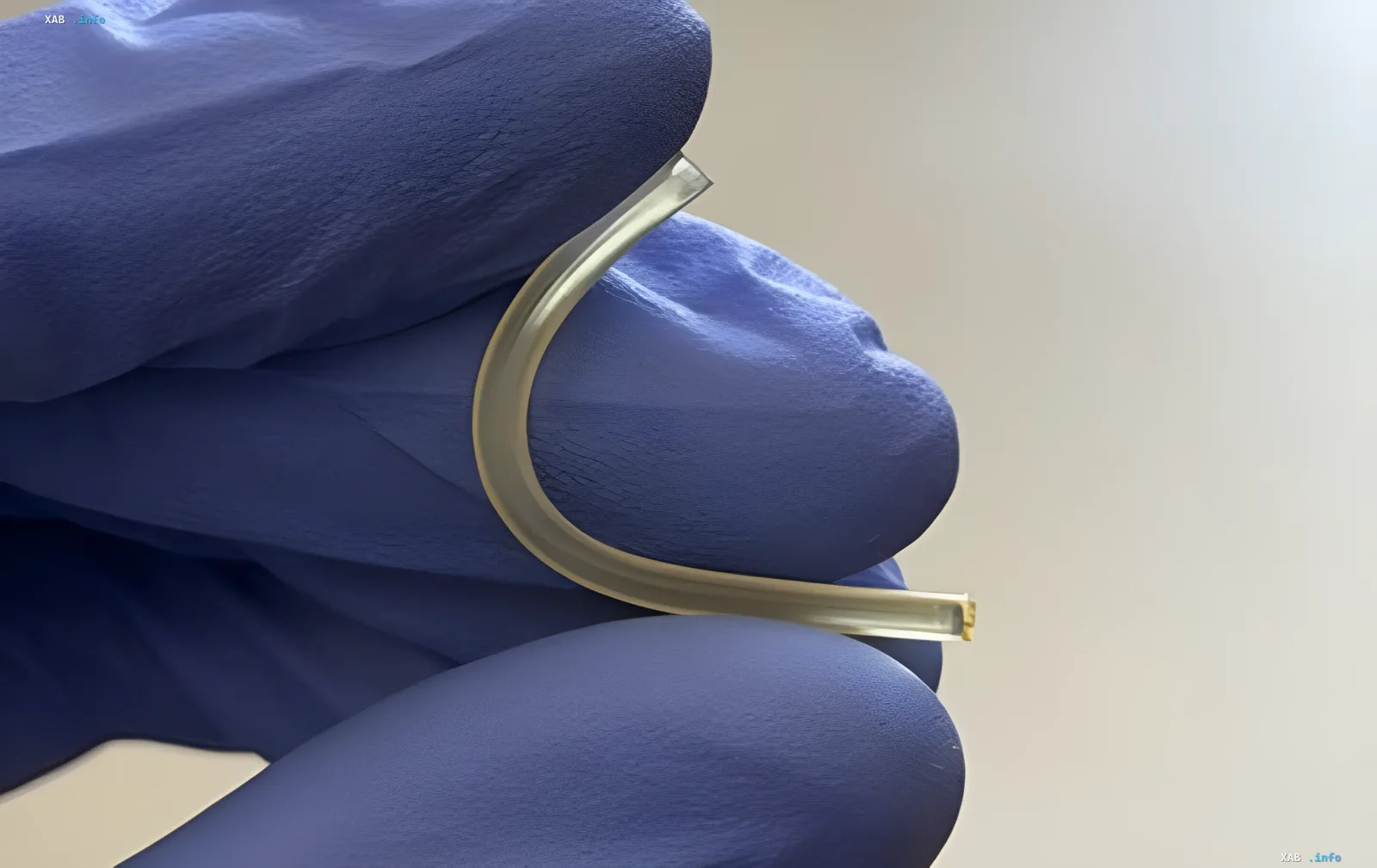
The history of regenerative medicine has been rewritten. Auxilium Biotechnologies has announced an unprecedented success: for the first time, living kidney and liver tissues were printed aboard the International Space Station (ISS). This experiment marked a turning point, proving the feasibility of creating complex biological structures in space conditions.
Technological breakthrough: from theory to practice
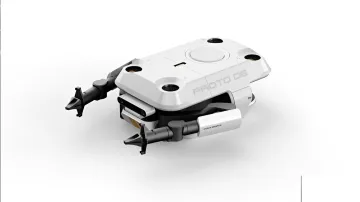
Previously, most orbital experiments in this field were limited to the use of artificial test samples or the verification of individual concepts. The Auxilium Biotechnologies mission demonstrated a completely different level of capabilities. The unified automated AMP-1 system successfully ensured high-precision and multi-disciplinary tissue production.
The bioprinter worked with cellular structures and complex tissue designs developed by specialists at the Wake Forest Institute for Regenerative Medicine (WFIRM). The key factor in success was the microgravity environment. It was precisely the absence of gravitational pressure that allowed scientists to achieve perfectly uniform cell distribution in three-dimensional structures, which was extremely difficult on Earth.
Safe delivery and scientific goals
The experiment concluded successfully. The capsule containing the tissue samples landed safely off the coast of California on June 17 at 5:11 AM Pacific Time. Now, scientists can study the obtained results in detail.
The main goal of the project is the creation of organoids — three-dimensional miniature models of human organs. Their application opens new horizons for the pharmaceutical industry:
- Studying the mechanisms of disease development at the cellular level.
- Testing the safety of new drugs.
- Modeling the body's response to treatment.
The implementation of this technology will allow for the complete replacement of classic animal testing, which is an ethical and scientific step forward.
Autonomy and the future of space medicine
Until now, all organoids were created on Earth and transported to orbit by rockets. The ability to print them directly on the ISS radically changes scientific logistics. Scientists gain autonomous access to experiments, ceasing to depend on the rigid schedules of spacecraft launches.
Auxilium is already looking to the future, considering the impending closure of the ISS. A long-term strategy is being developed to integrate bioprinters onto future commercial orbital stations, including the Vast and Starlab projects. In the long term, the technology will be scaled to provide autonomous medical care on permanent lunar bases and to support long-duration interplanetary expeditions.