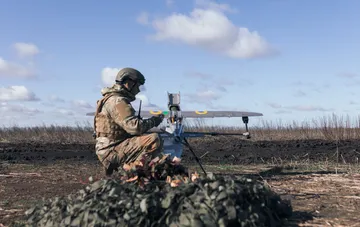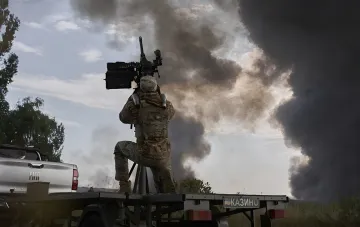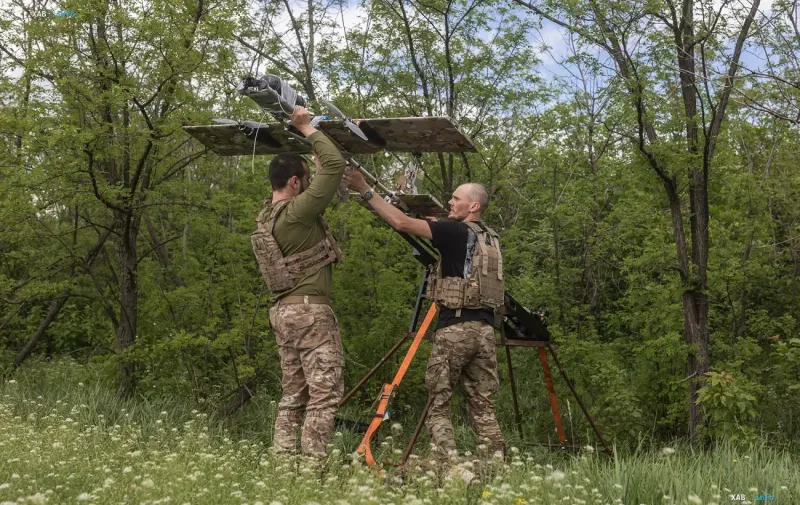
Ukraine's defense forces delivered a series of effective strikes on Russian military objectives in Hulyaipole, Zaporizhzhia Oblast. This was reported on September 24, 2026, by RBC-Ukraine, citing an official statement from the 7th Corps of Air Assault and Storm Troops of the Armed Forces of Ukraine (AFU). According to the command, as part of an operation to neutralize the enemy's offensive potential, the 44th Separate Artillery Brigade named after Hetman Danylo Apostol carried out precise strikes on concentrations of infantry, self-propelled artillery systems, howitzers, and other armored vehicles detected at firing positions within the city.
Hulyaipole as a strategic staging ground
Russian military forces view Hulyaipole as a key staging ground for a further offensive toward the city of Zaporizhzhia. The dense urban development, according to Ukrainian military assessments, allows the enemy to covertly accumulate personnel and military equipment, as well as to use civilian infrastructure to set up command posts, deploy artillery firing positions, and organize the launch of unmanned aerial vehicles. This is why strikes on the firing network in Hulyaipole are considered part of a broader task — to deprive the enemy of the ability to use the city as a base for offensive operations.
Details of the 44th Separate Artillery Brigade's strikes
According to the statement of the 7th Air Assault and Storm Troops Corps, the 44th Separate Artillery Brigade named after Hetman Danylo Apostol carried out a series of shots at pre-reconnoitered targets within the corps' area of responsibility. The strikes were delivered on enemy infantry concentrations, self-propelled artillery systems, howitzers, and other armored vehicles. Some of the targets, according to Ukrainian military sources, were detected directly at firing positions, indicating an attempt by the Russian side to conduct artillery fire at Ukrainian positions at the moment of being struck. The command emphasizes that the strikes were aimed at neutralizing the enemy's offensive potential in this sector of the front.
T-55: a 1950s artifact on the modern frontline
Among the destroyed equipment, according to the AFU, a Soviet T-55 medium tank was detected. This vehicle, adopted into the Soviet Army in the 1950s, was originally developed for operations under conditions of nuclear weapons use and remained one of the most numerous combat vehicles in armies around the world for decades. The appearance of the T-55 in the combat zone indicates that the Russian side continues to deploy equipment from deep reserves and depots, which may point to a shortage of modern combat vehicles in frontline units. For Ukrainian military personnel, the destruction of such samples has primarily symbolic and intelligence value, allowing them to track the enemy's logistics and replenishment.
Series of strikes in the Zaporizhzhia direction
The strikes on Hulyaipole are not an isolated episode. Previously, Ukraine's defense forces, according to Ukrainian sources, destroyed a train of Russian occupiers' artillery ammunition with a single drone strike in the same city. In addition, personnel of the 7th Air Assault and Storm Troops Corps recently struck two Grad multiple launch rocket systems (MLRS) on the Hulyaipole–Pohyli route in Zaporizhzhia Oblast. The totality of these operations demonstrates a consistent tactic by Ukrainian units to systematically destroy the enemy's firing and logistical infrastructure in the frontline city.
Assessment of the situation
The data presented is based on a one-sided statement by the 7th Air Assault and Storm Troops Corps of the AFU, published through RBC-Ukraine. Independent verification of specific Russian losses in this episode is not possible at the time of publication. Nevertheless, the sequence of strikes on Hulyaipole and the adjacent supply routes is confirmed by several separate reports from Ukrainian military structures over the past days, indicating a sustained line of action in this sector of the front.