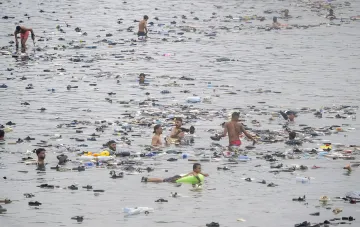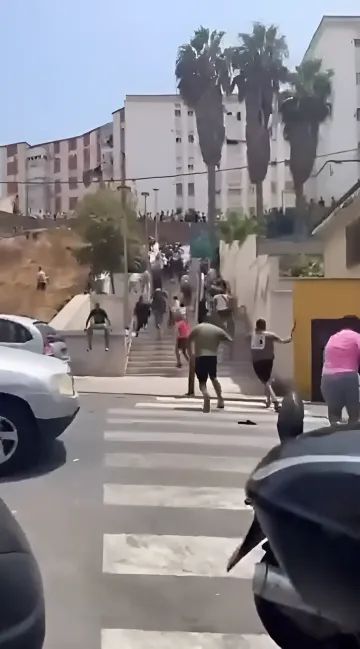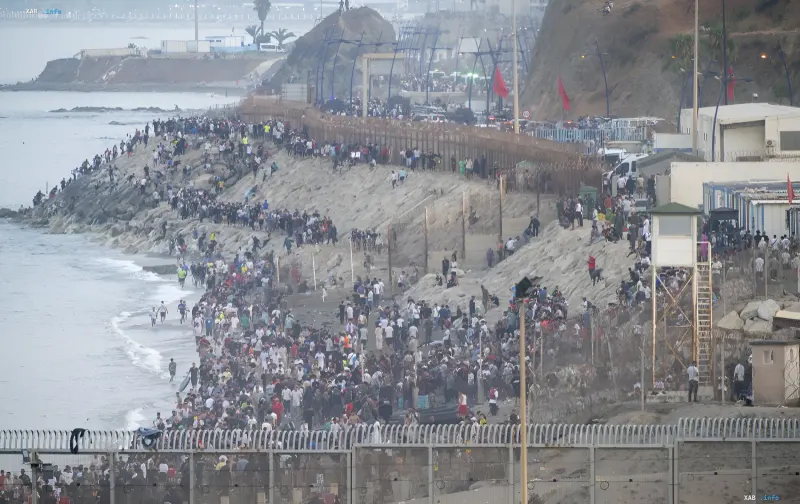
The Spanish enclave of Ceuta, located in North Africa, is facing unprecedented pressure. Approximately 60,000 people have breached the city's borders in the last 24 hours. This was stated by Juan Jesús Vivas, the president of the autonomous city, emphasizing that the current situation is beyond the capacity of local authorities.
Impossibility of Containing the Flow
Official estimates voiced by Ceuta's leadership indicate a catastrophic scale of the influx. Vivas explicitly stated that the figure of 60,000 people demonstrates the impossibility of withstanding such pressure alone. Consequently, he called on the central government of Spain to act "decisively and immediately" to stabilize the situation and respond to the challenge.
Tragedy at the Border
Attempts to cross the border are fraught with enormous risks. The Spanish news agency EFE reported an increase in casualties: the number of people who died on their way to Ceuta has risen to 43. To ensure public order and stabilize the situation, Spanish authorities were forced to deploy the military, a measure unprecedented for the enclave.
EU Reaction and Information Warfare
The scale of the crisis has triggered a sharp reaction at the European Union level. Amidst the acute escalation of the situation, several European leaders proposed temporarily suspending Spain's participation in the Schengen zone. However, European Commissioner for Migration Magnus Brunner assured that there would be no further movement of migrants deeper into EU countries.
Particular attention deserves the information aspect of the events. Acting Ukrainian Minister of Foreign Affairs Andrii Sybiha stated that pro-Russian networks are actively using photos from Ceuta to destabilize the situation in EU countries. According to analysts, more than 1,500 materials dedicated to this topic have been published in media spaces identified as pro-Russian.