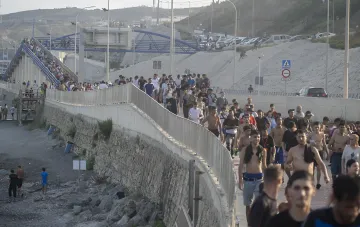
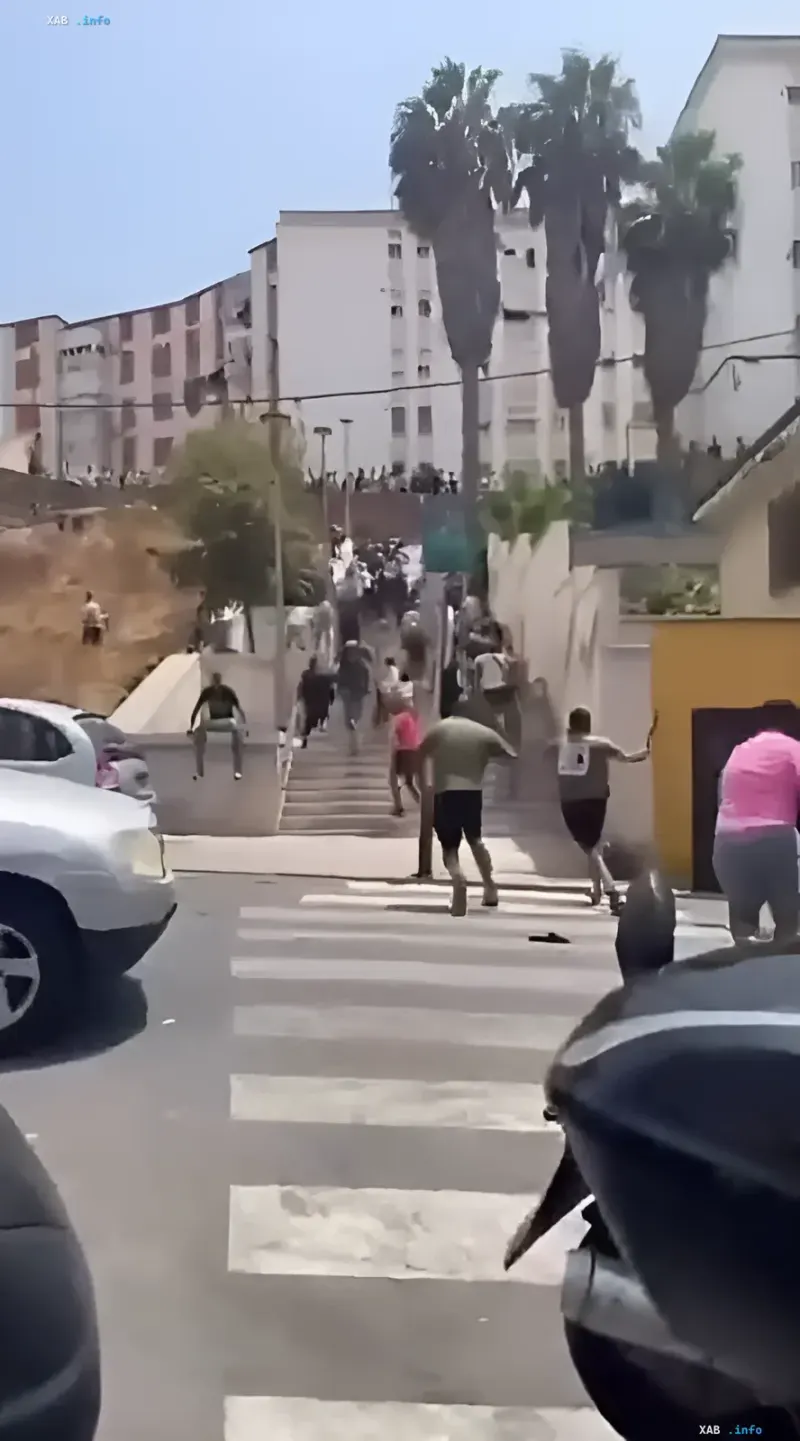
The Spanish enclave of Ceuta in North Africa has found itself at the epicenter of an unprecedented crisis. The city plunged into chaos following a mass breach of the border, as law enforcement agencies lost control of the situation. Fierce clashes erupted on the streets, and desperate local residents took up arms to protect their homes from looting.
The situation in the autonomous city has escalated into open confrontation. Local men, not waiting for help from overwhelmed security forces, formed self-defense units. Videos published online show groups of residents armed with sticks, batons, and pieces of rebar blocking streets and patrolling neighborhoods. Their main goal is to stop the mass looting of shops and thefts from private homes committed by individual groups of migrants who breached the border.
Aggression is mounting on both sides. Individual groups of men arriving from Morocco are engaging in direct clashes with the police, throwing stones at Civil Guard officers and setting parked cars on fire. The price of this battle is already measured in human lives: as of August 1, 2026, at least 57 people have died in stampedes at the fences and street fights.
The crisis in Ceuta reached a critical point after the Supreme Court of Spain banned security forces from conducting so-called "hot returns." This legal loophole was instantly exploited by criminal human trafficking syndicates, which coordinated a simultaneous assault on the border. By various estimates, between 40,000 and 60,000 people breached the enclave. Regional President Juan Jesús Vivas was forced to declare a state of "absolute humanitarian and social emergency."
The Spanish government has taken emergency measures. Prime Minister Pedro Sánchez, calling the events a direct "attack" on sovereignty, deployed regular army units and the Spanish Legion into the city. Madrid managed to negotiate with Rabat to revive the readmission agreement, and an expulsion conveyor belt is now running: approximately 37,500 illegal immigrants have already been returned to Morocco. However, thousands of refugees remain within the city, scattered across the districts.
The events in Ceuta have caused a powerful resonance in Europe, provoking a diplomatic rift. Italy, led by Giorgia Meloni, accused Madrid of failing to secure the Schengen borders and announced the suspension of the agreement, closing its borders to Spanish flights. France, in turn, deployed drones and mobile police units to the border for strict filtering of the flow. In Kyiv, the situation is assessed as part of the Kremlin's hybrid war aimed at dividing Western countries.