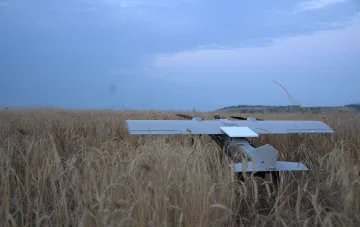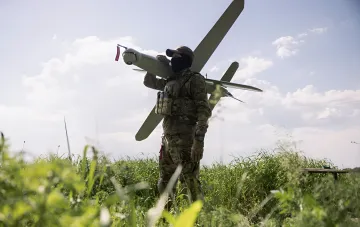
The Ukrainian army is on the verge of a qualitative leap in the use of unmanned systems. In the next 6–12 months, a radical increase in the autonomy of medium-range drones (Middle-Strike) and their resilience to electronic warfare (EW) means is expected. This was stated by Denis Polyachenko, Lieutenant Colonel and Head of Combat Management of the 7th Rapid Response Corps of the Air Assault Forces (DShV), in an exclusive column for NV Business.
Evolution from Mass Production to Specialization
According to the expert, the development of the unmanned aviation industry is ceasing to be purely quantitative. Universal platforms are being replaced by niche solutions. In the near future, aircraft designed for specific tasks will be adopted: some will be intended exclusively for deep reconnaissance, others for the targeted destruction of armored vehicles, and a third group for hunting enemy logistics columns in the rear. This approach allows for resource optimization and increased efficiency in the use of each unit.
Systemic Approach and the Role of AI
The key factor in successfully controlling the enemy's rear using Middle-Strike drones is not just the presence of equipment, but a systemic approach. Polyachenko emphasizes that the coordinated work of operators, analysts, and engineers is critically important. The future of combat, in the Lieutenant Colonel's opinion, is dictated not by individual pilots, but by drone groups acting as a single organism. Soon, complexes will appear on the battlefield where functions are clearly divided: one UAV searches for a target, the second relays data, and the third delivers the strike. Air priorities and task distribution will be determined by artificial intelligence algorithms.
7th Air Assault Corps: The Vanguard of Digitalization
The 7th Rapid Response Corps of the Air Assault Forces is at the forefront of implementing AI in combat operations. Paratroopers are already actively using algorithms to analyze intelligence information. Data obtained from reconnaissance 'wings' is supplemented by signals intelligence (SIGINT) and video intelligence. The speed at which AI deciphers disparate data and converts it into precise coordinates for artillery or strike drones directly affects the enemy's chances of changing position or hiding. This creates a 'time compression' effect for the enemy command.
Integration with Artillery
Despite the technological breakthrough, experts from the 7th Corps warn against overestimating the role of drones. Middle-Strike is not a 'magic wand' capable of winning a war on its own. It is a powerful innovative tool that qualitatively complements the work of traditional artillery and ground units. The synergy between high-tech aviation and classic branches of the armed forces creates an effect that the enemy cannot yet effectively neutralize.