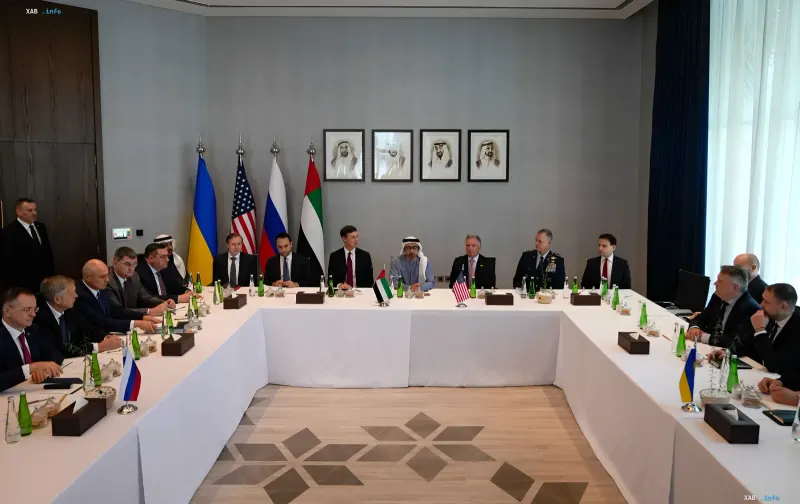
On Wednesday, November 11, 2026, the second day of trilateral negotiations between Ukraine, the United States, and the Russian Federation regarding the resolution of the military conflict is taking place in Abu Dhabi, the capital of the UAE. According to RBC-Ukraine sources, the agenda for the second day includes a discussion on a potential ceasefire, energy issues, and security in the Black Sea. According to Russian media, the meeting was scheduled to begin at 10:00 Kyiv time. Amid ongoing contacts, reports have emerged in Western media that after the meetings in Abu Dhabi conclude, US special envoy Steve Witkoff and Jared Kushner may travel to Moscow, followed by Kyiv.
Results of the first day: Four and a half hours of work without official details
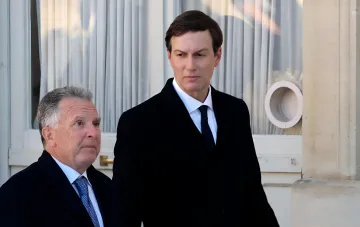
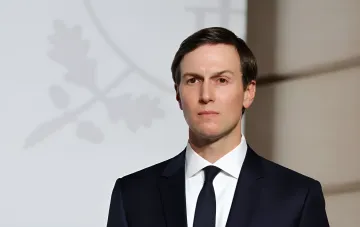
The first day of negotiations took place on Tuesday, November 10, and lasted approximately 4.5 hours. Following the meeting, the delegations confirmed their intention to continue work the next day. No detailed official comments were released by the participants, though a number of statements were made at the level of leaders and diplomats. Ukrainian President Volodymyr Zelenskyy, having received a report from the Ukrainian negotiating team, called the talks "constructive and quite substantive," while noting that "it is difficult to negotiate with the Russians." US Secretary of State Marco Rubio, who did not personally participate in the meeting, also described the negotiations as "very productive," emphasizing that "there is still a lot of work ahead." Among the American participants, Jared Kushner commented to the press on the progress of the meeting, stating that Russian leader Vladimir Putin "is ready for peace under the right conditions."
Security, prisoner exchange, and the territorial issue
According to an RBC-Ukraine source, the main topics of the first day were the future security architecture and security guarantees for Ukraine, Europe, and Russia. Separately, the sides discussed the possibility of a large-scale prisoner-of-war exchange: Zelenskyy indicated that options in the "1000-for-1000" or "1500-for-1500" format were being considered. The Russian delegation also raised the territorial issue, to which Zelenskyy replied that such topics should be discussed exclusively at the level of heads of state. Furthermore, according to the source, the Russians referred to Moscow's proposals on changing European security architecture, which Vladimir Putin put forward during negotiations with then-US President Joe Biden in December 2021. At that time, Russia demanded an end to further NATO expansion, a reduction in the allied military presence in countries that joined the Alliance after 1997, and limitations on military cooperation with post-Soviet states outside NATO, including Ukraine. The Russian side linked the start of the war to the fact that the Biden administration did not agree to these demands. The US delegation, in turn, tried to clarify exactly what Moscow fears and why it needs security guarantees.
The European vector: Who will represent the continent
Before the trilateral meeting, the Ukrainian delegation held separate coordination consultations with representatives of the US, the EU, NATO, and European countries. These meetings were attended by representatives of the E4 format: from the UK, National Security Advisor Jonathan Powell; from Germany, Foreign Policy Advisor to the Chancellor Günter Sautter; from France, Diplomatic Advisor to the President Emmanuel Bonne; and from Italy, Prime Minister's Advisor Fabrizio Saggio. The EU was represented by Head of Cabinet to Ursula von der Leyen Bjoern Seibert and Advisor to the President of the European Council Anna-Maria Buira; NATO was represented by Director of the Office of the Secretary General Jefrey van Leeuwen. At the same time, the question of the direct participation of European representatives in the negotiation process with Russia remains open. Zelenskyy stated that Europe must decide by the end of November who will represent the continent in negotiations to end the war, emphasizing the desirability of reaching such a decision during the meeting of the "coalition of the willing" on November 19 in Germany. Danish Prime Minister Mette Frederiksen, for her part, refused to represent Europe in negotiations with Russia, expressing the view that European institutions themselves should participate.
Moscow's position and future dynamics
The Russian side, according to available information, opposes involving the European Union in the negotiation process. Russian Foreign Minister Sergey Lavrov stated that European countries "only seek to buy time for Ukraine" and suggested they "stay at the hotel" in Abu Dhabi. According to Politico, the US is insisting on defining specific parameters for the participation of European partners. Thus, the second day of negotiations in Abu Dhabi is taking place in an environment where key issues — from the format of the ceasefire to the role of Europe in ensuring security — remain subjects of active discussion, and the final documents and specific obligations of the parties have not yet been published.