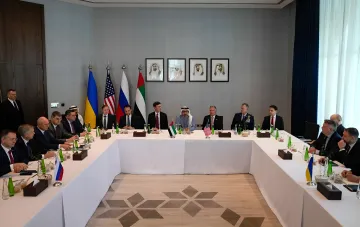
On November 11, the second day of trilateral negotiations between Ukraine, the United States, and the Russian Federation began in Abu Dhabi. This was announced by the Head of the Foreign Intelligence Service of Ukraine, Rustem Umerov, who is heading the Ukrainian delegation. According to him, the parties will first continue their work in a trilateral format, after which the Ukrainian delegation will hold a separate meeting with European partners. «We are starting the second day of negotiations. First, a trilateral format together with the US and Russia. After that, we will hold a separate meeting with European partners. We are working», Umerov wrote in his message, cited by RBC-Ukraine.
Format, Composition of Delegations, and Chronology
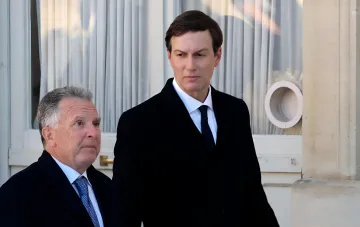
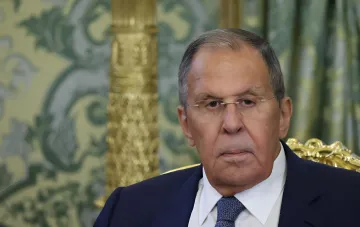
The first day of negotiations took place on November 10 and lasted about four and a half hours. The parties confirmed their intention to continue their work the following day. The Ukrainian delegation is led by Rustem Umerov, the Russian one by Presidential Aide Vladimir Medinsky, and the US side is represented by US Special Presidential Envoy Steve Witkoff and Jared Kushner. US Secretary of State Marco Rubio did not participate in the meeting, but commented on the course of negotiations, calling them «very productive» and adding that «there is still a lot of work to be done». According to Western media, after the conclusion of the Abu Dhabi round, Witkoff and Kushner may head to Moscow and then to Kyiv to continue bilateral contacts.
Second Day Agenda: Ceasefire, Energy, Black Sea
According to RBC-Ukraine sources, on the second day the parties intend to discuss a potential ceasefire, energy issues, and security in the Black Sea. Russian media reported that the meeting was scheduled to begin at 10:00 Kyiv time; other sources indicate 11:00 local Abu Dhabi time. Following the trilateral session, the Ukrainian delegation will move to a separate format involving European partners, which observers assess as an important milestone in shaping the post-war security architecture.
Security Guarantees and Army Funding
A key topic of the first day was the future security architecture and guarantees for Ukraine, Europe, and Russia. According to AFP, citing a high-ranking Ukrainian source, Kyiv is seeking funding during the negotiations to maintain an army of 800,000 personnel for at least 10 years after the end of hostilities. According to the agency's interlocutor, such a measure is necessary to protect against future aggression. Following the meeting involving Ukraine, the US, European countries, and NATO, the parties confirmed their shared commitment to establishing a post-war European security architecture.
Territorial Issue and Prisoner Exchange
The Russian delegation separately raised the territorial issue on the first day. Ukrainian President Volodymyr Zelenskyy, who received a report from the Ukrainian negotiating team, stressed that such issues must be discussed at the level of heads of state. He called the negotiations «constructive and substantive», but noted that «it is difficult to negotiate with the Russians». Zelenskyy also spoke about «fakes» spread by the Russian delegation: according to him, the Russians claimed they had occupied half of the Ukrainian-controlled part of Donbas. A large-scale prisoner exchange was also discussed separately — options of «1000 for 1000» or «1500 for 1500» were mentioned.
Russian Demands of 2021 and Washington's Reaction
The Russian delegation also referred to Moscow's proposals for changing the European security architecture, which were voiced in December 2021 during negotiations with US President Joe Biden. At that time, Russia demanded an end to further NATO expansion, a reduction of allied military presence in countries that joined the Alliance after 1997, and a restriction on military cooperation with post-Soviet states outside NATO, particularly Ukraine. According to an RBC-Ukraine source, the Russians linked the start of the war to the Biden administration's refusal to agree to these demands. The American side, in turn, tried to clarify what exactly Moscow fears and why it needs specific security guarantees. Jared Kushner stated that the Kremlin leader is «ready for peace under appropriate conditions», without disclosing the details of those conditions.
Expectations and Next Steps
Marco Rubio, who did not directly participate in the sessions, cautioned against excessive optimism regarding the timeline for a settlement and stressed that European countries must also be at the negotiating table in the future. Russian Presidential Press Secretary Dmitry Peskov earlier confirmed that the main format of the meeting remains trilateral — involving Moscow, Kyiv, and Washington. Thus, the second day in Abu Dhabi is becoming a pivotal stage: from discussing framework issues, the parties are moving to specific parameters of a ceasefire, energy security, and long-term financial obligations, while a separate session with Europeans may determine whether an agreed position on security guarantees can be worked out by the end of the week.