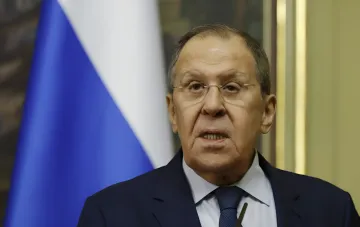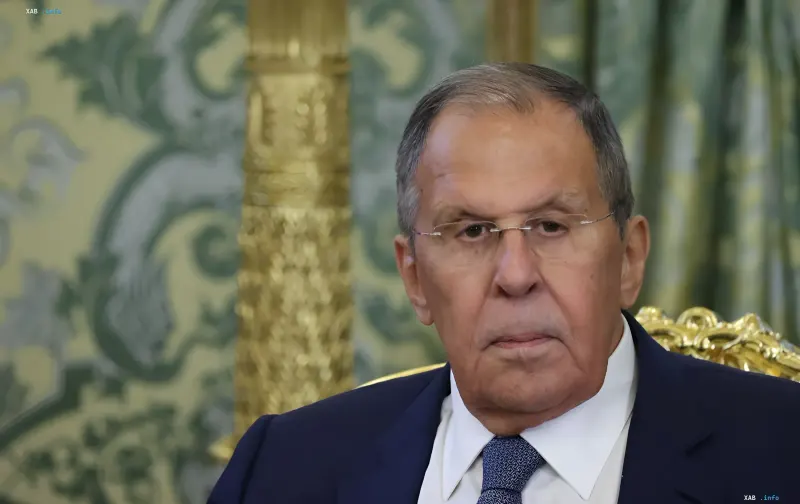
Russian Foreign Minister Sergey Lavrov has publicly commented on Ukrainian calls for an immediate ceasefire and a multi-level truce covering energy, food, aviation, and maritime sectors. According to him, these initiatives do not aim to achieve peace, but rather seek to grant Kyiv a temporary breathing space to rebuild its combat capabilities with the help of external sponsors. This was reported by RBC-Ukraine, citing TASS.
“Not for Peace”: Moscow’s Arguments
Lavrov stressed that Moscow has “verified many times” that Ukrainian calls for a ceasefire are temporary in nature. “Ukraine is calling for an immediate ceasefire, for agreeing on energy, food, aviation, and maritime truces. None of this is for peace,” the Russian Foreign Minister stated. According to him, the purpose of such initiatives is to give the regime in Kyiv an opportunity to replenish losses with the assistance of foreign partners. In this regard, Lavrov emphasized that Russia insists not on a temporary ceasefire — “such things have happened many times before” — but on “reliably eliminating the root causes of the crisis.”
Kyiv’s Position and Expectations of International Pressure
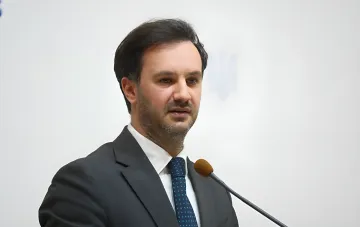
Against the backdrop of these statements, the Ukrainian side continues to promote the idea of a ceasefire. Recently, Ukrainian Foreign Ministry spokesperson Heorhii Tykhyi stated that Kyiv expects a number of countries to pressure Russia into a ceasefire in the Black Sea. According to him, these are states that depend on exports via the Black Sea basin and thus have a direct economic interest in stabilizing the situation in the region.
Analytical Assessment: ISW and The Telegraph
Analysts at the Institute for the Study of War (ISW) noted in their review that Ukraine is ready to discuss truce terms. At the same time, according to ISW experts, statements from the Russian side indicate that the Kremlin does not plan to change its stance on key settlement issues. Meanwhile, the British newspaper The Telegraph drew attention to the fact that Russia might try to use the negotiation process to end the conflict against Ukraine as a tool to extract concessions from NATO.
Context: The History of Temporary Truces
Lavrov’s mention of repeated experiences with temporary ceasefires refers to a series of previous attempts to freeze the conflict, which, from the Russian perspective, failed to produce a sustainable outcome. The Ukrainian side, by contrast, views a multi-level truce — ranging from energy infrastructure to maritime communications — as a fundamental element of de-escalation and the basis for subsequent political negotiations. The divergence in interpreting the goals and conditions of a ceasefire remains one of the key barriers on the path to a diplomatic settlement.