Context: who and why is claiming a seat at the table
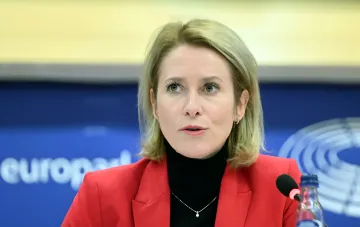
Tensions surrounding the negotiation format escalated after Vladimir Putin proposed holding preliminary consultations with European envoys, and European governments responded by demanding that decisions affecting the continent's security be made with their participation. Kallas, who has served as the EU High Representative for Foreign Affairs since December 2024 and previously led the Estonian government, has consistently stated that Moscow has no right to determine who represents the European Union in diplomatic processes. «We already have a European security architecture. The problem is that Russia continues to violate the treaties on which it is based. Putin does not have a veto on European security», she said in Warsaw, commenting on Washington's plans to conclude a «grand bargain» with Moscow, which, according to Donald Trump, «could affect the whole of Europe».
Kallas's position: ceasefire first, security second
Ahead of the EU Foreign Affairs Council meeting in Brussels on November 16, Kallas outlined a strict sequence: an immediate ceasefire must precede any discussions on Europe's future security architecture. «We need to see a ceasefire. A ceasefire to actually start talking about everything else», she emphasized. Kallas also criticized expectations that Europe should make concessions to Moscow while Russian forces continue to strike Ukrainian cities and infrastructure. «They are the aggressor, and there is one victim. We need to push for concessions from their side», the European diplomacy chief stated, calling Russian demands «maximalist and truly absurd».Sanctions and frozen assets as a leverage tool
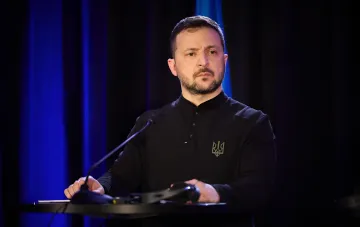
Among the tools of European influence, Kallas highlighted the sanctions regime and frozen Russian assets, warning against making concessions to Moscow without reciprocal obligations. According to her, negotiations should not turn into a one-way process of extracting concessions in Moscow's favor. Ukrainian Foreign Minister Andrii Sybiha, in turn, stated that Moscow «cannot be a security guarantor for the European continent», while Polish Foreign Minister Radosław Sikorski called any agreements on the future of Ukraine and Europe «over our heads» not just unwise, but «factually impossible».
Moscow reserves the right to choose «constructive» partners
Zakharova, while rejecting Kallas, simultaneously stated that Moscow «remains ready to interact with European representatives capable of making a constructive contribution to the negotiations». Thus, the Russian Foreign Ministry effectively set a condition: only those European diplomats whose position, in Moscow's assessment, does not contradict its «security interests» are acceptable. Kallas previously acknowledged that Moscow opposes her participation, but stressed that she represents all 27 EU member states rather than acting in a personal capacity. She also pointed out that Russia is trying to shift the focus of negotiations from ending the invasion to redrawing broader European security frameworks.
The situation remains tense: Brussels insists that the format and composition of the negotiating group are the exclusive prerogative of the EU, while Moscow is trying to limit the circle of acceptable European participants. In the coming days, the issue of the format is expected to be brought to the agenda of the next EU Foreign Affairs Council meeting, where the bloc's position regarding the US mediation track is reportedly to be discussed.