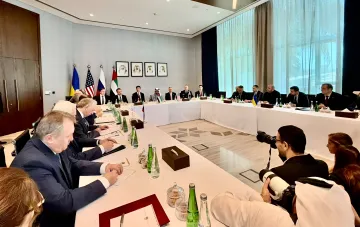
Abu Dhabi is hosting a new round of trilateral negotiations between Ukraine, the US, and Russia—the first in this format since February 2026. European participants are also present on the sidelines, yet, according to observers, each party comes to the table with its own agenda and expectations. The key question that remains open is whether these consultations can bring peace or at least a sustainable truce closer, or if they will remain merely an exchange of positions without concrete commitments.
New Conditions for Washington: Loss of Congressional Majority
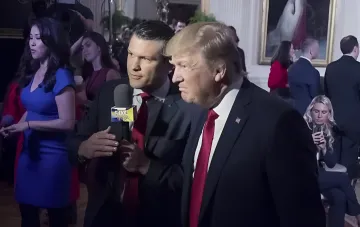
For the US, which remains the mediator and main driver of the process, the round in Abu Dhabi takes place in a fundamentally new political reality. On November 3, Donald Trump and the Republican Party lost the congressional elections, after which Democrats announced a series of investigations into the actions of the president and his team. In practice, this means it will become noticeably harder for Trump to pass bills, and his attention will be constantly distracted by congressional hearings and the need to replace members of his team. At the same time, as noted in Kyiv, Democrats do not intend to wait until January, when the new convocation officially takes the oath.
Rolling Back Bilateral Agreements with Moscow
Parallel to preparations for the trilateral format, the US is winding down bilateral agreements with Russia reached under Trump's auspices. In mid-October, a bipartisan bill titled «Ban on Corrupt Transactions on Russian Oil» was introduced in Congress to block the respective agreement. Even without its enactment, a number of companies have already abandoned Russian imports, further narrowing the room for compromises previously counted on by the administration.
Conflict of Interest for Trump's Emissaries
Trouble, according to media reports, also awaits the US representatives at the talks—the president's son-in-law Jared Kushner and his close friend Steven Witkoff—due to a conflict of interest. Kushner, combining negotiating duties, heads the investment holding Affinity Partners with predominantly Persian Gulf interests, creating a conflict regarding Iran, with which he and Witkoff have also held talks. Witkoff, serving as a special envoy, remains the co-founder of the cryptocurrency company World Liberty Financial, a significant stake in which was bought by UAE funds. According to the Financial Times, Democrats in Congress are considering investigating the foreign policy of the Trump administration and the business interests of his family and inner circle, including Kushner and Witkoff.
The "Big Deal" and Five Areas
Despite this, the US president and his emissaries continue to declare ambitious geopolitical plans. On November 6, Trump stated that a large-scale deal extending beyond Ukraine could be achieved as part of ending the war in Ukraine, calling it a «big beautiful deal». The statement followed a meeting with Vladimir Putin's emissary Kirill Dmitriev on November 5 at the White House, where the latter visited Melania Trump; the US president did not meet with the arriving Ukrainian representatives Dmytro Lubinets and David Arakhamia. Later, Kushner detailed five areas: permanent security consultations, reliable communication channels in crisis situations, increased military transparency, mutual measures to reduce escalation risks, and the creation of a long-term foundation for security and stability in Europe. According to Washington Post sources, the model is the Russia–NATO Council, created after the end of the Cold War and frozen in 2022.
Expert Assessment: Mostly Informational Noise
Ukrainian experts assess these statements with restraint. Oleksandr Antoniuk, a serviceman of the Ukrainian Defense Forces and political consultant, believes that in the short term, one should not count on a sharp change in US policy towards Russia or Ukraine, and Washington's loud formulations are just «big informational noise». He calls the only possible nuance the fact that Trump will likely be constrained in constructive initiatives due to domestic political pressure. Thus, the outcome of the Abu Dhabi round will largely be determined not so much by the rhetoric of the parties, but by whether they manage to overcome the gap between declared «deals» and the real constraints each party brings to the negotiating table.