The Chairman of the Foreign Affairs Committee of the Riigikogu (Estonian Parliament), Marko Mihkelson, has stated that the diplomatic process in Abu Dhabi should not be viewed as peace negotiations, but rather as a Russian "diplomatic special operation" aimed at raising the stakes in the war and attempting to redesign European security architecture. This was reported by RBC-Ukraine, citing the Estonian television channel ERR. According to the politician's assessment, Moscow is not interested in ending the conflict, but is using the negotiation format to achieve its own objectives.
"24 hours" versus 24 months
Mihkelson linked the start of diplomatic activity to Donald Trump coming to power in the USA. "I believe this is a purely Russian diplomatic special operation. Russia started it immediately after Donald Trump became US President and promised to end the war in 24 hours. Soon, 24 months will have passed, and Russia is constantly raising the stakes," he stated. Thus, according to him, the promised quick end to the war did not happen, and the negotiation process has turned into a tool for stalling and renegotiating terms.
Prisoner exchange — the best scenario of the round
Mihkelson called the return of some Ukrainian prisoners of war the best possible outcome of the current round in Abu Dhabi. At the same time, he warned against making concessions to Moscow on issues of European security in exchange for promises of a stable peace, emphasizing that such guarantees should not come at the cost of weakening Europe's defensive positions.
"The best negotiator is the Ukrainian army"
The politician urged European partners to focus on practical assistance to Kyiv rather than internal disputes over who will represent Europe at the negotiating table. "The best representative of Europe, the best negotiator, is the Ukrainian army," he declared. Among his priorities, he listed helping Ukraine survive a difficult winter, strengthening air defense, providing funds for continued resistance, and covering the budget deficit caused by military spending. Mihkelson also advocated for increasing pressure on Russia and using frozen Russian assets, believing that a readiness to resist aggression is what strengthens Europe's position.
Who will speak for Europe
Mihkelson's statement came against the backdrop of a discussion in Brussels regarding Europe's representation at peace talks. Previously, Ukrainian President Volodymyr Zelenskyy stated that European countries need to decide on their representative in November. Earlier, Italian Prime Minister Giorgia Meloni called on the EU to choose a candidate. Notably, Finnish President Alexander Stubb and Norwegian Prime Minister Jonas Gahr Støre held a telephone contact with Russian President Vladimir Putin — the first such contact, though the leaders spoke not on behalf of Europe, but as heads of states neighboring the Russian Federation.
Context: the trilateral round in Abu Dhabi
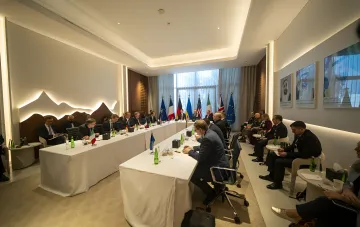
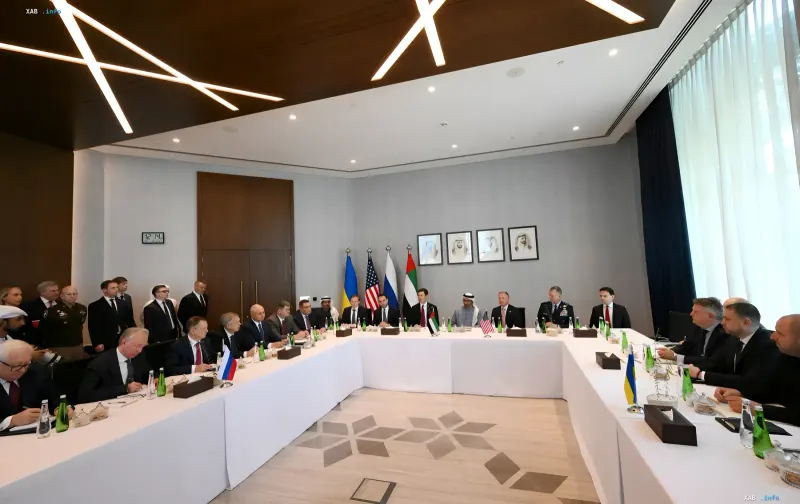
On November 10–11, trilateral negotiations in the Ukraine-USA-Russia format are taking place in Abu Dhabi. European representatives are present in the Emirates but have not yet been involved in the negotiation process itself; previously, the USA and Ukraine held a separate meeting with the Europeans and informed partners about the progress of the talks. Reportedly, the first day of the meeting lasted about four and a half hours with dozens of delegation members participating. Against this backdrop, Mihkelson's assessment serves as a warning: without real military and economic support for Kyiv, the diplomatic track, in his opinion, is incapable of yielding anything other than selective results such as prisoner exchanges.