Azerbaijani penitentiary institutions have seen a record number of journalists in recent years, with entire newsrooms sometimes sent behind bars. However, arrest has not stopped their professional activities: imprisoned journalists have begun publishing materials on corruption, detention conditions, prisoners' rights, and feminist topics. The basis of this story is an investigation by the BBC Russian Service, in which Abzas Media editor-in-chief Sevinj Vagifgizi, serving a nine-year sentence, describes how she and her colleagues turned confinement into a workplace from a prison cell in Baku Pre-trial Detention Center No. 1 (Kurdakhani).
The Deputy Chief's Office: 11 Photos and One Certificate
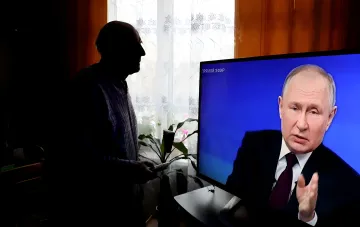
Sevinj Vagifgizi, 37, has spent almost her entire adult life in Azerbaijan under the rule of two generations of the Aliyev family. Her family, having fled the Fizuli district occupied by Armenia during the First Karabakh War, settled in Baku during Heydar Aliyev's tenure. Under his son Ilham, who built a cult of personality around his father and consolidated his own power, Sevinj studied journalism and worked for several independent publications. At 33, she became the editor-in-chief of Abzas Media, a platform known for anti-corruption investigations, including reports on companies belonging to the president's family. In November 2023, she was arrested following Abzas Media general director Ulvi Hasanli: she returned to Azerbaijan from a foreign trip knowing she could end up behind bars. In the summer of 2025, a court sentenced her to nine years in prison. In a letter sent to the BBC from confinement, she describes one of her first "sketches": in the small office of the deputy chief of Baku Pre-trial Detention Center No. 1, where she happened to be, 11 photographs of Heydar and Ilham Aliyev hung on the wall, and beneath them was a barely noticeable certificate for participating in a train-the-trainer workshop. "The television was on, and Space TV was broadcasting another family-and-domestic show. The program was so boring that instead of watching TV, we looked at each other," she recalls.
The "Abzas Office" in Kurdakhani
Along with Sevinj, her colleagues Nargiz Absalamova and Elnara Gasimova were arrested and charged in the same case. Sevinj did not tell them in advance about her decision to write from prison, fearing the pressure that might follow such work. "I thought that if the girls, despite possible threats, wanted to write about this, they would let me know themselves," the journalist recalls. That is what happened: after the first publications, Nargiz and Elnara began coming to her with topics, and soon ideas began flowing from other inmates of Kurdakhani prison as well. "The administration tried to ensure that no one reported illegal actions happening inside to us. But these people knew that journalists were being held in cells No. 40, 42, and 50, and they contacted us themselves," Sevinj says. This is how the informal "Abzas Office" appeared in Kurdakhani. Current Abzas Media editor-in-chief Gunel Safarova, commenting on the publications, says: "I always look forward to what they will write next."
Prison Food and a "Normal Lunch" Twice a Year
One of the first articles written from confinement was Nargiz Absalamova's piece on prison food. According to her, the food given to prisoners is inedible: the diet lacks fish, eggs, and fruit, and the actual menu differs sharply from prescribed norms. One guard, by his own account, fed the meat intended for prisoners to his dog as an experiment—the dog refused to eat it. Nargiz wrote that prisoners receive normal food only twice a year—on Ilham Aliyev's birthday and on the day of Heydar Aliyev's death. Gunel Safarova characterizes the situation thus: "The task was to silence them. But they decided not to do that, and began writing about what is happening in prisons. They became the voice of those who cannot tell society about their problems."
Wave of Arrests and Political Context
The arrest of Sevinj Vagifgizi and her colleagues became part of a broader wave of detentions of independent journalists across Azerbaijan that began in late 2023. The charges against the journalists are considered politically motivated by themselves and human rights organizations. Azerbaijani prisons have been the target of criticism by international human rights organizations for decades, and according to Sevinj, the journalists decided to use their imprisonment as an opportunity to expose what previously remained hidden: "I was always interested in what was happening there. But since journalists are not allowed to visit penitentiary institutions, the secrets of what happens there remained undisclosed. And we decided to view our imprisonment as an opportunity to expose these secrets." By the summer of 2025, when the verdict was handed down, several articles written by Sevinj in confinement and smuggled out had already been published on the Abzas Media website. Topics include corruption in the detention center, detention conditions, prisoners' rights, and feminist issues. "I couldn't imagine myself in any other profession," Sevinj writes in her appeal to the BBC. "And I hold the same opinion now."