Ukrainian theatre, film and dubbing actor Oleksandr Pohrebniak shared details of his work on new projects, the issue of illegal voice cloning by artificial intelligence, and the specifics of filming in the comedy series Kotliarevskyi, set to premiere on November 2 on Novyi Kanal, in an interview with Styler. The artist discussed the physical challenges of voicing animated films, the difference between working on camera and behind the scenes, and why he does not strive to be recognized by his voice in everyday life.
Dubbing difficulties and studio challenges
According to Pohrebniak, one of the hardest projects of the year was working on the animated film Kung Fu Panda 4, where he dubbed the main character. The character constantly made numerous sounds, screamed and breathed, which required maximum dedication from the actor. The situation was complicated by the artist's poor health and a tight schedule, yet postponing the recording was impossible. Despite the difficulties, the result turned out to be of such high quality that even close friends did not recognize the actor's voice in the animated film, which Pohrebniak himself considers the ultimate compliment for a professional.
Answering a question about recognition, the actor noted that people frequently recognize him by his voice in public places, which sometimes creates comical situations when he just wants to eat and rest. At the same time, he emphasizes that he does not understand colleagues who strive to speak in cartoon or advertising intonations in real life. The ability to be different and remain unnoticed outside the stage or studio is an important part of professional ethics.
The issue of voice theft for artificial intelligence
One of the key topics of the conversation was the intellectual property safety of dubbing actors. Pohrebniak stated that pirate sites and developers of artificial intelligence systems regularly attempt to illegally misappropriate the voices of professionals to train neural networks. The artist admitted that he receives numerous such offers, but categorically refuses such scams, considering it a short-sighted step that actors and studios have to fight constantly.
Discussing the collective nature of working on project adaptation, the actor noted that the process of translating and finding precise lines often happens directly during studio recording. A team consisting of a director, a translator, and actors jointly looks for the best solutions so that the lines accurately convey the characters' traits and the overall context of the work.
Experience filming in Kotliarevskyi and stage appearance
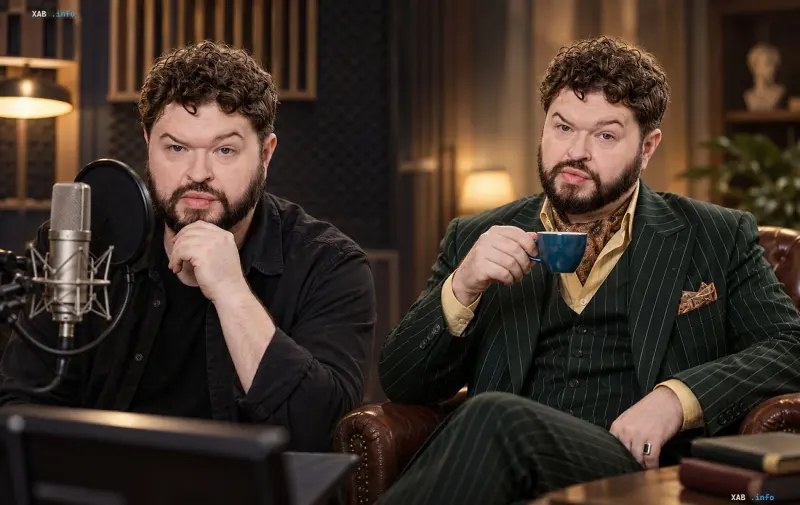
In the comedy series Kotliarevskyi, Pohrebniak played a lawyer, appearing on screen before viewers. The actor reminded that dubbing is not his only field of activity, as he previously performed in theatre, full-length films, and linear roles in television series, including the project SuperCops on Novyi Kanal. Each of these areas requires a special manner of existence and constant readjustment of acting skills.
Filming in the new project required stepping out of his comfort zone in terms of appearance. Pohrebniak had to wear classic three-piece suits, shirts, cravats, and rings, although in daily life he prefers simple casual and sportswear exclusively in black tones. Furthermore, for the sake of the lawyer's role, the actor got a special biological hair perm, which required complex maintenance, causing certain physical discomfort throughout the filming period.
Significance and future prospects
Oleksandr Pohrebniak's experience vividly demonstrates the modern challenges facing the dubbing and film production industry in Ukraine. Protecting unique voices from unauthorized use by neural networks is becoming a matter of survival for a whole generation of artists. At the same time, the successful transition of actors from dubbing studios to television screens proves the high level of their professional training and versatility, capable of attracting viewer attention to new original domestic projects.