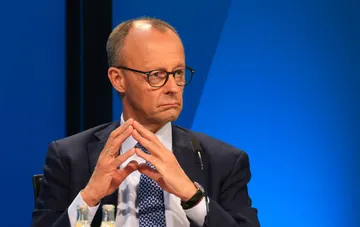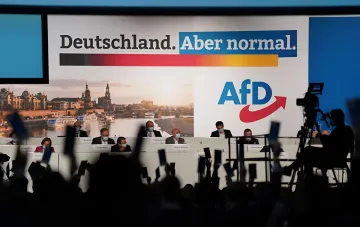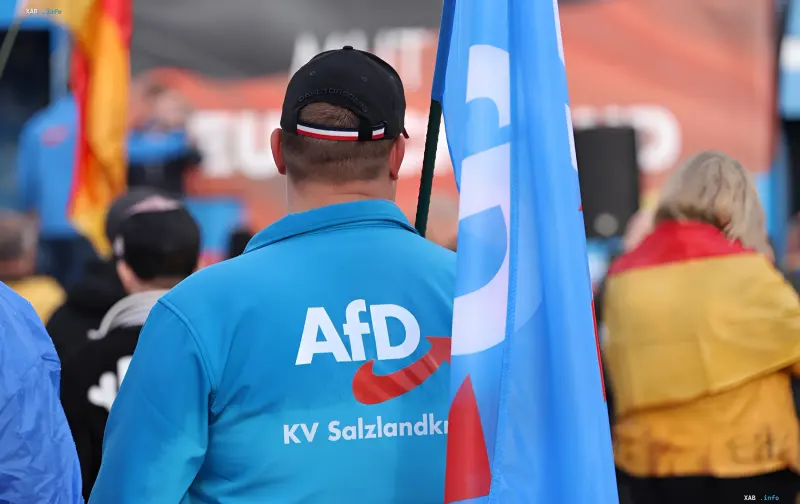
In the Saxony-Anhalt state parliament (Landtag) elections, the far-right Alternative for Germany (AfD) is polling 44.2% of the vote, according to an ARD forecast released at 20:27 local time (21:27 Kyiv time). This is roughly 23 percentage points more than the party received in the previous election, and potentially the best result for the AfD since its founding in 2013. Chancellor Friedrich Merz's party — the Christian Democratic Union (CDU) — is polling just 18.5% under the same forecast, down from 37.1% in 2021, meaning support for the Christian Democrats in the region has nearly halved in five years.
A historic threshold and the question of a majority
The key question that the final results will answer is whether the AfD will win enough mandates to form a state government on its own. If the party secures an absolute majority in the Landtag, it will be a historic event for modern Germany: the AfD would take control of a federal state government for the first time. Party co-chair Alice Weidel has already called the result "historic" and stated that the AfD has received a "clear mandate to form a government." The AfD's main candidate in the region, 35-year-old Ulrich Sigmund, added that the party has "effectively entered history," and hinted that Merz's tenure as chancellor should come to an end: "Every day this man remains in the chancellery is one day too many."
Contradictory data
Here, the parties' versions and the figures themselves diverge. On the one hand, the AfD publicly declares its readiness and "mandate" to govern the state independently. On the other, the final distribution of mandates has not yet been determined, and if the party falls short of an absolute majority by a few mandates, it will have to seek coalition partners — while the traditional parties categorically refuse to cooperate with the far-right. A key factor is the "Sara Wagenknecht Alliance" (BSW), which is fighting to clear the 5% threshold: the party has already declared its willingness to work with the AfD, thereby securing a majority for it. Thus, the claim of a "clear mandate" currently runs ahead of the factual situation and depends on the final arithmetic of mandates.
Why voters chose the AfD
The AfD's campaign was built on a hardline migration policy, conservative values, and criticism of the traditional political forces. Among the party's proposals are strengthening the deportation of migrants as part of a "remigration offensive," restricting migration, changes to school education, a ban on rainbow flags in schools, greater emphasis on traditional values and family benefits after the birth of a child. The AfD also advocates closer relations with Moscow, including resuming school exchange programs with Russia, and proposes revising the approach to teaching German history in schools. The region, home to just over 2 million people, remains one of the main centers of support for the AfD in the country, and the CDU had governed it for the past 24 years.
Reaction from the losers
For the CDU, the result was a serious defeat: the party's general secretary Franziska Hoppermann called it "very heavy" and a "collective defeat" for the Christian Democrats. The drop in support from 37.1% to 18.5% over five years, amid 24 years of governing the region, makes this outcome not merely a regional but a systemic problem for the party, which is led at the federal level by Chancellor Merz.