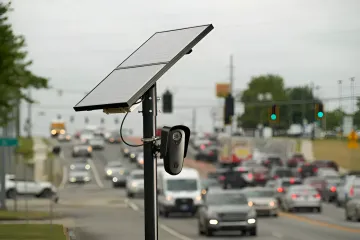
Amidst growing pressure on emergency response services worldwide, the US state of Louisiana is taking a bold step towards digitizing rescue operations. The Orleans Parish Communications Center (OPCC) in New Orleans has begun implementing advanced artificial intelligence technologies to handle incoming 911 calls. This solution aims to address a critical issue: operators receive over a thousand calls daily, often leading to delays in responding to real threats to citizens' lives and health.
From Informational Inquiries to Emergencies
The implementation of the technology proceeded in stages. Back in April 2026, New Orleans began using AI to handle calls to the 311 service, which deals with non-emergency citizen inquiries. Statistics showed that about 50% of such calls were purely informational. The neural network successfully handled the task of providing information, relieving operators of routine work. Now, in August 2026, this technology has moved to a new level: the algorithm is being tested to handle emergency calls to 911.
Carbyne Technology: How AI Emergency Call Triage Works
The system is based on the AI Emergency Call Triage platform by the company Carbyne. The system's name alludes to the process of sorting and prioritizing (triage) patients in medicine. In the context of a dispatch service, the algorithm acts as a primary filter. The system analyzes the incoming call and can provide immediate feedback to the caller. The key function at this stage is accelerating the processing of calls related to already known incidents. The algorithm automatically asks the caller if they are reporting a specific event and, upon confirmation, provides up-to-date information about the situation. If the call concerns a new, unknown threat, the system instantly redirects the call to a live operator.
Implementation Goals and Current Limitations
The main goal of using the AI system is to combat the accumulation of a huge number of calls and reduce wait times for those who truly need help. However, representatives of the OCD service emphasize that at this stage, it is not about full automation of the process. The algorithm does not replace humans but acts as an assistant providing current information and redirecting calls. This allows dispatchers to focus on complex cases requiring human involvement and decision-making.
Contradictory Data
The question of the reliability of artificial intelligence in critical situations remains a subject of heated debate. On one hand, proponents of implementation point out that with human oversight, careful preparation of training data, and reliable cybersecurity, the system can significantly improve the efficiency of rescue services. On the other hand, critics and security experts note the risks of AI model unreliability. Practice shows that algorithms can fail, provide false information, or act on hidden biases developed during training. In a situation where human life is at stake, any algorithm errors can have fatal consequences, and current mechanisms for controlling AI in such areas are not yet perfect.