In August 2026, the technological landscape is undergoing fundamental changes. The South Korean giant Samsung Electronics has officially confirmed a massive expansion of its horizons, moving beyond traditional semiconductors and consumer electronics. The company is creating a specialized division Robotics eXperience (RX), which aims to dominate the humanoid robot segment. This decision, made at the highest level, signals the beginning of a new era in the industry, where the Korean giant intends to leverage its unique advantages in AI and component manufacturing.
Structural Changes and Management
The new RX division is not an experimental project on the periphery of the company. It reports directly to Samsung Electronics CEO Lee Jae-yong (TM Roh). Such an organizational structure underscores the strategic importance of robotics for the future of the conglomerate. To manage the development strategy in this area, the company has recruited Lee Don-geon. Previously, he worked at Hyundai Motor, where he oversaw projects related to Boston Dynamics robots. His move to Samsung last month was one of the key personnel decisions aimed at ensuring a technological breakthrough.
Data Infrastructure and Gauss AI Model
Samsung's key asset in the robotics race is not only hardware but also access to colossal data sets. Unlike startups, Samsung operates on information coming from numerous factories around the world, as well as from millions of smart devices. To process this data and train neural networks, a new specialized data center (DC) is being built at the campus in Gumi. Robot training will be conducted using data generated directly at the company's enterprises. Samsung's own AI model, Gauss, which already demonstrates high efficiency in recognition and control tasks, will serve as the "brain" for the robots.
Competitive Advantages and Global Hiring
Unlike many competitors forced to rely on third-party suppliers, Samsung possesses a full production cycle. The company independently develops and manufactures batteries and semiconductor components necessary for robot operation. This ensures control over the cost of goods and the quality of the final product. Furthermore, to accelerate development, Samsung is actively recruiting specialists from the US and China who have experience in creating advanced robotics. This creates a multicultural development environment capable of quickly adapting the best global practices.
Contradictory Data
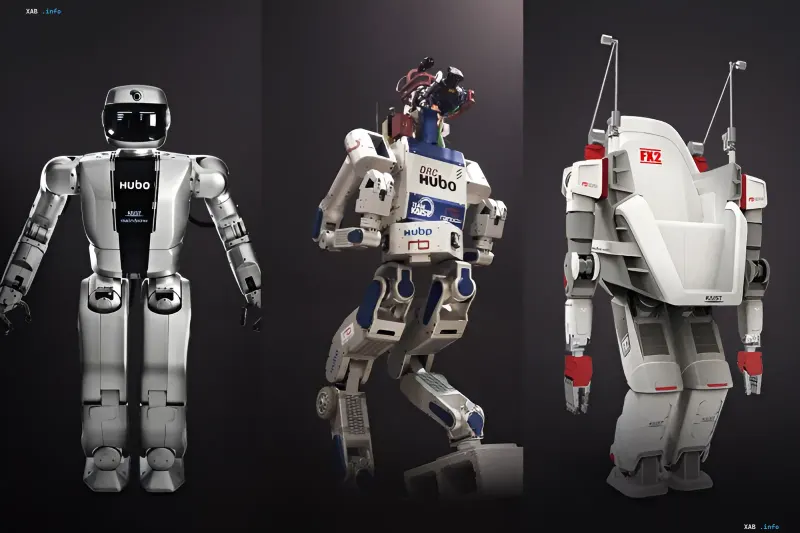
The question of whether Samsung Electronics is a new player in the market causes discrepancies in the expert community. On the one hand, the official creation of the RX division is positioned as the beginning of active expansion. On the other hand, sources indicate that the company has been conducting developments in this field for many years without publicizing them. In particular, there is a division called Rainbow Robotics, which specializes in creating humanoid robots (such as the HUBO models shown in the photo). Some analysts believe that RX is not the creation of a new direction from scratch, but rather the consolidation and scaling of existing, but hidden, developments that are now being translated into the stage of commercial implementation.
Market Prospects
The launch of the RX division in 2026 coincides with the peak of interest in the automation of industrial processes and household tasks. Experts believe that Samsung is capable of offering a solution that surpasses the products of many national manufacturers due to the integration of its own technologies. However, success depends on how quickly the company can adapt its algorithms to real-world usage scenarios using data from the new DC in Gumi. The world awaits the first demonstrations of robots created under the auspices of the new division.