
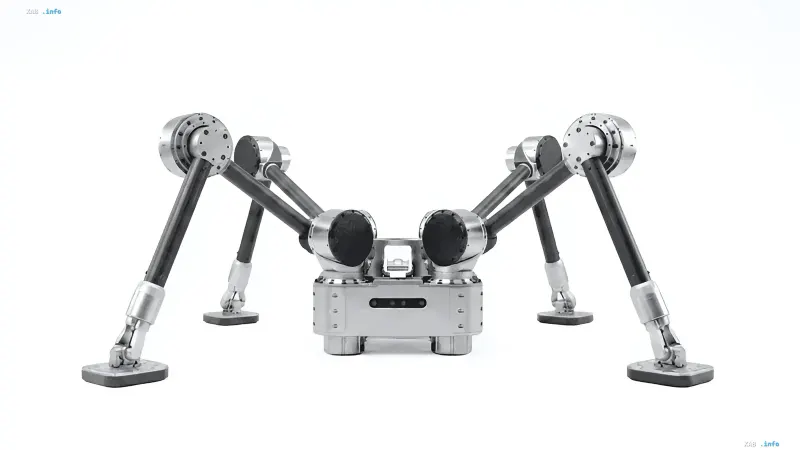
In South Korea, robotics is reaching a new level of practical application, penetrating one of the most conservative sectors — heavy shipbuilding. Diden Robotics has introduced an innovative quadruped spider robot, DIDEN Spider, designed for welding, inspection, and maintenance inside the hulls of ships under construction. The main advantage of this development is the device's ability to move on any surface: floors, vertical walls, and even ceilings. Thanks to powerful electromagnets in its limbs, the robot can traverse steel structures, which is critical for accessing narrow and dangerous ship compartments.
Technological Breakthrough and Efficiency
According to Diden Robotics engineers, the use of such autonomous solutions can reduce shipbuilding time by 60–70%. The robot not only welds metal but also performs comprehensive weld finishing: grinding and subsequent painting. In collaboration with Aidin Robotics, an intelligent sensor system has been created to calibrate tool force, ensuring perfect surface quality without human intervention. This achievement makes shipyards, such as Samsung and Hyundai facilities, significantly more competitive in a global market where pressure from Chinese manufacturers is increasing every year.
Conflicting Data
There is some variance regarding commercial deployment. According to official Diden Robotics data, the first units were delivered to Korean shipyards back in December 2025. At the same time, the company expects the first mass commercial batches to hit the market in 2027. The gap between the initial units and the full commercial launch may be due to the need to refine electronics prone to welding interference.
Combatting Electromagnetic Interference
Welding arc operation creates harsh conditions for microelectronics. High-voltage pulses can induce false signals, causing control boards to restart. To address this, Diden Robotics has begun developing its own protected electronic components. In the future, the company plans to expand its product line, adding bipedal platforms for work in narrow openings and even humanoid welding robots, creating significant prerequisites for labor market transformation in the industrial sector.