
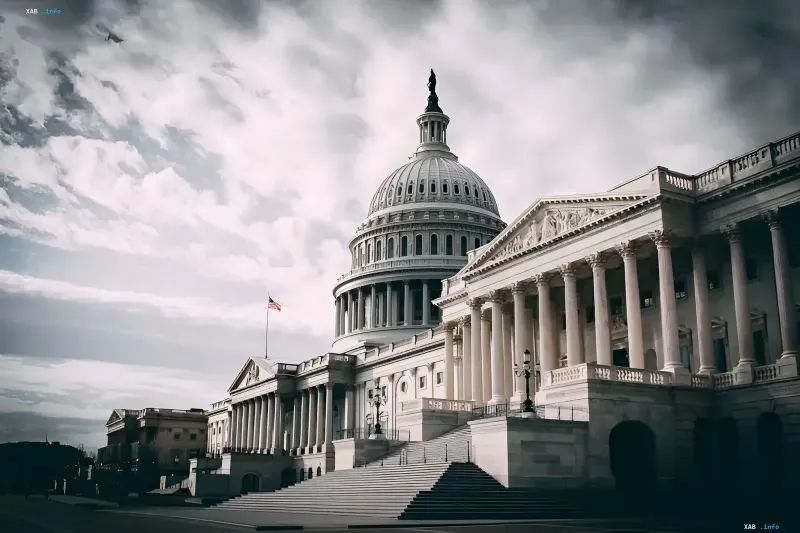
The Office of the Legislative Counsel of the US House of Representatives has been overwhelmed by a flood of bills drafted with the help of artificial intelligence. According to the office, an increasing number of lawmakers are turning to publicly available AI services — primarily OpenAI's ChatGPT and Anthropic's Claude — to draft their legislative proposals. As a result, the council's lawyers spend a disproportionate amount of time reviewing and rewriting such documents: in their assessment, in some cases it would be faster to write the text from scratch than to fix an AI-generated draft.
Systemic Errors in Generated Texts
The main problem with AI-drafted bills is the abundance of incorrect terminology, inaccurate references, and other errors. Publicly available models typically miss nuances and small but legally significant details that can substantially affect the interpretation and adoption of a law. As a typical example, the office noted that AI cannot reliably distinguish between "tax credits, tax deductions, tax exemptions, or grants" — concepts that have fundamentally different consequences in legislation. In some generated texts, the term "state" erroneously includes only the 50 states, excluding the District of Columbia and Native American territories, and previous laws are also cited inaccurately.
Superficial Study of Issues by Lawmakers
Beyond technical errors, AI-drafted bills give rise to another problem: according to the office, congressional staff are no longer as familiar with the content of their own documents and with what exactly they are trying to achieve. Relying on generative models, lawmakers study the relevant issues only superficially, which lowers the overall quality of the lawmaking process.
Countermeasure: AI Against AI
To cope with the growing workload caused by AI-generated bills, the Office of the General Counsel is not ruling out a mirror measure — using artificial intelligence in its own work to "improve efficiency." A working group has already created an AI-based "Comparative Print Package" designed to help staff visualize the impact of each bill on existing legislation. Unlike ordinary generative tools, this package returns an error if it cannot determine exactly where changes should be made to the bill — a mechanism aimed at preventing obvious fabrication, i.e., hallucinations, from entering the documents.
Contradictory Data
No discrepancies in key facts, figures, or chronology have been recorded in the available sources on the topic: publications by 3dnews.ru, hi-tech.mail.ru, and news.rambler.ru are consistent in describing the problem of congressional lawyers being overwhelmed by AI-drafted bills and in listing the typical errors of generative models. No separate competing versions of events were identified at the time the material was prepared.