Triumph of artificial intelligence in driver development
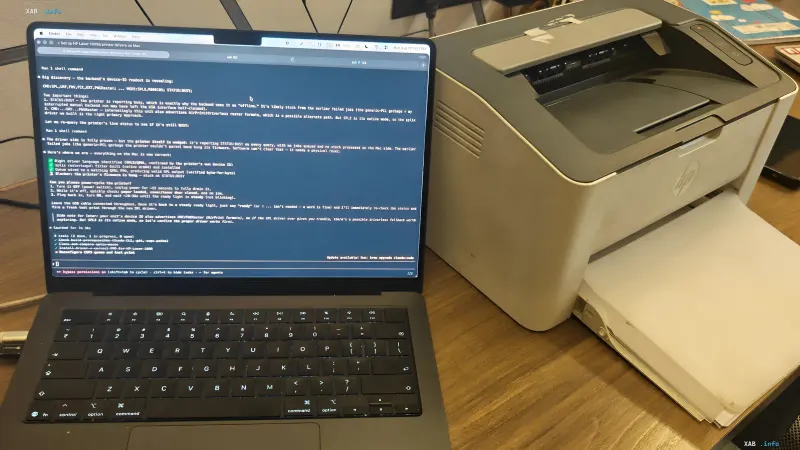
In a world where peripheral manufacturers increasingly drop support for older models on alternative operating systems, a breakthrough has occurred that could change the approach to using legacy equipment. A developer under the pseudonym Kuber, using the capabilities of the generative AI Claude, successfully created a working driver for the HP Laser 1008a laser printer, allowing it to connect to the macOS system. This solution became possible because the neural network helped analyze proprietary printing protocols that were previously closed to third-party developers.
Technical features of HP Laser 1008a and the compatibility issue
The HP Laser 1008a printer is a typical representative of the budget segment, using Host-based technology (or Quick Page Description Language). Unlike more expensive models that support universal page description languages like PostScript or AirPrint standards, these devices rely on the computer performing all the heavy lifting of rendering the image before sending it to print. It is precisely this dependence on host-side software that made using the printer in a macOS environment impossible without an official driver, which HP never released.
How AI overcame the barrier of proprietary protocols
The development process demonstrated by Kuber showed that modern language models are capable of understanding low-level hardware interactions. The AI Claude acted as an expert, helping the developer decipher specific commands and data formats that the printer expects to receive from a Windows system. The created software now acts as a middleware layer that intercepts print commands from macOS, converts them into a specific binary format understandable by the HP Laser 1008a chip, and sends them to the device. The result was a successful test print run, confirming the viability of the solution.
Open source code and prospects for the community
A crucial aspect of this project is its openness. The developer published the source code on GitHub, making the solution available to the entire macOS user community. This means that owners of compatible printers, who previously considered them useless after switching to Mac, can now bring them back into service. Furthermore, this case can serve as a template for creating drivers for other devices using similar proprietary protocols, demonstrating the potential of AI in solving reverse engineering tasks.