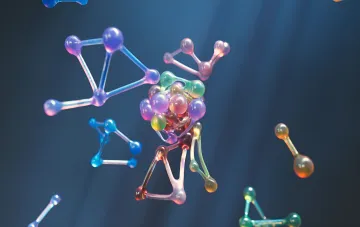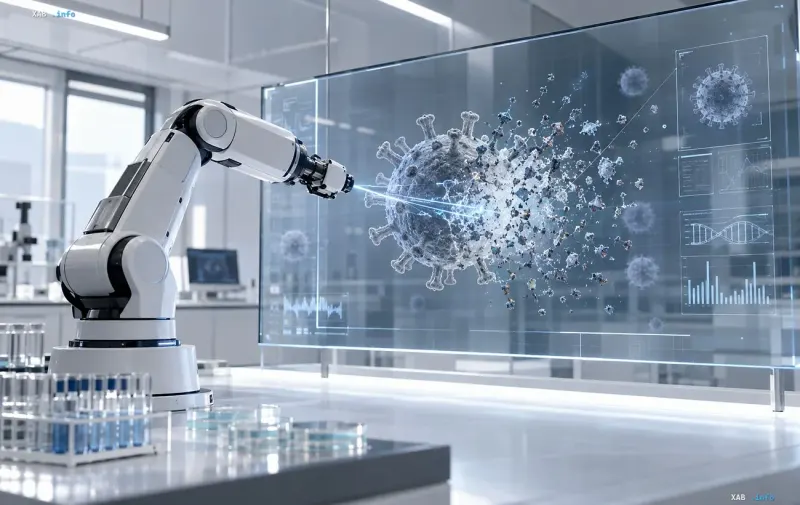
American biotechnology company Radical Numerics has announced the first-ever clinical application of a bacteriophage cocktail entirely designed using artificial intelligence algorithms. The medical community faces a global threat of antibiotic resistance, where traditional drugs prove powerless against superbugs. The use of neural networks opens a fundamentally new stage in biomedicine, enabling the creation of high-precision drugs to save patients.
Revolutionary Algorithm and Targeted Strike on Superbugs
Researchers from a laboratory in San Francisco developed a specialized neural network, Omnii-1, capable of designing artificial bacteriophages—viruses that selectively destroy pathogenic microorganisms. Unlike standard broad-spectrum antibiotics, such AI-generated viruses targetedly attack specific bacteria without damaging the patient's beneficial gut microflora. Leveraging computing power and deep learning algorithms significantly accelerates the development of new viral agents surpassing natural prototypes.
Laboratory Tests and Transition to Clinical Practice
Before the procedure, specialists took a bacterial sample directly from the patient's severe antibiotic-resistant infection and tested generated variants against it. The Omnii-1 algorithm successfully designed a cocktail that completely neutralized the resistant isolate in in vitro laboratory tests. Having obtained positive results, doctors applied the experimental drug under a special protocol to treat the specific individual. Such an approach in modern medical practice is used as a last resort when standard approved treatments have been exhausted.
Prospects of Artificial Intelligence in Pharmacology
The developers deliberately refrain from publishing detailed clinical treatment data, citing strict requirements for confidentiality and the protection of patient personal data. Scientists emphasize that observing the therapy of a single patient cannot serve as definitive proof of the overall safety and efficacy of the method. Nevertheless, the Omnii-1 model also demonstrated the ability to predict phages to combat Pseudomonas aeruginosa, dangerous in burns and cystic fibrosis. This precedent marks the transition of artificial intelligence from computer modeling to real medical practice in creating personalized medicines.